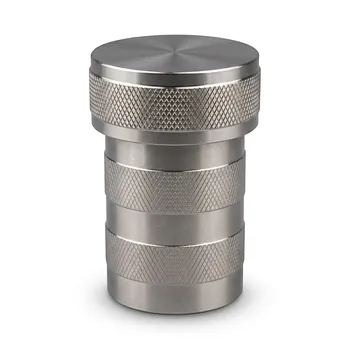
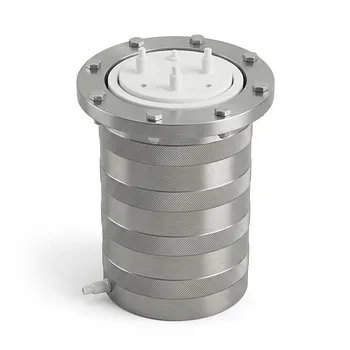
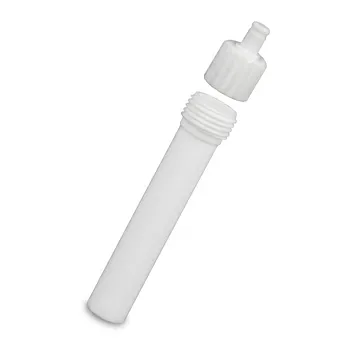
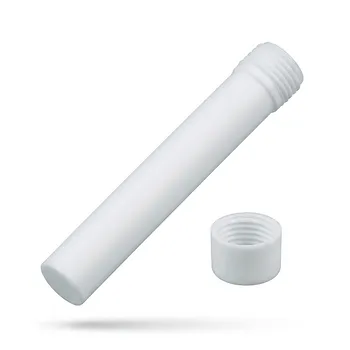
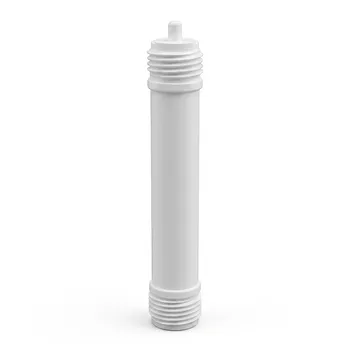
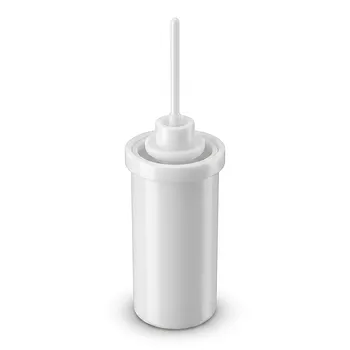
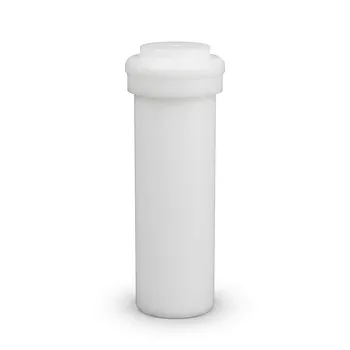
The synthesis of high-quality Zinc Tin Oxide (ZTO) nanostructures relies on a hybrid reactor design to manage simultaneous mechanical and chemical stresses. Using a stainless steel autoclave with a Polytetrafluoroethylene (PTFE) liner ensures that the reaction environment can withstand extreme autogenous pressure while remaining completely chemically inert. This configuration prevents the aggressive alkaline precursors from corroding the vessel and ensures that the resulting ZTO crystals are not poisoned by metallic impurities.
The core requirement for this setup is the decoupling of functions: the stainless steel provides the structural integrity to contain high-pressure subcritical fluids, while the PTFE liner serves as a sacrificial, non-reactive barrier that maintains the chemical purity essential for oriented crystal growth.
The Mechanical Necessity of Stainless Steel
Containing Autogenous High Pressure
Hydrothermal synthesis of ZTO often occurs at temperatures reaching 200°C, where water and solvents generate significant internal pressure. The stainless steel outer shell acts as a pressure vessel, providing the tensile strength necessary to prevent explosive decompression during the heating cycle.
Maintaining a Sealed Subcritical Environment
To facilitate the growth of nanostructures, the reaction must remain in a sealed environment to reach a subcritical state. The robust nature of the steel housing ensures that the seal remains tight even as the internal temperature and pressure fluctuate, allowing for consistent morphology in the synthesized ZTO.
The Chemical Necessity of the PTFE Liner
Resistance to Aggressive Alkalinity
ZTO synthesis frequently utilizes strong alkaline solutions, such as Sodium Hydroxide (NaOH), and organic amine additives like Ethylenediamine (EDA). A PTFE liner is required because it is virtually immune to chemical attack from these reagents, which would otherwise rapidly corrode or "pitting" a metal surface.
Elimination of Metallic Ion Contamination
If the reaction solution directly touched the steel walls, metal ions (such as iron, nickel, or chromium) would leach into the precursor. This metallic contamination would disrupt the delicate oriented growth of the ZTO crystals and compromise the phase purity of the final nanostructures.
Low Surface Energy and Yield Stability
PTFE possesses an extremely low surface energy, which prevents the synthesized ZTO particles from adhering to the container walls. This characteristic ensures a higher stable powder yield and makes the recovery of the nanostructures significantly more efficient after the reaction is complete.
Understanding the Trade-offs
Temperature Limitations
While PTFE is highly resistant to chemicals, it has a clear thermal ceiling, typically around 250°C. Exceeding this temperature can cause the liner to soften or deform, potentially compromising the seal or releasing fluorinated vapors into the reaction.
Thermal Lag and Gradient Issues
The use of a liner introduces an additional layer of material that the heat must penetrate to reach the reactants. This can cause a thermal lag, where the internal temperature of the solution stays lower than the programmed temperature of the oven for a significant period.
Pressure Sensitivity and Deformation
If the heating and cooling cycles are too rapid, the pressure differential between the inside of the liner and the steel jacket can cause the PTFE to collapse or warp. Users must manage cooling rates carefully to preserve the longevity of the liner.
How to Apply This to Your Project
Choosing the Right Setup for Your Goal
To ensure the successful synthesis of ZTO nanostructures, evaluate your experimental parameters against the following criteria:
- If your primary focus is phase purity: Always utilize a high-quality, virgin PTFE liner to ensure zero leaching of chromium or nickel ions from the autoclave body.
- If your primary focus is high-temperature synthesis (>250°C): You must transition from PTFE to a PPL (polyphenylene polymers) liner or a gold-lined vessel, as standard PTFE will fail structurally.
- If your primary focus is crystal morphology control: Ensure the autoclave filling degree is between 60% and 80% to provide enough headspace for pressure development without stressing the PTFE seal.
By strictly isolating the chemical reaction within a PTFE barrier while relying on a steel exoskeleton for strength, you create the precise, high-energy environment required for the growth of advanced ZTO nanostructures.
Summary Table:
| Feature | Stainless Steel Outer Shell | PTFE (Polytetrafluoroethylene) Liner |
|---|---|---|
| Primary Role | Mechanical support & pressure vessel | Chemical barrier & inert reaction zone |
| Key Benefit | Prevents explosive decompression | Resists alkaline corrosion (NaOH/EDA) |
| Purity Impact | Provides structural seal integrity | Prevents metallic ion (Cr/Ni) leaching |
| Material Property | High tensile strength | Low surface energy (high powder yield) |
| Critical Limit | Susceptible to chemical pitting | Thermal ceiling of ~250°C |
Elevate Your Synthesis Precision with KINTEK
Achieving high-phase purity in ZTO nanostructures requires equipment that never compromises on material integrity. KINTEK is your premier partner for high-performance fluoropolymer laboratory solutions. From everyday essentials like PTFE and PFA beakers, crucibles, and reagent bottles to specialized hydrothermal synthesis liners, microwave digestion vessels, and custom electrochemical cells, we provide the inert environment your research demands.
Our expertise extends to end-to-end custom CNC fabrication, allowing us to deliver everything from complex non-standard machined parts to high-volume orders of tubes, fittings, and valves. Whether you need standard labware or a bespoke reactor setup, KINTEK ensures your results are free from metallic contamination and chemical interference.
Ready to optimize your lab's performance? Contact KINTEK today to discuss your custom project or bulk supply needs!
References
- Ana Rovisco, Pedro Barquinha. Effect of the seed layer crystalline structure in the growth of zinc-tin oxide (ZTO) nanostructures. DOI: 10.1186/s11671-025-04410-8
This article is also based on technical information from Kintek Knowledge Base .
Related Products
- High Temperature Corrosion Resistant Hydrothermal Synthesis Reactor with TFM Inner Liner and Straight Cylinder Design
- PTFE Lined High Pressure Digestion Vessel 50ml High Temperature Hydrothermal Synthesis Tank
- Custom TFM Reaction Vessel with Stainless Steel Jacket and PTFE Inner Cup for High Corrosion Resistance
- High Pressure Custom TFM Reactor Stainless Steel Outer Vessel PTFE Inner Cup for Corrosive Synthesis
- High Purity PTFE Microwave Digestion Vessel Replacement Liner for Acid Sample Preparation and Trace Analysis
People Also Ask
- What is the role of a corrosion-resistant reactor in the synthesis of lignin-based carbon dots? Ensure Maximum Purity
- What are the technical advantages of using hydrothermal synthesis reactors for advanced electronic & optical nanomaterials?
- How does a hydrothermal synthesis reactor facilitate the production of crystalline materials with tailored morphologies? Precision Crystal Growth
- Why is the sealing reliability of a hydrothermal synthesis reactor critical for 24-hour cycles? Ensure Nano-Precision
- What role do hydrothermal synthesis reactors play in CQD preparation? Achieve High-Purity Nanomaterial Synthesis