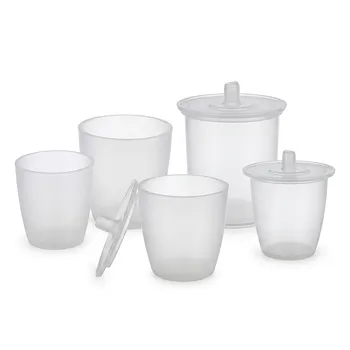
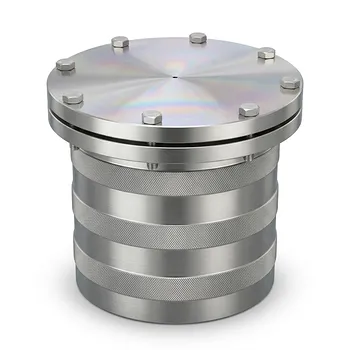
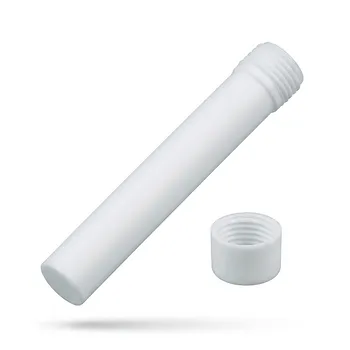
The selection of an autoclave liner material is the defining factor in preventing metallic contamination during the hydrothermal growth of Zinc Oxide (ZnO). Because the liner is the only component in direct contact with the growth solution, its chemical stability determines the final purity and functional integrity of the crystal. High-purity fluoroplastics, such as PTFE or PFA, act as a physical and chemical barrier that isolates the reaction from the autoclave’s metallic body, preventing the leaching of impurities like Manganese (Mn²⁺) that would otherwise degrade the crystal's electronic and optical performance.
Core Takeaway: The autoclave liner serves as a chemically inert interface that prevents metal ions from the reactor vessel from entering the synthesis environment. This isolation is critical for maintaining the high phase purity and structural perfection required for high-performance ZnO single crystals.
The Mechanics of Chemical Isolation
Preventing Metallic Ion Migration
Hydrothermal synthesis occurs under high pressure and temperature, conditions that naturally promote the leaching of metals from the stainless steel autoclave body. A high-purity PTFE (Polytetrafluoroethylene) or PFA (Perfluoroalkoxy) liner effectively seals the reaction environment from these external contaminants. Without this barrier, transition metals can migrate into the solution and become unintentionally incorporated into the ZnO crystal lattice.
Resisting Aggressive Alkaline Environments
Zinc Oxide synthesis frequently utilizes high concentrations of strong alkaline agents, such as 3M or 6M Sodium Hydroxide (NaOH). These solvents are highly corrosive and would rapidly erode an unprotected metal vessel. Fluoroplastic liners provide exceptional chemical inertness, ensuring that the solvent remains pure and the reactor vessel remains structurally intact throughout the growth cycle.
Impact on Crystal Quality and Performance
Preserving Electronic and Optical Integrity
The introduction of even trace amounts of foreign metal ions can drastically alter the semiconductor properties of ZnO. Contaminants like Mn²⁺ act as unintended dopants, shifting the optical absorption spectra and degrading the electronic mobility of the crystal. By using a chemically stable liner, researchers ensure that the synthesized single crystals meet the stringent standards required for optoelectronic applications.
Ensuring Phase Purity and Morphology
The presence of impurities in the reaction solution can disrupt the dissolution-recrystallization process that governs crystal growth. A clean environment facilitated by a high-purity liner supports the development of specific crystal growth orientations and high crystallinity. This results in well-defined morphologies and prevents the formation of secondary phases that could weaken the material's structural properties.
Understanding the Technical Trade-offs
Temperature and Pressure Constraints
While fluoroplastic liners offer superior chemical resistance, they impose specific thermal limits on the synthesis process. Most PTFE liners are rated for temperatures up to approximately 150°C to 250°C; exceeding these limits can lead to liner deformation or "creeping" under high autogenous pressure. This requires a precise balance between the need for high-reaction activity and the mechanical limitations of the liner material.
Wear and Cross-Contamination Risks
Over multiple synthesis cycles, liners can develop microscopic surface degradation or absorb trace amounts of precursors. If a liner is not properly maintained or replaced, it can become a source of cross-contamination between different batches of ZnO. Achieving consistent, high-purity results requires rigorous cleaning protocols and periodic inspection of the liner's surface integrity.
How to Apply This to Your Project
When configuring a hydrothermal system for Zinc Oxide synthesis, the choice of liner should align with your specific material requirements and thermal parameters.
- If your primary focus is high-purity electronic-grade single crystals: Utilize high-purity PFA liners and ensure the autoclave is fully sealed to prevent any contact between the alkaline solution and the stainless steel walls.
- If your primary focus is high-temperature synthesis (above 250°C): Consider specialized liner materials or gold/silver-lined autoclaves, as standard PTFE may lose structural integrity at these extreme temperatures.
- If your primary focus is industrial-scale nanopowder production: Prioritize PTFE liners for their cost-effectiveness and excellent resistance to the high-concentration NaOH typically used in bulk powder synthesis.
The integrity of your ZnO crystals is only as reliable as the interface that contains their growth.
Summary Table:
| Feature | Benefit for ZnO Growth | Recommended Materials |
|---|---|---|
| Metallic Isolation | Prevents Mn²⁺ and transition metal leaching into crystals | High-purity PTFE / PFA |
| Chemical Inertness | Resists corrosive 3M/6M NaOH alkaline environments | Fluoropolymer Liners |
| Thermal Stability | Maintains seal integrity up to 250°C during synthesis | Specialized PFA/PTFE |
| Contamination Control | Prevents cross-batch impurities and structural defects | Virgin-grade Fluoroplastics |
Achieve Unmatched Purity in Your Synthesis with KINTEK
Don't let metallic leaching compromise your research. At KINTEK, we provide the high-performance fluoropolymer solutions essential for sensitive hydrothermal growth.
From standard and custom PTFE/PFA liners, hydrothermal synthesis vessels, and microwave digestion containers to a full range of labware—including beakers, reagent bottles, and advanced fluid transfer components—we deliver the chemical isolation your project demands. Backed by end-to-end custom CNC fabrication, KINTEK can supply everything from high-volume consumables to bespoke non-standard machined parts, ensuring an absolute focus on material purity.
Ready to optimize your laboratory setup? Contact KINTEK today to discuss your custom fluoropolymer requirements!
References
- T. Abe, Hiroyuki Osada. Identification of defects and impurities in hydrothermally grown ZnO single crystals by ESR. DOI: 10.1007/s10854-025-14951-4
This article is also based on technical information from Kintek Knowledge Base .
Related Products
- High Purity PTFE Microwave Digestion Vessel for Soil and Food Analysis Acid Resistant Fluoropolymer Sample Preparation Liners
- PTFE PFA Vacuum Filtration System Corrosion Resistant Customizable Shatterproof Laboratory Device
- High Purity PTFE Filter with PFA Valve Connections and Integrated Sieve Plate for Corrosive Fluid Processing
- PTFE Lined High Pressure Digestion Vessel 50ml High Temperature Hydrothermal Synthesis Tank
- High Purity PTFE Microwave Digestion Vessel Replacement Liner for Acid Sample Preparation and Trace Analysis
People Also Ask
- How does the dielectric property of PTFE benefit microwave-assisted digestion? Unlock Rapid and Uniform Sample Heating
- What are the advantages of using microwave digestion vessels? Optimize EG@MO synthesis with superior thermal control.
- What safety features are commonly integrated into microwave digestion vessels? Ensuring High-Pressure Laboratory Safety
- What are the advantages of using microwave digestion vessels for environmental analysis? Boost speed and sample accuracy.
- How do microwave digestion vessels support pharmaceutical elemental impurity testing? Achieve Precise USP Compliance