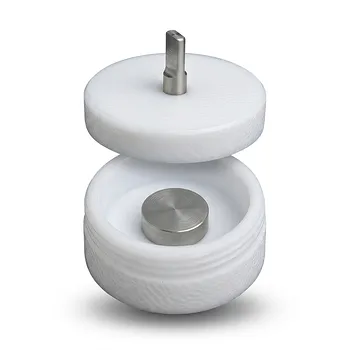
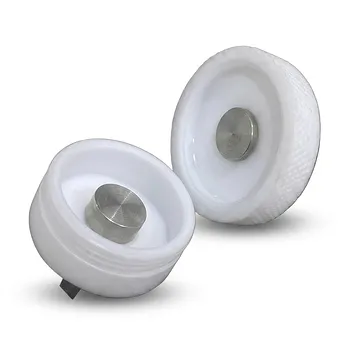
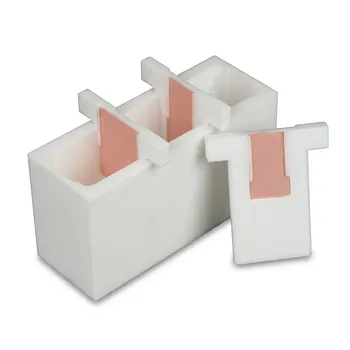
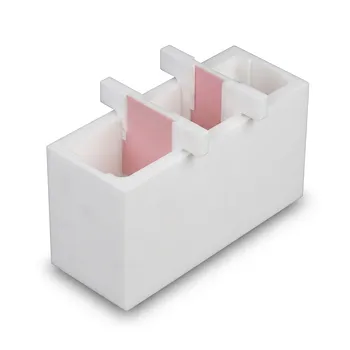
The hydrophobicity of PTFE is essential in electrochemical clamp design because it prevents electrolyte migration and ensures interface stability. By repelling water and aqueous solutions, PTFE stops the "creep" of electrolytes along the clamp components, which would otherwise lead to corrosion, electrical leakage, or contamination of the measurement.
Core Takeaway: PTFE’s high water contact angle creates a non-stick, repellent barrier that isolates the electrode interface from parasitic physical effects like electrolyte creep and bubble entrapment, ensuring highly accurate and reproducible electrochemical data.
Preventing Electrolyte Migration and Creep
The Barrier Against "Creep"
In electrochemical cells, electrolytes often travel up the surface of submerged components through capillary action or surface tension, a phenomenon known as electrolyte creep. PTFE’s water contact angle of over 100 degrees effectively halts this movement, keeping the electrolyte confined to the reaction zone.
Protecting Electrical Contacts
By preventing creep, PTFE ensures that the electrolyte does not reach the metallic electrical connections at the top of the clamp. This protection is vital for preventing corrosion of the clamp hardware and avoiding unintended electrical pathways that would skew data like Cyclic Voltammetry (CV) or Electrochemical Impedance Spectroscopy (EIS).
Material Science of Repellency
The hydrophobic nature of PTFE stems from the fluorine atoms in its structure, which have extremely low polarizability. This creates a low-energy surface that water molecules cannot easily bond with, causing them to bead up and roll off rather than adhere.
Enhancing Interface Stability and Accuracy
Eliminating Bubble Entrapment
During electrochemical reactions, gas bubbles often form on surfaces; if these bubbles stick to the clamp or electrode holder, they block the active area and cause noise in the data. PTFE’s low coefficient of friction (0.05–0.10) and non-stick properties ensure that bubbles are released immediately rather than becoming trapped.
Minimizing Fouling and Adhesion
PTFE prevents the buildup of reaction byproducts or contaminants on the clamp rod, a process known as fouling. This ensures a clean and stable environment at the electrode-electrolyte interface, which is necessary for achieving reproducible results across multiple tests.
Managing the Local Microenvironment
In specialized applications like CO2 reduction, PTFE’s hydrophobicity helps manage the three-phase interface (solid-liquid-gas). It allows gases to diffuse efficiently to the catalyst site while blocking water molecules that might trigger unwanted side reactions, such as the Hydrogen Evolution Reaction (HER).
Understanding the Trade-offs
Mechanical Limitations
While PTFE is chemically and hydrophobically superior, it is a soft plastic that can deform under high mechanical pressure. Over-tightening a PTFE clamp can lead to "cold flow," where the material permanently changes shape, potentially loosening the grip on the electrode over time.
Temperature and Vacuum Constraints
PTFE is highly stable, but its performance can shift near its transition temperatures. In extreme thermal environments or ultra-high vacuum applications, its outgassing properties and thermal expansion must be carefully accounted for to prevent leaks or contamination.
Porosity in Specialized Forms
In some designs, such as gas diffusion electrodes, PTFE is used in a porous form to allow gas through while blocking liquid. If the pressure exceeds the water entry pressure, the hydrophobic barrier can "flood," neutralizing the very benefit the material was intended to provide.
How to Apply This to Your Project
Selecting the Right Clamp Configuration
- If your primary focus is high-precision analytical testing (EIS/CV): Prioritize clamps with solid PTFE bodies to ensure zero electrolyte creep and maximum insulation of the electrical signal.
- If your primary focus is gas-evolving reactions (HER/OER): Choose PTFE-coated or solid PTFE holders to prevent bubble accumulation that causes "noise" in your current density readings.
- If your primary focus is long-term battery cycling: Ensure the PTFE clamp is designed with a reinforced internal structure to mitigate the material's tendency to deform under constant mechanical stress.
Ultimately, the strategic use of PTFE’s hydrophobicity transforms a simple holder into a precision instrument that protects the integrity of the electrochemical environment.
Summary Table:
| Feature | Impact on Electrochemical Design | Benefit to Research |
|---|---|---|
| High Contact Angle (>100°) | Prevents electrolyte "creep" via capillary action | Protects electrical contacts from corrosion and leakage |
| Low Surface Energy | Repels water and aqueous solutions | Minimizes contamination and ensures interface stability |
| Non-stick Properties | Facilitates immediate release of gas bubbles | Reduces signal noise in gas-evolving reactions (HER/OER) |
| Low Friction (0.05–0.10) | Reduces byproduct buildup (fouling) | Maintains a clean electrode-electrolyte interface |
| Chemical Inertness | Resists aggressive electrolytes | Ensures long-term durability in varied pH environments |
Elevate Your Research Integrity with KINTEK’s Precision Fluoropolymer Solutions
In high-precision electrochemistry, the material of your hardware is just as critical as your catalyst. At KINTEK, we understand that PTFE’s hydrophobicity is the key to preventing parasitic effects like electrolyte creep and signal noise. We maintain an absolute focus on high-performance fluoropolymers to ensure your data remains untainted and reproducible.
Whether you require everyday essentials—such as beakers, reagent bottles, tubing, and filters—or advanced, custom-machined electrochemical cells, battery testing fixtures, and electrode accessories, KINTEK is your end-to-end partner. Our capabilities extend from standard labware to complex, bespoke CNC-fabricated components designed for specialized reaction environments like hydrothermal synthesis and microchannel reactors.
Don't let material failure compromise your results. Contact KINTEK today to discuss your custom laboratory setups and high-purity fluoropolymer needs.
Related Products
- Acid Resistant PTFE Button Cell Battery Test Fixture Customizable Machining High Purity Electrochemical Testing Clamp
- Corrosion Resistant PTFE Coin Cell Battery Testing Clamps and Acid Proof Custom Fluoropolymer Battery Fixtures
- White PTFE Electrolytic Cell with Movable Slider and Insulated Lid for Fluorine Corrosion Resistance
- Corrosion Resistant PTFE Electrochemical Cell for New Energy Research Inert Insulating Customizable Lab Reaction Vessel
- Custom PTFE Electrolytic Cell Corrosion Resistant Low Background Reaction Vessel with Inlet Outlet Ports
People Also Ask
- How does the chemical inertness of PTFE benefit laboratory-scale battery testing? Ensure high-purity research results.
- In what ways do PTFE battery testing fixtures enhance laboratory throughput and reliability? Maximize Research Efficiency
- In what industrial manufacturing contexts are PTFE battery clamps or fixtures utilized? Optimize Battery Production.
- What is the thermal operating range for PTFE battery clamps in electrochemical research? Stability from -200°C to +260°C
- What are the primary functions and material compositions of PTFE battery clamps? Ensure Precision & Chemical Resistance