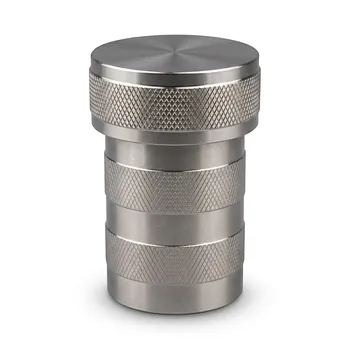
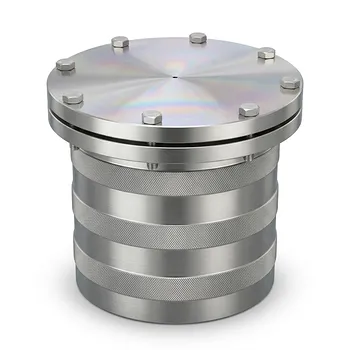
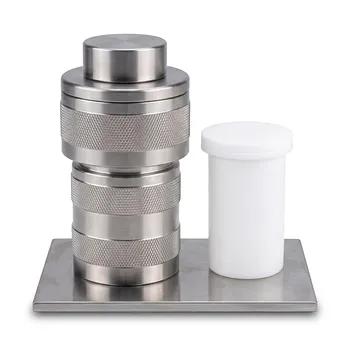
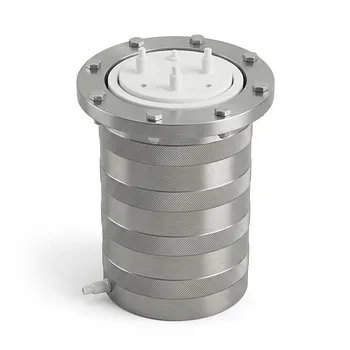
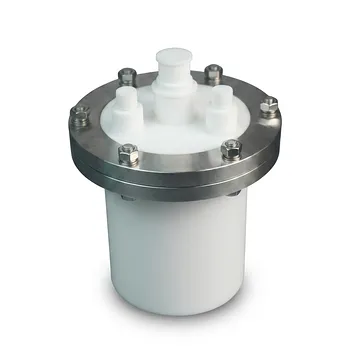
The filling factor is the most critical safety parameter in hydrothermal synthesis because it prevents catastrophic pressure buildup. By maintaining a filling volume typically between 60% and 80%, you provide the necessary headspace for liquid solvents to expand as they heat up. Without this buffer, the internal pressure can rise exponentially, leading to equipment deformation or explosive failure.
The filling factor ensures a "cushion" of vapor exists above the liquid, allowing for safe thermal expansion. Neglecting this ratio transforms a controlled laboratory experiment into a high-risk pressure vessel failure.
The Mechanics of Thermal Expansion
Liquid Expansion at High Temperatures
Solvents, particularly water, expand significantly as they transition from room temperature to hydrothermal conditions. Because liquids are virtually incompressible, they require physical space to occupy as their density decreases and volume increases.
The Role of the Vapor "Cushion"
The headspace acts as a compressible buffer that accommodates the expanding liquid. This space allows for the equilibrium of vapor pressure, which is much easier for the reactor vessel to contain than the hydraulic force of an expanding liquid.
Maintaining Pressure Equilibrium
When the correct filling factor is used, the pressure inside the liner remains within the design limits of the stainless steel outer shell. This balance is essential for the chemical reaction to proceed at the desired temperature without compromising the vessel's integrity.
Consequences of Improper Filling
Structural Deformation and Leaking
If a liner is overfilled, the expanding liquid will eventually press directly against the PTFE or PPL liner. This hydraulic pressure can force the liner to deform, causing it to "flow" into the threads of the cap or lead to seal failure and leaking.
Catastrophic Shell Failure
The most severe risk of overfilling is the rupture of the outer shell. When the headspace is exhausted, even a slight increase in temperature causes a massive, non-linear spike in internal pressure that can exceed the tensile strength of the steel.
Thermal Lag and Accuracy
Inaccurate filling can also affect the internal chemistry. An improper volume-to-surface area ratio may lead to uneven heating, where the internal temperature of the solvent lags significantly behind the temperature set on the oven or heating mantle.
Understanding the Trade-offs
The Risks of Overfilling
Overfilling beyond 80% leaves no margin for error regarding temperature fluctuations. If the oven overshoots its target temperature, the resulting expansion can cause an instantaneous vessel failure before the safety rupture disc (if present) can even react.
The Drawbacks of Underfilling
While filling below 50% is generally "safe" from a pressure perspective, it can be detrimental to the synthesis. Low liquid levels can lead to the gas-phase decomposition of precursors or result in insufficient pressure to drive the desired crystalline growth.
How to Apply This to Your Project
To ensure a successful and safe hydrothermal reaction, choose your filling volume based on your specific safety requirements and reaction goals.
- If your primary focus is maximum laboratory safety: Maintain a filling factor of 60% to 70% to provide a generous buffer for thermal expansion and potential temperature overshoots.
- If your primary focus is maximizing chemical yield: You may increase the filling factor up to 80%, provided your temperature control is highly precise and the solvent's expansion characteristics are well-understood.
By strictly adhering to these filling limits, you protect your equipment and ensure a stable environment for high-pressure chemical synthesis.
Summary Table:
| Filling Factor | Risk/Outcome | Safety Recommendation |
|---|---|---|
| Below 50% | Low yield, gas-phase decomposition of precursors | Safe but inefficient |
| 60% - 70% | Optimal balance of safety and thermal expansion | Recommended for general use |
| 70% - 80% | Maximum yield; requires precise temperature control | Use with caution |
| Above 80% | Catastrophic failure, vessel rupture, and leaking | Extremely Dangerous |
Secure Your Synthesis with High-Performance Fluoropolymer Solutions
At KINTEK, we understand that precision and safety are non-negotiable in hydrothermal synthesis. We manufacture virtually all imaginable laboratory supplies crafted from high-performance PTFE and PFA, ensuring your experiments are backed by the most reliable materials in the industry.
Whether you need:
- Standard or Custom Hydrothermal Synthesis Liners and microwave digestion vessels.
- Everyday Labware: Beakers, measuring cylinders, crucibles, and reagent/wash bottles.
- Trace Analysis & Sample Prep: High-purity instruments, filters, pipettes, and tweezers.
- Fluid Transfer & Advanced Components: Tubing, valves, electrochemical cells, and battery testing fixtures.
Backed by end-to-end custom CNC fabrication, KINTEK is equipped to deliver everything from complex, non-standard machined parts to high-volume orders with an absolute focus on fluoropolymer excellence.
Don't compromise on safety—contact our technical experts today to find the perfect fit for your lab!
Related Products
- High Temperature Corrosion Resistant Hydrothermal Synthesis Reactor with TFM Inner Liner and Straight Cylinder Design
- Custom TFM Reaction Vessel with Stainless Steel Jacket and PTFE Inner Cup for High Corrosion Resistance
- PTFE Lined High Pressure Digestion Vessel 50ml High Temperature Hydrothermal Synthesis Tank
- High Pressure Custom TFM Reactor Stainless Steel Outer Vessel PTFE Inner Cup for Corrosive Synthesis
- High Purity TFM Microwave Digestion Vessels PTFE Acid Evaporation Liners Domestic GT-400 Equivalent Laboratory Reaction Containers
People Also Ask
- What is the role of a corrosion-resistant reactor in the synthesis of lignin-based carbon dots? Ensure Maximum Purity
- What are the technical advantages of using hydrothermal synthesis reactors for advanced electronic & optical nanomaterials?
- How does a hydrothermal synthesis reactor facilitate the production of crystalline materials with tailored morphologies? Precision Crystal Growth
- Why is the sealing reliability of a hydrothermal synthesis reactor critical for 24-hour cycles? Ensure Nano-Precision
- What role do hydrothermal synthesis reactors play in CQD preparation? Achieve High-Purity Nanomaterial Synthesis