Contact stability is the foundation of reliable electrochemical data. For SupercapBatteries, it ensures that contact resistance remains consistently low during high-frequency current switching and long-duration testing. Without this stability, any increase in ohmic voltage drop will interfere with the evaluation of capacitance retention, leading to a false assessment of the material’s actual cycle life.
Core Takeaway: Stable contact in testing fixtures eliminates parasitic resistance fluctuations that would otherwise distort performance metrics. By maintaining uniform mechanical pressure and electrical continuity, these fixtures ensure that recorded data reflects the material's true electrochemical capabilities rather than the limitations of the test setup.
The Impact of Resistance on Data Integrity
Preventing Ohmic Voltage Drop
During long-term cycle testing, even minor fluctuations in the physical connection can lead to an increase in ohmic voltage drop. This drop directly interferes with the measurement of specific capacitance retention, making it difficult to distinguish between material degradation and fixture failure.
Reliability in High-Frequency Switching
SupercapBatteries often undergo high-frequency current load switching, which puts immense stress on the electrical interface. High-quality fixtures ensure that the electrodes and external circuits maintain a steady connection, preventing "noise" from contaminating the results during rapid charge-discharge transitions.
Accuracy of Performance Limits
Minimizing contact resistance allows for a more accurate reflection of the device's energy density and power density. When contact is stable, the tester captures the intrinsic performance limits of the supercapacitor rather than the resistance of the experimental assembly.
Mechanical Stability and Interface Preservation
Suppressing Material Delamination
Active materials often experience volume changes during electrochemical cycling, which can lead to interface delamination. Dedicated fixtures apply a constant mechanical pressure (such as 6 MPa or 10 psi) to inhibit this failure, ensuring the electrode remains in tight contact with the separator and electrolyte.
Promoting Uniform Electrolyte Wetting
Uniform vertical pressure is essential for promoting electrolyte wetting within porous electrodes. By suppressing the loosening of electrode plates, the fixture effectively slows the increase of internal resistance and extends the measurable cycle life of the battery.
Maintaining the Reaction Interface
In systems like flow batteries or solid-state cells, the fixture acts as the core reaction vessel. It must mechanically secure the anion exchange membrane or electrolyte interface to ensure that active materials do not cross over and that the coulombic efficiency is measured accurately.
Environmental and Structural Integrity
Preventing Electrolyte Evaporation
Long-term testing—often spanning hundreds or thousands of cycles—requires a superior seal to prevent electrolyte evaporation. Industrial-grade fixtures provide the airtight environment necessary to ensure that capacity decay data is not skewed by a loss of liquid electrolyte over time.
Resilience Under Extreme Conditions
Contact stability must be maintained not just at room temperature, but also under extreme thermal conditions (e.g., -20°C to 25°C). Fixtures designed for these environments prevent physical shifting or contraction of components that would otherwise cause a contact failure.
Safeguarding Against Leakage
For long-term cycling tests, such as those exceeding 20 hours of continuous operation, fixture stability prevents electrolyte leakage. This is critical for maintaining a safe testing environment and ensuring the Faraday efficiency of the system is calculated correctly.
Understanding the Trade-offs
While high mechanical pressure is necessary to ensure contact stability, excessive pressure can be detrimental. Applying too much force may compress the separator to the point of a short circuit or physically damage delicate electrode structures.
Furthermore, fixtures themselves are subject to wear and tear over hundreds of tests. Components like springs, gaskets, and contact pins can lose their tension or become corroded, meaning that a fixture that was stable at cycle 1 may introduce significant resistance by cycle 1,000 if not properly maintained.
How to Apply This to Your Project
Recommendations for Testing Success
- If your primary focus is High-Power Density: Prioritize fixtures with gold-plated or high-conductivity contacts to minimize the ohmic resistance that limits power delivery.
- If your primary focus is Long-Term Cycle Life: Select a fixture with a robust sealing mechanism and a constant-tension spring to prevent electrolyte loss and compensate for material expansion.
- If your primary focus is Material Characterization: Use a specialized mold cell or pouch cell fixture that allows for precise control of vertical pressure to ensure uniform wetting and interface stability.
The integrity of your battery research depends entirely on the stability of the physical connection between the material and the measurement hardware.
Summary Table:
| Key Factor | Impact on Testing | Main Benefit |
|---|---|---|
| Ohmic Voltage Drop | Eliminates parasitic resistance fluctuations | Accurate capacitance retention metrics |
| Mechanical Pressure | Inhibits material delamination & promotes wetting | Long-term interface stability |
| Sealing Integrity | Prevents electrolyte evaporation | Reliable capacity decay data over time |
| Thermal Resilience | Maintains connection during temperature shifts | Consistent data in extreme conditions |
| High-Frequency Load | Minimizes electrical interface "noise" | Precision during rapid charge-discharge |
Elevate Your Battery Research with KINTEK Precision
Don't let unstable fixtures compromise your long-term cycle data. KINTEK specializes in high-performance fluoropolymer labware and custom-engineered testing solutions designed to maintain absolute contact stability. From battery testing fixtures, electrochemical cells, and hydrothermal synthesis liners to essential consumables like PTFE/PFA beakers, high-purity tubing, O-rings, and gaskets, we provide the tools necessary for rigorous material characterization.
Whether you require standard laboratory supplies or bespoke CNC-fabricated components for complex non-standard setups, our focus on high-performance materials ensures your experiments remain contamination-free and physically stable.
Ready to optimize your lab's performance? Contact us today to discuss your custom project or high-volume needs!
References
- Murat Ateş. CuO and MoS2 difference including S -rGO and PPy nanocomposite for SupercapBattery device. DOI: 10.59287/icsis.630
This article is also based on technical information from Kintek Knowledge Base .
Related Products
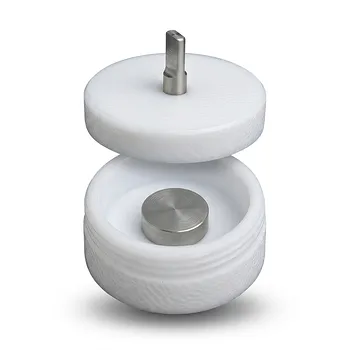
- Acid Resistant PTFE Button Cell Battery Test Fixture Customizable Machining High Purity Electrochemical Testing Clamp
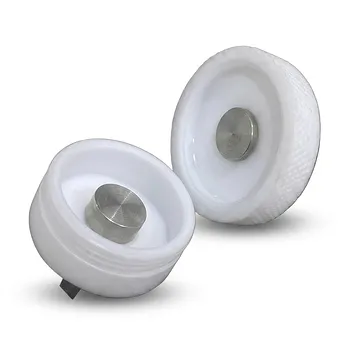
- Corrosion Resistant PTFE Coin Cell Battery Testing Clamps and Acid Proof Custom Fluoropolymer Battery Fixtures
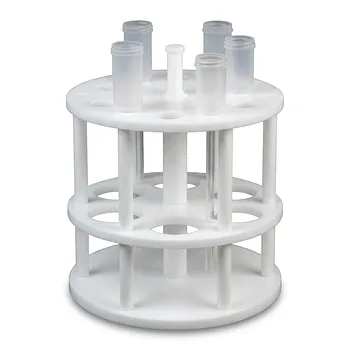
- Custom PFA Microcolumn Racks and PTFE Machined Low Background Corrosion Resistant Laboratory Fixtures
People Also Ask
- How does the chemical inertness of PTFE benefit laboratory-scale battery testing? Ensure high-purity research results.
- In what ways do PTFE battery testing fixtures enhance laboratory throughput and reliability? Maximize Research Efficiency
- In what industrial manufacturing contexts are PTFE battery clamps or fixtures utilized? Optimize Battery Production.
- What is the thermal operating range for PTFE battery clamps in electrochemical research? Stability from -200°C to +260°C
- What are the primary functions and material compositions of PTFE battery clamps? Ensure Precision & Chemical Resistance