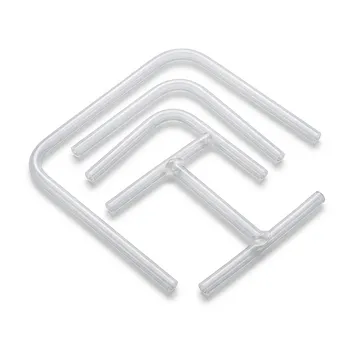
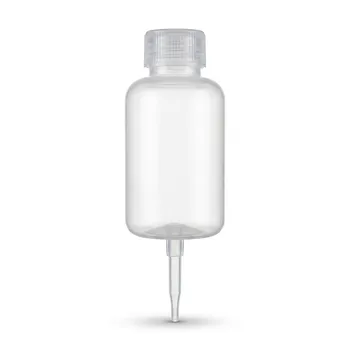
Restricting molecular mobility is essential because it keeps PFA’s fluorinated surface chemically and physically stable during use. If the main chain or side groups can move and reorient when exposed to liquids or elevated temperatures, less-fluorinated or polar groups may become exposed at the surface. That can increase wetting, adhesion, residue retention, and variability in fluid delivery; restricting this motion preserves PFA’s low surface energy, non-wetting behavior, and chemical resistance.
The key principle is surface stability: PFA performs reliably when its fluorinated groups remain oriented at the surface instead of rearranging in response to liquids or heat.
How Molecular Mobility Affects PFA Performance
Main-chain mobility controls structural stability
The polymer main chain forms the underlying framework of PFA components. Excessive segmental motion can allow the surface structure to rearrange under operating conditions, particularly when the material contacts aggressive liquids or experiences elevated temperatures.
Restricting main-chain mobility helps maintain a consistent surface and bulk structure. This supports the dimensional, chemical, and fluid-handling stability required in tubing, fittings, reaction vessels, and laboratory containers.
Side-chain mobility controls surface chemistry
The surface behavior of PFA depends strongly on its fluorinated groups. When side-chain motion is restricted, these groups remain oriented toward the interface and continue to provide low surface energy.
If molecular motion allows surface groups to reorient, underlying polar groups can become more exposed to the liquid. The result may be greater wetting and stronger liquid–surface interactions.
Working temperature is a critical condition
Restriction must be effective at the component’s actual operating temperature, not only at room temperature. As temperature rises, polymer segments generally gain mobility, increasing the possibility of surface reorientation.
A PFA formulation or component structure that maintains restricted mobility under service conditions is therefore more likely to deliver stable performance over repeated thermal and chemical exposure.
Why Stable Non-Wetting Matters
Lower wetting reduces liquid adhesion
A stable fluorinated surface resists wetting by both water and many organic liquids. This reduces the tendency of process fluids to spread across or adhere to the PFA surface.
For fluid transfer components, lower adhesion helps liquid move through tubing and fittings rather than remaining on internal walls.
Less residue improves cleanliness
When liquids do not strongly wet or adhere to the surface, less material is left behind after draining, dispensing, or rinsing. This is particularly important for reaction vessels, sample-handling equipment, and laboratory fluid paths.
Reduced residue retention can also limit carryover between operations, although cleaning validation remains necessary for any critical application.
Consistent wetting supports reliable delivery
Fluid delivery depends not only on chemical compatibility but also on predictable interaction between the liquid and the component wall. A stable, low-energy surface helps maintain consistent flow, draining, dispensing, and filling behavior.
This is especially valuable where small residual volumes or changing liquid compositions could otherwise affect process accuracy.
How the Effect Is Evaluated
Dynamic contact angle hysteresis reveals surface rearrangement
Contact angle hysteresis compares how a liquid advances across and recedes from a surface. A larger difference between these angles generally indicates stronger pinning, greater heterogeneity, or more pronounced liquid–surface interaction.
Changes in hysteresis can therefore provide evidence that the PFA surface is reorganizing or becoming less uniformly non-wetting during liquid exposure.
XPS identifies changes in surface composition
X-ray photoelectron spectroscopy, or XPS, analyzes the outermost surface chemistry. It can indicate whether fluorinated groups remain dominant at the interface or whether other groups become more exposed.
Used together, contact angle measurements and XPS connect observable wetting behavior with molecular-level surface changes.
The measurements support a mechanism, not just a specification
These techniques help explain why one PFA surface remains stable while another shows greater wetting or residue retention. They are useful for understanding the relationship between molecular mobility, surface composition, and component performance.
Performance Benefits for Components and Labware
Tubing and fittings
In tubing and fittings, restricted mobility helps preserve a low-adhesion internal surface. This supports predictable fluid transport and reduces the amount of liquid that remains on the flow path after use.
Stable surface behavior also helps maintain performance when the component is exposed repeatedly to different chemicals or temperatures.
Reaction vessels
For PFA reaction vessels, reduced molecular rearrangement limits liquid spreading and residue retention on the vessel walls. This supports more predictable draining, cleaning, and material recovery.
The benefit is especially relevant when handling reactive, high-purity, or difficult-to-remove liquids.
Laboratory labware
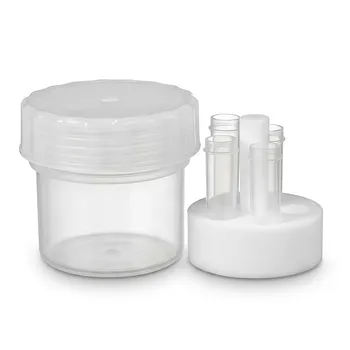
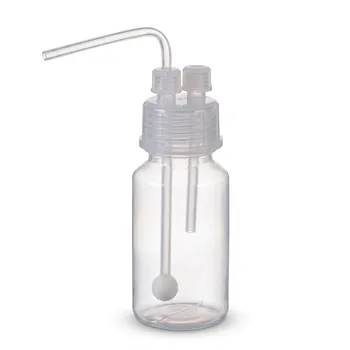
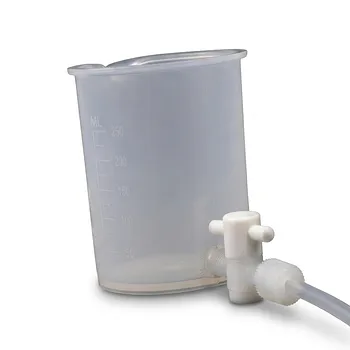
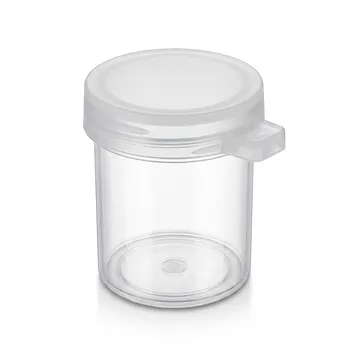
Beakers, bottles, liners, and other PFA labware benefit from surfaces that remain consistently non-wetting. Stable surface chemistry reduces the risk that performance will change simply because the item has been exposed to a particular liquid or operating temperature.
This contributes to repeatable laboratory handling rather than relying on an initially clean surface that degrades during use.
Understanding the Trade-offs
Mobility cannot be treated as universally harmful
Some molecular mobility is inherent to polymer processing and use. The objective is not to eliminate all motion, but to prevent enough motion at the surface to cause undesirable reorientation or exposure of polar groups.
A material must still retain the flexibility, toughness, and manufacturability needed for tubing, seals, fittings, and formed labware.
Low adhesion does not mean no interaction
PFA’s non-wetting behavior reduces adhesion; it does not guarantee that every liquid will behave identically or that contamination is impossible. Liquid composition, temperature, pressure, surface condition, and exposure time all influence performance.
Claims such as “zero adhesion” should therefore be understood as a design objective or practical characterization result, not an unconditional physical guarantee.
Chemical resistance alone is insufficient
A PFA component may be chemically resistant yet still show undesirable wetting, residue retention, or delivery variability if its surface reorganizes during service. Chemical compatibility and surface stability address different failure mechanisms.
For demanding applications, both should be evaluated.
Testing must reflect actual service conditions
Room-temperature contact-angle data may not predict behavior at elevated operating temperatures or after repeated chemical exposure. Testing should reproduce the relevant liquid media, temperature range, contact time, cleaning cycles, and flow conditions.
This is the best way to determine whether molecular mobility remains sufficiently restricted in the intended application.
How to Apply This to Your Project
The correct evaluation should connect molecular mobility, surface chemistry, and actual fluid-handling performance rather than considering them separately.
- If your primary focus is chemical compatibility: Select PFA components whose surface and bulk stability have been evaluated across the actual chemicals and temperatures used in service.
- If your primary focus is low residue and cleanability: Prioritize stable low-energy surfaces and verify wetting, contact angle hysteresis, and cleaning performance with representative liquids.
- If your primary focus is reliable fluid delivery: Assess internal-surface stability under realistic flow, temperature, and cycling conditions, not only under initial room-temperature tests.
- If your primary focus is laboratory reproducibility: Use PFA labware with documented resistance to surface reorientation and validate carryover and draining behavior for the specific procedures.
Restricting main-chain and side-chain mobility keeps PFA’s fluorinated surface stable, which is the foundation for predictable chemical resistance, low adhesion, clean fluid transfer, and dependable laboratory performance.
Summary Table:
| Aspect | Impact of Restricting Molecular Mobility |
|---|---|
| Main-chain mobility | Maintains structural stability, dimensional accuracy, and bulk properties under operating conditions. |
| Side-chain mobility | Keeps fluorinated groups oriented at the surface, preserving low surface energy and non-wetting behavior. |
| Operating temperature | Ensures that the desired restriction is effective at actual service temperatures, preventing surface reorientation. |
| Wetting & adhesion | Reduces liquid spreading and adhesion, leading to less residue retention and improved cleanliness. |
| Fluid delivery | Provides consistent flow, draining, and dispensing by preventing surface reorganization that could alter liquid interaction. |
| Evaluation methods | Contact angle hysteresis and XPS are used to verify that the surface remains stable and fluorinated. |
| Component benefits | Tubing, fittings, reaction vessels, and labware maintain their non-wetting and low-residue properties throughout use. |
Unlock the Full Potential of Your PFA Components with KINTEK
Ensure your fluid transfer systems and labware deliver the highest performance and reliability. At KINTEK, we specialize in precision-engineered PTFE and PFA products, backed by deep expertise in material science and custom machining. Whether you need high-purity tubing, custom reaction vessels, or complex machined parts, our solutions are designed to maintain molecular stability and surface integrity—even under demanding conditions.
Why choose KINTEK?
- Expertise: Deep understanding of polymer behavior and surface chemistry.
- Customization: End-to-end CNC machining for non-standard parts and bespoke setups.
- Quality: High-purity materials for trace analysis and critical processes.
- Support: Dedicated assistance from material selection to final validation.
Take the next step—Contact us today to discuss your requirements and discover how our PFA/PTFE solutions can enhance your operations. Get in touch now!
For distributors and OEMs, we offer competitive margins, OEM/ODM support, and reliable supply chains to meet your volume needs. Let's partner for success!
Related Products
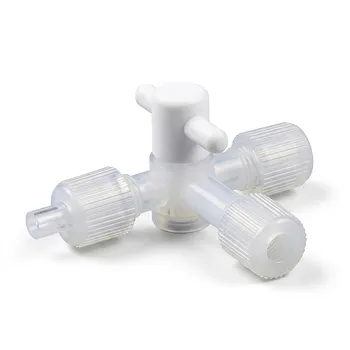
- Corrosion Resistant High Purity PFA Valve and Weldable Transparent Tubing for Semiconductor Fluid Transfer
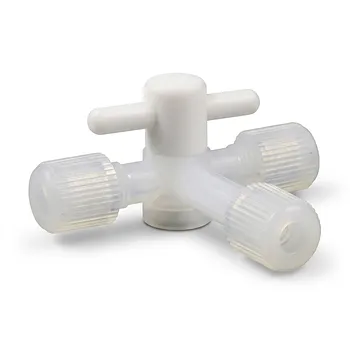
- High Purity PFA Valves and Weldable Corrosion Resistant Transparent Tubing for Semiconductor Sensor Manufacturing Fluid Transfer
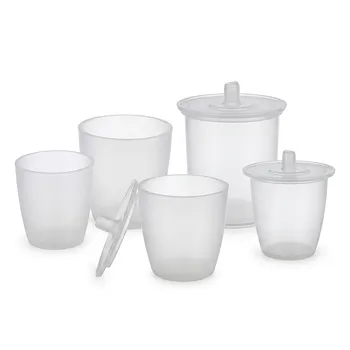
- High Purity PFA Crucible and Corrosion Resistant PTFE Beaker for Trace Analysis and Custom Laboratory Applications
- Custom PTFE Constant Pressure Separatory Funnel Corrosion Resistant Low Background Labware for PFA Flasks
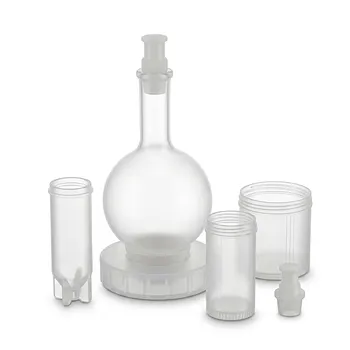
- Custom PFA Pear Shaped Flask High Purity Corrosion Resistant Labware Custom Molded Fluoropolymer Flask Glass Replacement Solution
People Also Ask
- Why are high-purity PFA fluid transfer components preferred for battery electrolytes? Ensure Purity & Data Accuracy
- How do high-precision PFA fluid transfer components, such as tubing and fittings, affect the results of continuous-flow synthesis?
- How do PFA fluid transfer components contribute to chemical research precision? Achieve high-purity results today.
- What role do PFA tubing and valves play in high-precision laboratory fluid transfer systems? Ensure Ultra-Pure Results
- Which material characteristics of fluoropolymers are most critical for high-purity fluid transfer and labware? Key factors: chemical inertness, low extractables, thermal stability.