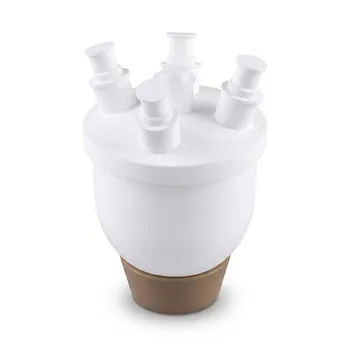
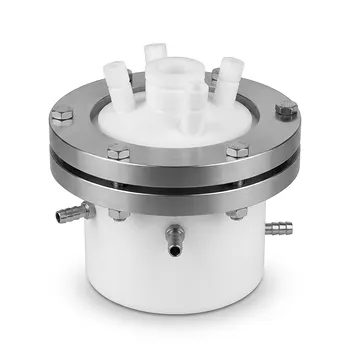
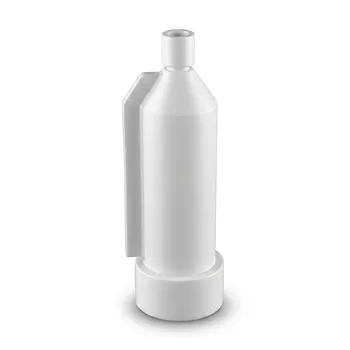
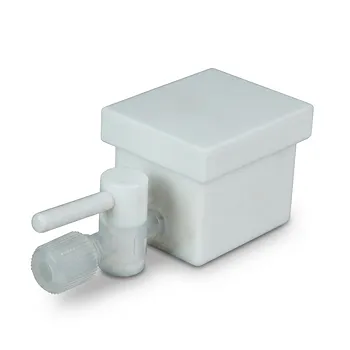
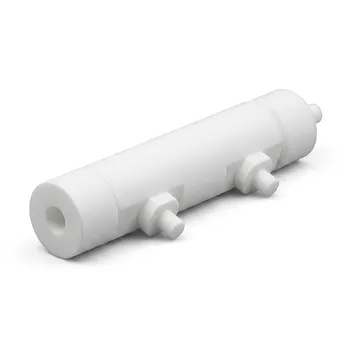
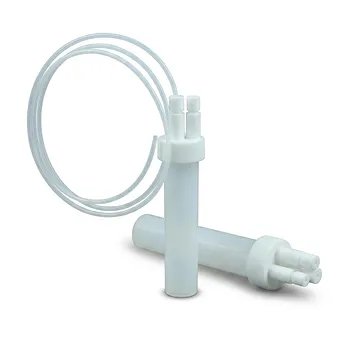
PTFE is considered ideal for ultra-corrosive chemical service because it combines exceptional chemical inertness with reliable sealing and high material purity. It resists virtually all strong acids, strong bases, organic solvents, and many corrosive gases without dissolving, degrading, or reacting with the process media. As a result, PTFE gaskets, seals, tubing, digestion vessels, and reaction components can contain aggressive chemicals while reducing leaks, contamination, and premature material failure.
The central advantage of PTFE is that it remains chemically stable where metals, rubber elastomers, and many other plastics may corrode, swell, dissolve, or leach impurities. Its effectiveness comes from the combination of broad chemical compatibility, low friction, insolubility, and high purity.
Why PTFE Performs in Severe Chemical Environments
Its molecular structure resists chemical attack
PTFE is a fluoropolymer with exceptionally strong carbon-fluorine bonds. This stable molecular structure makes the material difficult for acids, bases, solvents, and reactive gases to penetrate or chemically alter under normal operating conditions.
Unlike conventional polymers, PTFE generally does not dissolve or swell significantly when exposed to aggressive industrial chemicals. This helps components retain their intended dimensions and sealing function.
It protects against corrosion
Many metallic materials can corrode rapidly when exposed to strong acids, halogens, or other highly reactive compounds. Historical applications involving extremely corrosive substances, including uranium hexafluoride, demonstrate why fluoropolymer materials became important for chemical containment.
PTFE does not provide a universal solution for every chemical or temperature combination, but it offers unusually broad resistance across the chemical environments that damage conventional sealing materials.
It maintains containment performance
A seal must do more than survive chemical exposure. It must continue to contact mating surfaces and prevent process fluids or gases from escaping.
PTFE provides low friction, useful wear resistance, and adequate conformability for many gasket and seal designs. These properties support reliable mating with metal components and reduce the risk of leakage during operation.
Why PTFE Is Valuable in Reaction Apparatus
It reduces sample contamination
Pure PTFE is highly insoluble and can be manufactured to a high level of cleanliness. It therefore introduces fewer impurities into sensitive chemical processes than materials that corrode, dissolve, or release extractable compounds.
This is especially important in trace analysis, laboratory digestion, pharmaceutical processing, and other applications where contamination can compromise results or product quality.
It preserves equipment integrity
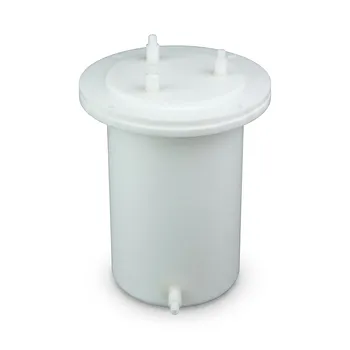
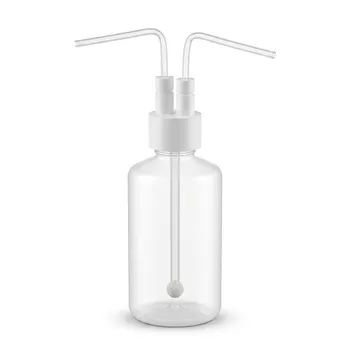
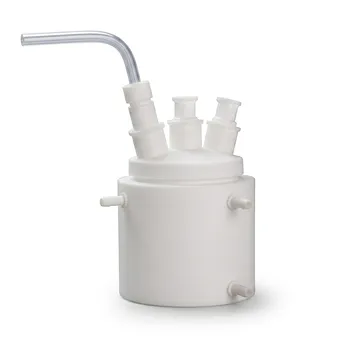
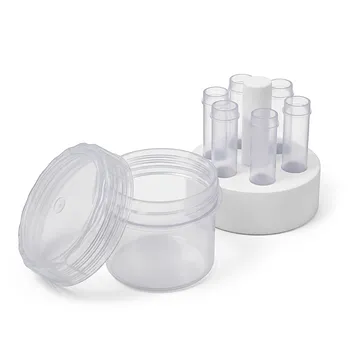
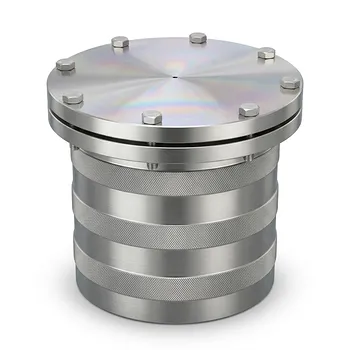
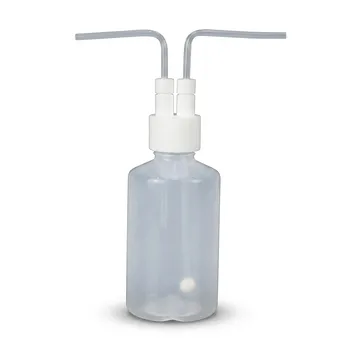
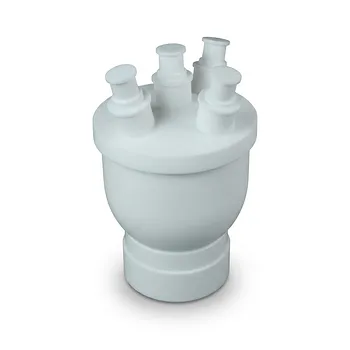
Reaction vessels, reagent bottles, digestion vessels, liners, and transfer components may encounter concentrated reagents or corrosive vapors. PTFE helps isolate the apparatus from these media and prevents the equipment itself from becoming a source of corrosion products.
That stability can extend service life and reduce maintenance caused by surface attack, pitting, or chemical degradation.
It supports demanding fluid handling
PTFE is used in custom gaskets, valve components, tubing, bellows, and fluid-transfer assemblies because it can contain corrosive liquids and gases without rapidly losing chemical compatibility.
Its low coefficient of friction also supports dry-running or low-lubrication designs where adding a lubricant could create contamination or compatibility problems.
The Properties That Make PTFE Effective as a Seal
Low friction
PTFE has a very low coefficient of friction. This reduces sliding resistance in dynamic seals and can limit wear during movement, cycling, or assembly.
Low friction is also useful where conventional lubricants are undesirable because of chemical incompatibility or purity requirements.
Temperature and corrosion durability
PTFE tolerates substantial temperature variation while maintaining its chemical resistance across a wide operating range. It is therefore useful when a process combines aggressive chemicals with heating, cooling, or thermal cycling.
The allowable temperature and pressure depend on the specific design, grade, geometry, and loading conditions. Chemical compatibility alone does not establish a safe operating limit.
High purity
For ultra-pure applications, virgin or specially processed PTFE can be selected to minimize contamination. This makes it suitable for sensitive chemical analysis and processes where trace metals or organic residues would be unacceptable.
Material grade, manufacturing controls, cleaning procedures, and handling practices remain important. A PTFE component is only as clean as its production and installation process.
Understanding the Trade-offs
PTFE can creep under sustained load
PTFE is relatively soft compared with metals and can undergo creep, also called cold flow, when subjected to continuous compression or pressure. Over time, this may reduce sealing force and create leakage if the design does not control deformation.
Engineers may compensate through proper gland dimensions, support rings, energizers, confined-gasket designs, or modified PTFE compounds.
Mechanical strength is not unlimited
Pure PTFE has lower stiffness and load-bearing capability than many engineering plastics and metals. High pressure, large gaps, repeated cycling, or abrasive service may require reinforced PTFE or a different seal architecture.
A chemically resistant material is not automatically the best choice for every mechanical duty.
Extreme chemistry still requires verification
PTFE is resistant to virtually all common industrial solvents, strong acids, strong bases, and corrosive gases, but “chemically inert” should not be interpreted as universal resistance. Certain conditions, including high-temperature reactions involving elemental fluorine or molten alkali metals, can attack PTFE.
Compatibility must be checked against the exact chemical, concentration, temperature, pressure, exposure time, and mechanical stress.
Permeation may matter
Although PTFE is highly resistant to bulk chemical attack, some gases and small molecules can permeate through it. For high-purity gas handling, vacuum service, or hazardous-gas containment, designers must evaluate permeability as well as corrosion resistance.
The seal geometry and any backup containment strategy may be as important as the selected material.
Making the Right Choice for Your Goal
PTFE is most effective when chemical compatibility is evaluated together with mechanical loading, temperature, purity, and seal geometry.
- If your primary focus is corrosion resistance: Select PTFE when exposure involves strong acids, strong bases, organic solvents, or aggressive gases, subject to verification of the exact operating conditions.
- If your primary focus is contamination control: Use high-purity or virgin PTFE components with controlled manufacturing and cleaning processes.
- If your primary focus is leak prevention: Design for PTFE's creep and deformation behavior using appropriate compression, confinement, clearances, and backup elements.
- If your primary focus is dynamic sealing: Take advantage of PTFE's low friction, while checking wear, pressure, speed, and the need for a filled PTFE grade.
- If your primary focus is extreme-temperature or high-pressure service: Treat PTFE's chemical resistance as only one design input and confirm its mechanical limits for the complete duty cycle.
For ultra-corrosive environments, PTFE is powerful because it preserves chemical stability and purity, but reliable performance comes from matching its material limits to the complete application.
Summary Table:
| Property | Benefit |
|---|---|
| Chemical inertness | Resists a wide range of acids, bases, and solvents |
| Low friction | Reduces wear in dynamic seals |
| High purity | Minimizes contamination in sensitive processes |
| Temperature resistance | Maintains performance across broad temperature range |
| Creep under load | Requires design considerations for sustained compression |
| Mechanical strength | Limited compared to metals, may need reinforcement |
| Permeation | Some gases may permeate, requires evaluation for gas containment |
When you need reliable PTFE components for ultra-corrosive applications, trust KINTEK's high-performance fluoropolymer products. Our PTFE and PFA labware, seals, tubing, and custom machined parts ensure purity and durability. Contact us today for solutions tailored to your needs — get in touch.
Related Products
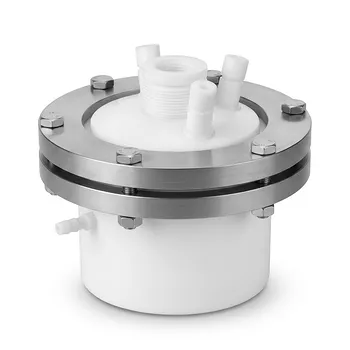
- Custom PTFE Reaction Apparatus Flange Sealed Corrosion Resistant Jacketed Vessel with Stirring Bar and Thermometer Ports
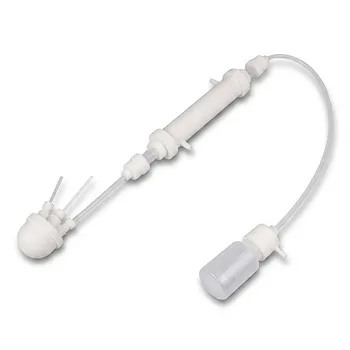
- Custom PTFE Condensation Reflux Apparatus with Serpentine Coil and Flask Collection System for Corrosive Chemical Processing
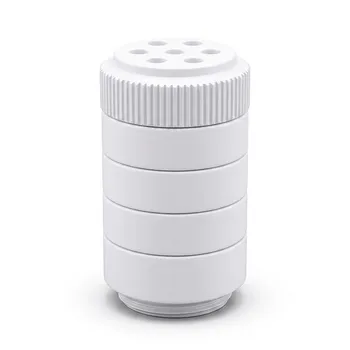
- Custom PTFE Multilayer Reaction Apparatus High Temperature Corrosion Resistant Threaded Modular Sieve System
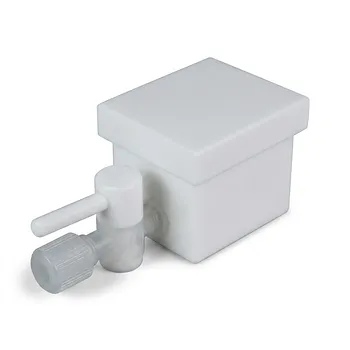
- Custom PTFE Laboratory Apparatus Corrosion Resistant Low Background Reaction Cells Precision CNC Fabrication
- High Performance Customizable PTFE Reaction Vessel and Corrosion Resistant Polytetrafluoroethylene Flask for Chemical Laboratory Use
People Also Ask
- How do perfluorinated solvent environments influence the selection of reaction vessels and fluid handling components in nonaqueous emulsion polymerizations? Choose fluoropolymer materials.
- Why are high-purity PTFE or PFA reaction vessels recommended for the synthesis of PANI-TiC hybrid materials? - Guide
- Why are fluoroplastic (PTFE) reaction vessels recommended for Methylene Blue (MB) adsorption kinetic experiments?
- Why is a PTFE reaction vessel required for Ti3C2Tx MXene synthesis? Ensure Safe HF Etching & High Purity
- Why is a high-quality PTFE reaction vessel required for the etching preparation of Ti3C2Tx MXene? Ensure Pure Synthesis.