pH control is critical because it protects both the microbiological quality and physical stability of an aqueous fluoropolymer dispersion. These formulations are generally maintained above pH 7, with as-supplied PTFE dispersions often near pH 10. If the pH falls during storage, organic ingredients such as nonionic surfactants become more vulnerable to microbial attack, while excessive acidity can cause fluoropolymer particles to aggregate or flocculate.
The practical objective is not simply “high pH,” but a stable alkaline operating range. Ammonium hydroxide provides rapid and effective neutralization, while amine additives can reduce long-term pH drift because they are less volatile and remain in the formulation longer.
Why pH Determines Dispersion Quality
Alkalinity Supports Biological Resistance
A basic formulation helps resist bacterial and microbial attack on organic components, particularly surfactants used to stabilize the fluoropolymer particles.
When the pH declines during storage, microorganisms can consume these organic ingredients. The resulting degradation may produce souring, dark brown discoloration, rancid odor, and eventual loss of product usability.
Acidity Promotes Particle Instability
pH also affects the electrochemical conditions that keep fluoropolymer particles separated in water. If the dispersion becomes too acidic, particles can aggregate or flocculate.
This changes viscosity and flow behavior and may create grit, gel particles, non-uniform coating thickness, or surface defects in finished components.
Storage Conditions Can Accelerate Drift
The pH of an aqueous PTFE dispersion may gradually decrease during prolonged storage. Warm and humid conditions can increase the risk of microbial degradation once the formulation loses sufficient alkalinity.
For that reason, pH should be treated as a storage and quality-control parameter, not merely as a value adjusted during initial manufacture.
How Alkaline Additives Behave Differently
Ammonium Hydroxide: Strong Initial Correction
Ammonium hydroxide is highly effective for establishing an alkaline pH. It is commonly useful when a formulation needs a rapid pH adjustment or when stored material must be restored to its target range.
Its main limitation is volatility. Ammonia has a small molecular size and can escape from the liquid or diffuse through some plastic packaging materials.
Volatility Creates Long-Term pH Drift
As ammonia is lost, the formulation can move gradually toward neutral pH. The initial pH may therefore look acceptable even though the product has insufficient long-term alkaline reserve.
This is the central trade-off with ammonium hydroxide: it is efficient for immediate pH control but less reliable as the sole mechanism for maintaining alkalinity over extended storage.
Amine Compounds: More Persistent Alkalinity
Amine compounds can be incorporated to maintain basicity after some ammonia has escaped. Their lower volatility allows them to remain in the dispersion longer and provide a more persistent pH reserve.
The appropriate amine system must still be selected and optimized for the specific fluoropolymer, surfactant package, packaging materials, purity requirements, and storage conditions. “Non-volatile” does not automatically mean universally compatible.
Combined Systems Can Balance Performance
A formulation may use ammonium hydroxide for efficient initial neutralization and an amine component to reduce subsequent pH drift. This combines rapid adjustment with improved storage persistence.
The balance matters. Too little persistent base leaves the dispersion vulnerable to drift, while an excessive or incompatible alkaline additive may affect formulation properties, downstream processing, or purity.
Maintaining the Correct Alkaline Range
Use pH Around the Established Product Target
As-supplied PTFE dispersions are often around pH 10, and restoring a drifting dispersion to approximately that value with diluted ammonium hydroxide is identified as a practical control measure.
The correct target should come from the product specification or validated formulation rather than from a universal rule. Different fluoropolymer grades and surfactant systems may require different limits.
Monitor Rather Than Correct by Guesswork
Periodic pH testing detects loss of volatile base before microbial degradation or particle instability becomes visible. Measurement should be part of incoming inspection, process control, and long-term storage monitoring.
A correction should be made gradually with a diluted alkaline solution and adequate mixing. Localized concentration spikes can destabilize particles even when the final measured pH appears acceptable.
Connect pH Testing to Visual and Odor Checks
pH data should be evaluated alongside appearance, odor, viscosity, and evidence of grit or gel formation. A sour odor, brown discoloration, or changed flow behavior may indicate that microbial or physical degradation has already begun.
Restoring pH cannot necessarily reverse material that has already been biologically spoiled or irreversibly flocculated.
pH Control Depends on Mixing Practice
Addition Sequence Affects Stability
The order in which water, surfactants, alkaline agents, and fluoropolymer solids are introduced affects particle wetting and shear sensitivity. An incorrect sequence can prevent surfactants from properly wetting the particles or create localized chemical incompatibility.
Alkaline additives should therefore be incorporated according to a validated manufacturing procedure, rather than added wherever convenient in the batch sequence.
Excessive Shear Can Damage the Dispersion
Aqueous fluoropolymer dispersions have limited shear stability. High-shear mixing can cause premature coagulation, grit, gel formation, or excessive foaming.
Axial-flow impellers and controlled mixing conditions are generally better suited than aggressive radial dispersers when the objective is to maintain particle integrity.
Air Entrapment Creates Processing Defects
High-speed mixing in an unbaffled tank can create a vortex that entrains air. Entrained air may later produce pinholes or other defects in coatings and treated surfaces.
Baffles, off-center mixer placement, controlled speed, or gentle container rolling can help re-incorporate settled solids while limiting air intake and shear damage.
Understanding the Trade-offs
A High Initial pH Does Not Guarantee Stability
Ammonium hydroxide can produce the desired pH immediately, but that value may decline as ammonia escapes. A single release-time measurement cannot establish how the dispersion will behave throughout storage.
Long-term stability requires monitoring pH retention, not merely confirming initial alkalinity.
Persistent Amines Require Compatibility Testing
Amine additives improve resistance to pH drift, but they become part of the formulation and may influence surfactant behavior, purity, viscosity, or downstream processing.
Their use should be validated against the complete formulation and packaging system, particularly where high purity or low extractables are required.
pH Cannot Compensate for Poor Processing
Correct alkalinity does not prevent failure caused by excessive shear, incorrect addition order, inadequate wetting, or air entrainment. These factors can independently cause agglomeration, foam, grit, or gel formation.
pH control is therefore one element of dispersion stability, alongside controlled mixing, ingredient sequence, packaging, and storage conditions.
Avoid Treating “More Basic” as Automatically Better
The formulation should be maintained within its validated alkaline window. Excessive alkalinity may create compatibility or processing problems even though it reduces the immediate risk of falling toward neutral conditions.
The technically sound goal is controlled, persistent alkalinity rather than the highest possible pH.
How to Apply This to Your Formulation
pH control should be designed as a stability program that accounts for both initial neutralization and long-term base retention.
- If your primary focus is immediate pH adjustment: Use ammonium hydroxide in a controlled, diluted addition to establish the specified alkaline target without creating local concentration spikes.
- If your primary focus is long-term storage: Evaluate a compatible amine component or blended alkaline system to compensate for ammonia loss and reduce pH drift.
- If your primary focus is microbiological resistance: Monitor pH periodically and investigate souring, discoloration, odor, or changes in the nonionic surfactant system before the dispersion is visibly spoiled.
- If your primary focus is coating or component quality: Control pH together with addition sequence, mixing shear, and air entrainment to prevent flocculation, grit, gel particles, and pinholes.
- If your primary focus is high purity: Validate alkaline additives, packaging, and storage conditions for their effects on extractables, contamination, and long-term formulation integrity.
A stable aqueous fluoropolymer dispersion depends on maintaining the right alkaline range with an additive system that remains effective throughout processing and storage.
Summary Table:
| Additive | Role | Advantages | Limitations |
|---|---|---|---|
| Ammonium Hydroxide | Rapid initial neutralization | Efficient, commonly used | Volatile, can cause long-term pH drift |
| Amine Compounds | Persistent alkaline reserve | Lower volatility, maintain pH longer | May affect formulation properties, needs compatibility testing |
| Combined Systems | Balanced pH control | Rapid adjustment + storage stability | Requires optimization |
Ensure your fluoropolymer dispersions stay stable and high-quality with our advanced PTFE/PFA labware and custom solutions. Our experts can help you optimize pH control and storage. Contact us today for tailored support and premium products designed for your specific needs.
Related Products
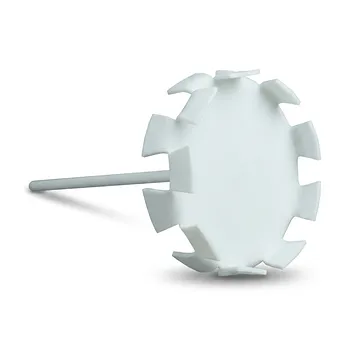
- High Purity PTFE Dispersion Disk for Food and Cosmetic Processing Non Stick Corrosion Resistant Large Stirring Paddle Customizable Fluoropolymer Impeller
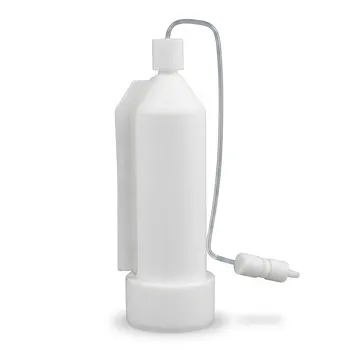
- Custom PTFE Dissolution Bottle 50ml with PFA Ultra Fine Tubing Corrosion Resistant No Leaching
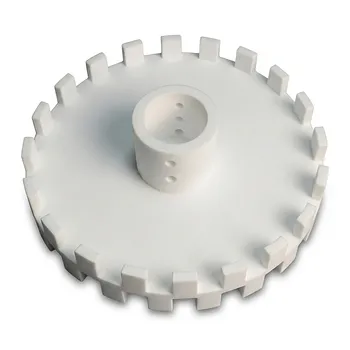
- Corrosion Resistant PTFE Stirring Disk Chemical Dispersion Plate 350mm Diameter Fluoropolymer Mixer Accessory
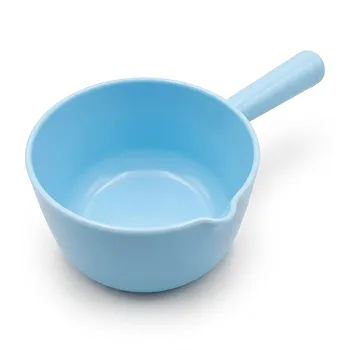
- High Purity PFA Sampling Scoop Custom Fluoropolymer Water Ladle Organic Solvent Resistant Dipper
- Translucent PFA Bottle Top Dispenser for Corrosion Resistant Chemical Squeeze Extraction
People Also Ask
- How many variations of PTFE disks are available and what parameters do they differ in? Choose the Right Material for Your Application
- What is the chemical formula and material of PTFE Disk? Unlock the Power of C₂F₄ Polymer
- What are the tolerance specifications for the thickness of PTFE disks? Why ±20% is the Industry Standard
- What is Dispersion PTFE used for? Creating Thin, High-Performance Coatings and Films
- Why are simple short-chain perfluoroalkyl carboxylic acids (such as C4 perfluorobutanoate) inadequate direct replacements for long-chain surfactants in high-solid PTFE dispersion manufacturing?