High-purity platinum wire is the industry standard for counter electrodes because it combines exceptional chemical inertness with superior catalytic activity. This specific combination ensures that the electrode facilitates a stable current loop without participating in redox reactions or dissolving into the electrolyte. Consequently, any measured electrochemical signals are guaranteed to originate solely from the working electrode being studied.
Core Takeaway: Platinum wire serves as a "silent partner" in electrochemical testing, providing the necessary current balance while remaining chemically stable in harsh environments. Its high conductivity and catalytic efficiency prevent the counter electrode from becoming a bottleneck that would otherwise distort the performance data of the material under test.
Ensuring Chemical and Electrochemical Inertness
Resistance to Corrosion in Harsh Electrolytes
High-purity platinum is a noble metal with exceptional corrosion resistance, even in aggressive environments like 1 M to 6 M KOH. This stability prevents the metal from degrading or leaching ions into the solution during long-term testing.
Wide Electrochemical Potential Window
Platinum remains electrochemically silent across a broad range of voltages, meaning it does not undergo self-oxidation or reduction. This inertness is critical for ensuring that the current measured by the workstation reflects the intrinsic properties of the active material, such as V3O7@PANI or NiCo2O4.
Prevention of Ion Interference
Because platinum does not dissolve, it eliminates the risk of metal impurity migration. In lesser materials, dissolved ions from the counter electrode could deposit onto the working electrode, leading to "poisoning" and inaccurate performance assessments.
Maximizing Reaction Kinetics and Current Flow
High Catalytic Activity for Gas Evolution
Platinum is a premier catalyst for hydrogen and oxygen evolution reactions (HER/OER). Its high catalytic activity allows these balancing reactions to occur at the counter electrode with minimal resistance.
Minimizing Overpotential and Polarization
The material possesses an extremely low overpotential, meaning it requires very little energy to trigger the necessary balancing reactions. This prevents "electrode polarization" at the counter electrode, which could otherwise introduce measurement errors during cyclic voltammetry or charge-discharge tests.
Providing an Unrestricted Current Path
By offering superior electrical conductivity, platinum wire ensures that the circuit remains unrestricted. This configuration allows the electrochemical workstation to maintain precise control over the redox processes occurring on the working electrode (e.g., 1T-MoSSe).
Understanding the Trade-offs and Limitations
The Cost of High-Purity Materials
Platinum is a precious metal, making high-purity wire or plates significantly more expensive than alternatives like graphite or stainless steel. While the initial investment is high, the longevity and data reliability often justify the expense in professional research.
Risk of Platinum Dissolution in Specific Acidic Media
While highly stable in alkaline environments, platinum can experience slight dissolution in specific acidic conditions, particularly in the presence of high chloride concentrations (like aqua regia). In these rare cases, trace platinum can deposit onto the working electrode, artificially enhancing its catalytic performance.
Surface Area Considerations
While platinum wire is excellent for general testing, its limited surface area can occasionally become a bottleneck for very high-current applications. In such scenarios, researchers often switch to a platinum plate or mesh to provide a larger reaction interface.
How to Apply This to Your Research
Making the Right Choice for Your Goal
- If your primary focus is high-precision alkaline battery or supercapacitor testing: Use high-purity platinum wire or plates to ensure the highest data integrity and resistance to strong KOH solutions.
- If your primary focus is evaluating hydrogen evolution catalysts: Use a platinum plate with a significantly larger surface area than your working electrode to ensure the counter electrode never limits the reaction rate.
- If your primary focus is cost-sensitive, high-throughput screening: Consider high-density graphite rods as a temporary alternative, though you must verify they do not degrade or introduce carbon dust into your electrolyte.
By selecting high-purity platinum, you eliminate the counter electrode as a variable, ensuring your research accurately reflects the true potential of your electrochemical materials.
Summary Table:
| Key Feature | Benefit to Electrochemical Testing |
|---|---|
| Chemical Inertness | Resists corrosion in harsh electrolytes (e.g., KOH) and prevents ion leaching. |
| High Catalytic Activity | Facilitates HER/OER with minimal resistance, ensuring the current is not bottled up. |
| Low Overpotential | Reduces electrode polarization, leading to more accurate CV and charge-discharge data. |
| High Conductivity | Provides an unrestricted current path for precise control by the workstation. |
| Broad Potential Window | Remains electrochemically silent, ensuring signals originate only from the working electrode. |
Elevate Your Research with Precision-Engineered Laboratory Solutions
Ensure the integrity of your electrochemical data with high-performance components from KINTEK. We provide a comprehensive range of laboratory supplies, from everyday basic labware (beakers, crucibles, reagent bottles, and digestion tubes) to specialized sample prep tools like separatory funnels, filters, and high-purity trace analysis instruments.
KINTEK specializes in high-performance fluoropolymer materials, manufacturing virtually all imaginable supplies from PTFE and PFA. Our expertise extends to:
- Advanced Electrochemical Gear: Standard and custom electrochemical cells, battery testing fixtures, and electrode accessories.
- Fluid Transfer & Control: Tubing, fittings, valves, and specialized cleaning/storage tanks.
- Custom Fabrication: End-to-end custom CNC fabrication for complex non-standard machined parts and bespoke laboratory setups.
Whether you require high-volume consumables like stirring bars and O-rings or sophisticated reaction apparatus like microwave digestion vessels and microchannel reactors, we deliver absolute quality tailored to your specific needs.
Maximize your lab's potential—contact us today to discuss your custom requirements!
References
- M. Manikandan, Subrata Karmakar. Engineering NiO/g-C₃N₄ and NiO/rGO composites for dual applications in electrochemical water splitting and energy storage. DOI: 10.1038/s41598-025-20713-3
This article is also based on technical information from Kintek Knowledge Base .
Related Products
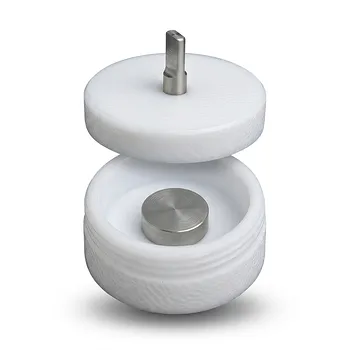
- Acid Resistant PTFE Button Cell Battery Test Fixture Customizable Machining High Purity Electrochemical Testing Clamp
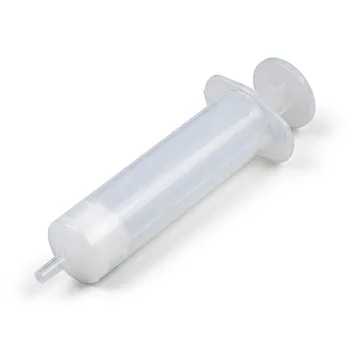
- High Purity PFA Syringe 10ml Corrosion Resistant Translucent Fluoropolymer Sampling Unit for Trace Analysis
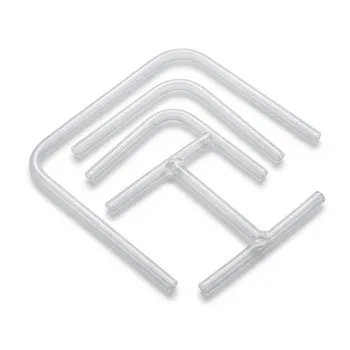
- High Purity PFA Coiled Tubing Custom PTFE Machining PFA Welding and Precision Bending Solutions
- High Purity TFM Microwave Digestion Vessels PTFE Acid Evaporation Liners Domestic GT-400 Equivalent Laboratory Reaction Containers
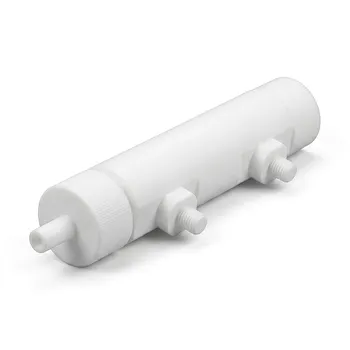
- High Purity Custom PTFE Reaction Cell Electrolytic Tank for Semiconductor and Polysilicon Industrial Applications
People Also Ask
- In what ways do PTFE battery testing fixtures enhance laboratory throughput and reliability? Maximize Research Efficiency
- How does the chemical inertness of PTFE benefit laboratory-scale battery testing? Ensure high-purity research results.
- Why are customized PTFE testing fixtures required for electrochemical testing and battery research? Boost Data Accuracy
- In what industrial manufacturing contexts are PTFE battery clamps or fixtures utilized? Optimize Battery Production.
- What is the thermal operating range for PTFE battery clamps in electrochemical research? Stability from -200°C to +260°C