Flushing with dilute nitric acid is a mandatory maintenance protocol designed to eliminate hematite buildup and chemical residue from reactor internals. This process prevents physical obstructions like pipe blockages while ensuring that subsequent experiments are not compromised by cross-contamination or pressure instability.
Regular nitric acid flushing maintains system hydraulics and chemical purity by dissolving mineral scaling and particulate matter. This procedure is essential for ensuring the reliability of experimental data and the long-term stability of automated flow systems.
The Impact of Particulate Accumulation
Removing Hematite Scaling
Hematite particles often adhere to the inner walls of tubing and reactor components during synthesis. Dilute nitric acid acts as a potent solvent to chemically dissolve these deposits before they harden into permanent scaling.
Preventing Hydraulic Instability
Particle buildup narrows the effective diameter of the flow path, causing significant pressure fluctuations. Systematic flushing ensures consistent flow rates, which are critical for maintaining the precise residence times required for flow chemistry.
Maintaining Equipment Longevity
Unchecked accumulation can lead to total pipe blockages, requiring expensive component replacement. By performing an online cleaning procedure, operators can extend the lifespan of the reactor hardware significantly.
Safeguarding Data Integrity and Automation
Eliminating Cross-Contamination
Residual materials from a previous experiment can act as unintended catalysts or reactants in the next batch. Nitric acid ensures a "blank slate," allowing researchers to attribute results solely to the current experimental parameters.
Supporting Self-Optimization Algorithms
Automated systems rely on high-quality, reproducible data to make real-time adjustments. By removing physical and chemical variables caused by fouling, flushing keeps the self-optimization logic accurate and prevents "drifting" in data sets.
Ensuring Batch Consistency
In a continuous flow environment, even minor residues can alter the chemical environment of the reactor. Nitric acid flushing provides a standardized baseline for every new batch, ensuring that the results are repeatable across different days and operators.
Understanding the Trade-offs and Risks
Material Compatibility Concerns
While effective, nitric acid is corrosive and may degrade certain seals, O-rings, or non-stainless components over time. It is vital to verify that all wetted parts of the reactor are chemically resistant to the specific concentration of acid being used.
Waste Management Requirements
Frequent flushing generates acidic waste streams that require proper neutralization before disposal. This adds an operational layer regarding the handling and cost of hazardous chemical waste.
Impact on Throughput
Introducing a cleaning step between experiments increases the total time per run. However, this "downtime" is typically viewed as a necessary investment to prevent the much longer delays associated with system failure or compromised data.
Optimizing Your Cleaning Protocol
The necessity of nitric acid flushing depends largely on your specific experimental goals and the nature of your reactants.
- If your primary focus is system longevity: Implement automated flushing cycles between every run to prevent hematite from bonding permanently to the reactor walls.
- If your primary focus is experimental precision: Use high-purity dilute nitric acid followed by a deionized water or solvent rinse to ensure no ionic traces interfere with sensitive reactions.
- If your primary focus is maximizing throughput: Monitor the system pressure closely and trigger a flush only when a specific pressure differential threshold is reached.
A disciplined approach to chemical cleaning transforms a continuous flow reactor from a temperamental tool into a reliable platform for discovery.
Summary Table:
| Cleaning Objective | Primary Benefit | Impact on System |
|---|---|---|
| Hematite Removal | Prevents pipe blockages | Extends hardware lifespan |
| Pressure Control | Maintains hydraulic stability | Ensures precise residence times |
| Decontamination | Eliminates cross-talk | Guarantees data reproducibility |
| System Baseline | Standardizes conditions | Supports self-optimization logic |
Secure Your Flow Chemistry with Acid-Resistant Precision
Maintaining a continuous flow reactor requires components that can withstand rigorous cleaning protocols. KINTEK specializes in high-performance fluoropolymer solutions designed for extreme chemical environments. From high-purity PTFE and PFA tubing, fittings, and valves to custom-machined reaction apparatus, hydrothermal synthesis liners, and microwave digestion vessels, our products are built to resist corrosion from dilute nitric acid and other harsh reagents.
Whether you need everyday labware like beakers and reagent bottles or bespoke CNC-fabricated components and electrochemical cells, KINTEK provides end-to-end solutions tailored to your specific research needs. Don’t let equipment degradation compromise your data.
Contact KINTEK today to discover how our high-performance lab supplies can enhance your reactor’s longevity and experimental accuracy!
References
- Cameron Jackson, Edward Lester. Self-optimising continuous-flow hydrothermal reactor for nanoparticle synthesis. DOI: 10.1039/d4re00339j
This article is also based on technical information from Kintek Knowledge Base .
Related Products
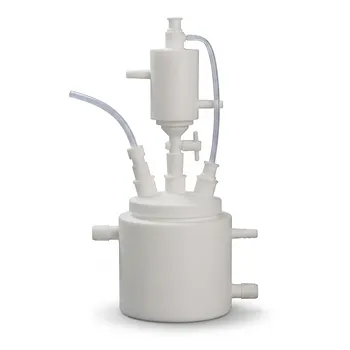
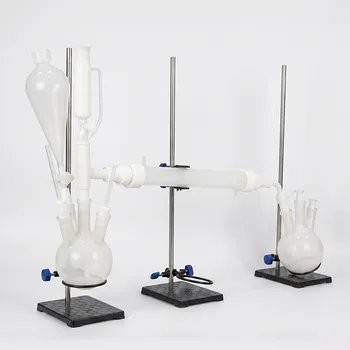
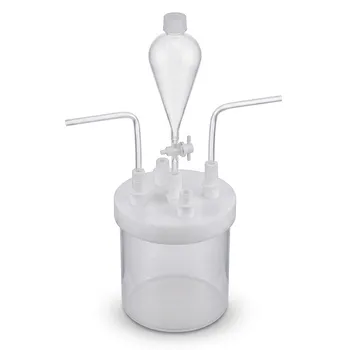
- PTFE Flat Bottom Flask Continuous Reaction System Hydrofluoric Acid Resistant with Dropping Funnel
- PTFE Continuous Reaction System Jacketed Constant Pressure Dropping Funnel Corrosion Resistant HF Resistant Customizable
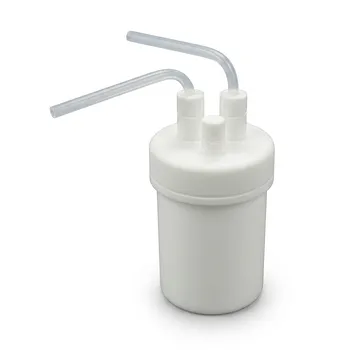
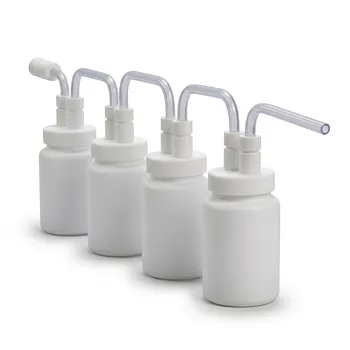
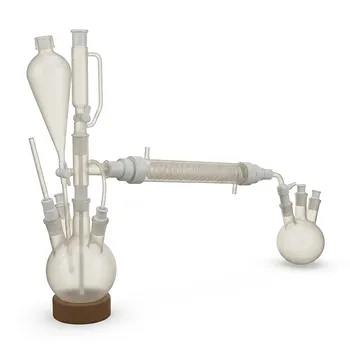
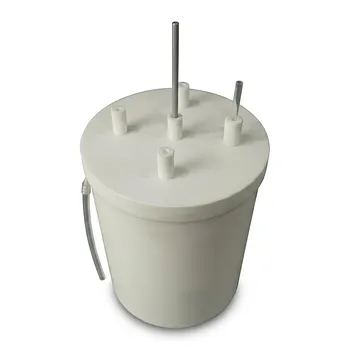
- Custom PTFE Continuous Reaction Bottles Virgin Fluoropolymer High Purity Low Background Synthesis Vessels
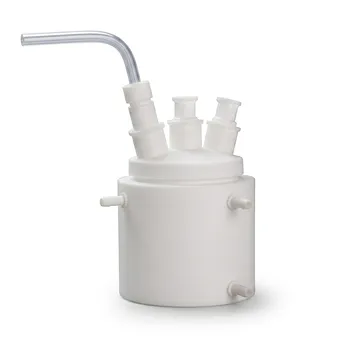
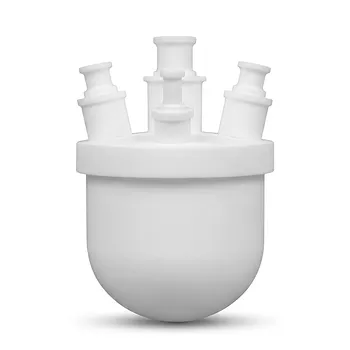
- High Temperature Teflon Continuous Reaction System and HF Resistant Three Neck Flask for Petrochemical Processing
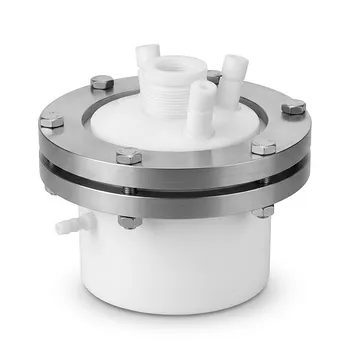
- High Pressure Custom TFM Reactor Stainless Steel Outer Vessel PTFE Inner Cup for Corrosive Synthesis
People Also Ask
- How do pyrolysis temperature and steam diluent ratios influence tetrafluoroethylene (TFE) conversion and yield in fluoropolymer monomer reaction apparatus? Optimize TFE yield with temperature and steam control
- What causes polymer wall adhesion in fluoropolymer polymerization reactors, and how can it be prevented? Discover effective solutions for clean, safe operations.
- When synthesizing fluorinated polymers using volatile and toxic monomers like octafluorocyclopentene (OFCP) or decafluorocyclohexene (DFCH), what material safety and thermal features are required for fluoropolymer laboratory reaction apparatus and fluid h
- How can autopolymerization of TFE gas be prevented during storage and handling? Master TFE safety with oxygen control, inhibitors, and robust system design.
- Why use sealed or fluoropolymer-lined reactors for FeOTSac deprotection? Optimize purity & rapid reaction kinetics.