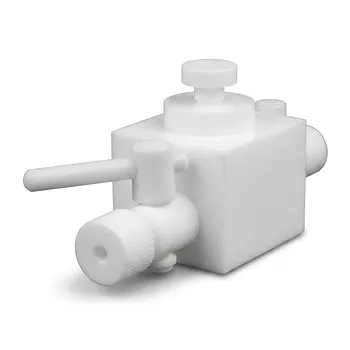
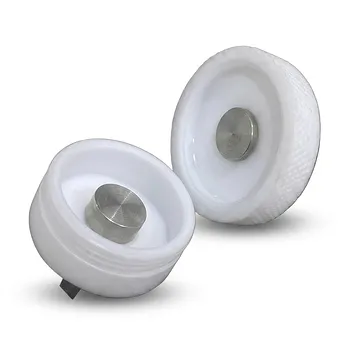
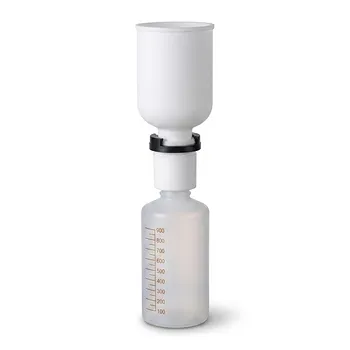
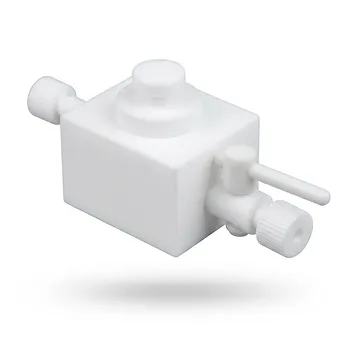
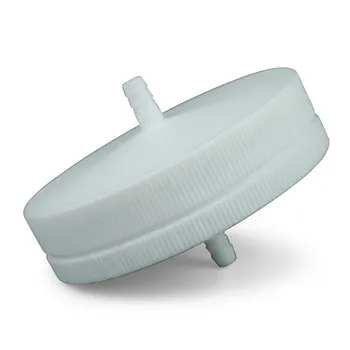
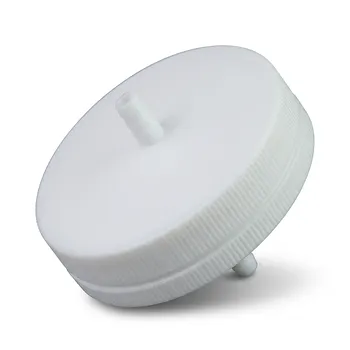
Evaluating the reusability of $SnO_2$ nanomaterials requires professional filtration and fixation fixtures primarily to prevent material loss and agglomeration during repeated use. Without these specialized tools, the inevitable loss of catalyst particles during cycling prevents the creation of accurate decay curves, making it impossible to determine the material's true industrial lifespan or economic value.
Core Takeaway: Professional filtration and fixation fixtures ensure maximum catalyst recovery, providing the high-fidelity data needed to assess the long-term operational stability and economic viability of $SnO_2$ nanomaterials in industrial applications.
The Physical Challenges of $SnO_2$ Nanomaterials
The Risk of Particle Agglomeration
$SnO_2$ nanomaterials are inherently prone to agglomeration during multiple adsorption-desorption cycles. When particles clump together, their effective surface area decreases, which can lead to misleading data regarding the material's intrinsic catalytic activity.
Preventing Material Loss during Cycling
During the washing and recovery phases of an experiment, fine nanomaterials are easily lost if standard filtration methods are used. Professional fixation fixtures or specialized microporous membranes are designed to trap these particles, ensuring they remain in the system for the next cycle.
Maintaining Surface Integrity
Professional fixtures provide a controlled environment that minimizes mechanical stress on the particles. This helps maintain the structural integrity of the $SnO_2$, ensuring that any observed performance decline is due to chemical degradation rather than physical mishandling.
Data Integrity and Economic Modeling
Generating Accurate Decay Curves
The primary goal of reusability testing is to generate a decay curve that shows how performance drops over time. If catalyst particles are lost due to poor filtration, the decay curve will appear much steeper than it actually is, leading to false conclusions.
Evaluating Industrial Wastewater Feasibility
In industrial wastewater treatment, economic feasibility depends on how many times a catalyst can be reused before it needs replacement. Professional fixtures allow researchers to simulate these industrial cycles with high precision, providing the "ground truth" for cost-benefit analyses.
Substantiating Operational Stability
Long-term operational stability is a prerequisite for any commercial $SnO_2$ application. By ensuring maximum recovery after each cycle, these fixtures allow for a definitive assessment of the material’s lifespan under realistic stress conditions.
Understanding the Trade-offs
Equipment Cost vs. Data Accuracy
The primary trade-off in using professional fixtures is the initial capital investment and the complexity of the experimental setup. While manual recovery is cheaper, it introduces significant "noise" into the data that can invalidate long-term stability claims.
Recovery Efficiency vs. Processing Time
High-precision microporous membranes provide excellent recovery but may increase filtration time due to lower flux rates. Researchers must balance the need for total particle retention with the practical constraints of laboratory throughput.
Common Pitfalls of Substandard Fixtures
Using non-specialized equipment often results in irreversible attachment of the $SnO_2$ to the filter medium. This not only results in material loss but can also contaminate the catalyst, leading to inaccurate adsorption-desorption results.
Applying These Principles to Your Research
Making the Right Choice for Your Goal
To ensure your evaluation of $SnO_2$ nanomaterials is both scientifically rigorous and practically relevant, consider the following recommendations:
- If your primary focus is industrial scaling: Invest in professional fixation fixtures to generate high-fidelity decay curves that prove long-term economic viability.
- If your primary focus is fundamental material characterization: Utilize microporous membranes to maximize recovery and ensure that performance changes are linked strictly to chemical surface states.
- If your primary focus is rapid screening of new materials: Use standardized filtration protocols to maintain consistency, but acknowledge that manual recovery may underestimate the material's true reusability.
Implementing professional recovery systems is the only way to transform laboratory observations into a definitive proof of $SnO_2$ durability for the real world.
Summary Table:
| Feature | Impact of Substandard Fixtures | Advantage of Professional Fixtures |
|---|---|---|
| Material Recovery | High loss of fine nanoparticles | Maximum retention & accurate decay curves |
| Particle State | Severe agglomeration & reduced surface area | Controlled environment prevents clumping |
| Data Integrity | False steep performance decay | Reliable data for industrial economic modeling |
| Surface Integrity | Mechanical stress and contamination | Protected chemical states for true stability |
| Cost Analysis | Invalidates long-term lifespan projections | Provides the 'ground truth' for ROI studies |
Optimize Your Nanomaterial Research with KINTEK
Ensure the integrity of your reusability studies with high-performance laboratory solutions. KINTEK specializes in manufacturing premium laboratory supplies crafted from high-purity PTFE and PFA, specifically designed to withstand rigorous chemical environments and prevent sample contamination.
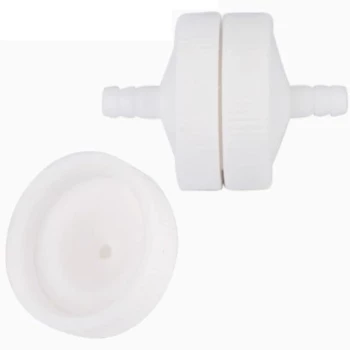
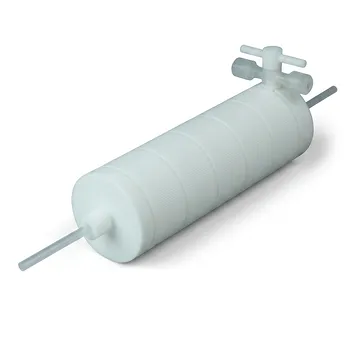
From essential labware (beakers, crucibles, reagent bottles) and sample prep tools (filtration units, separatory funnels, pipettes) to advanced custom CNC-fabricated reaction apparatus like hydrothermal liners and electrochemical cells, we provide the precision fixtures needed to prevent SnO2 loss and agglomeration.
Ready to elevate your data accuracy? Contact us today to discuss how our bespoke fluoropolymer components and high-volume consumables can support your industrial scaling goals.
References
- Alok Tiwari, Gourang Damle. Advancements in SnO2-based nanomaterials for efficient dye removal from wastewater. DOI: 10.1007/s43621-025-01524-y
This article is also based on technical information from Kintek Knowledge Base .
Related Products
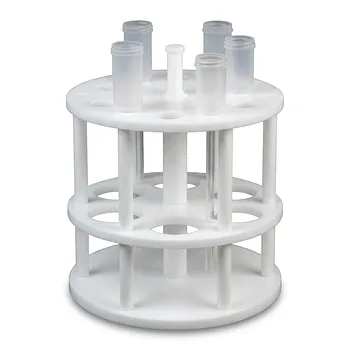
- Custom PFA Microcolumn Racks and PTFE Machined Low Background Corrosion Resistant Laboratory Fixtures
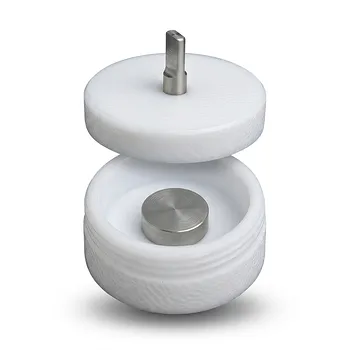
- Acid Resistant PTFE Button Cell Battery Test Fixture Customizable Machining High Purity Electrochemical Testing Clamp
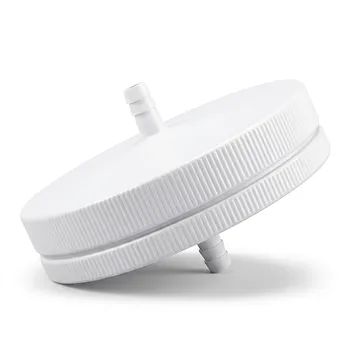
- PTFE Filter Membrane Holder for Hydrogen Chloride and Water Filtration 90mm Environmental Sampling Clamp Customizable
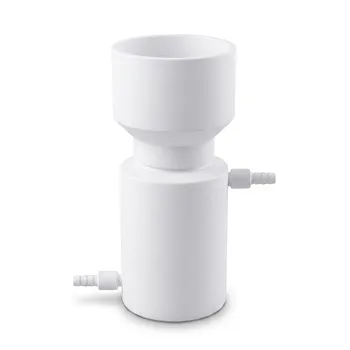
- High Purity PTFE Buchner Funnel Vacuum Filtration System Corrosion Resistant Low Trace Laboratory Suction Filter Apparatus
- Custom PTFE Filtration System Acid Resistant High Purity Semiconductor Grade Chemical Processing Filter
People Also Ask
- What other PTFE lab accessories are commonly used? Essential Tools for Chemical Resistance & Purity
- How does high fluorination in perfluorinated polymers improve chemical resistance and thermal stability of lab apparatus? Discover the science behind PTFE and PFA's superior performance.
- What inherent material characteristics of non-melt-processable PTFE make it suitable for manufacturing high-purity laboratory containers and custom-machined apparatus?
- What material considerations are critical for laboratory apparatus when performing cage-opening reactions on fluorinated silsesquioxanes using strong superacids? Choose PTFE/PFA for inertness and purity
- What surface chemical species and binding energy signatures are detected on PTFE fluoropolymer sample holders during XPS analysis? Key insights for accurate calcium detection.