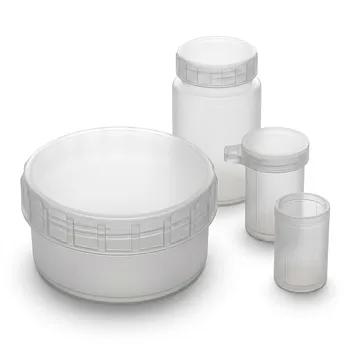
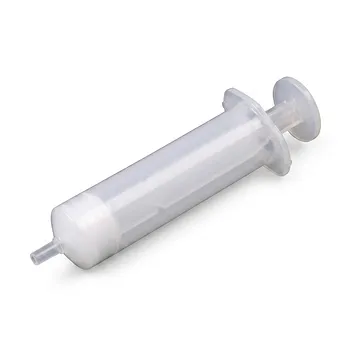
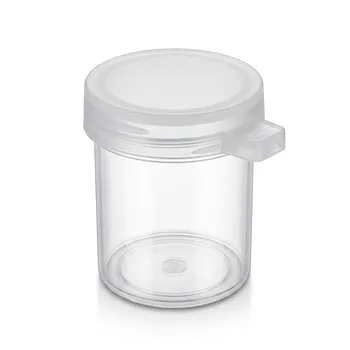
Perfluorinated polymers are preferred because they combine exceptional chemical inertness, thermal stability, and low contamination risk. PTFE and PFA have backbones surrounded by fluorine atoms and contain no hydrogen-bearing groups, making them more resistant to concentrated acids, bases, oxidizers, and organic solvents than partially fluorinated polymers. Their low extractables, minimal ion leaching, and resistance to degradation help preserve trace-level analytical accuracy and containment reliability.
PTFE and PFA protect both the sample and the equipment: their highly fluorinated structures resist chemical attack and contribute very low background contamination, even during aggressive digestion and high-purity fluid handling. They are not universally superior in every mechanical or processing category, but they are generally the safest choice when chemical purity and resistance dominate.
Why Full Fluorination Matters
The fluorinated molecular shield
PTFE consists of a carbon backbone surrounded by fluorine atoms, while PFA has a similarly fluorinated structure with perfluoroalkoxy ether linkages. The dense fluorine environment shields the backbone and makes chemical access to the polymer difficult.
The strong carbon–fluorine bond is a major contributor to this stability. As a result, PTFE and PFA generally resist attack from concentrated acids, bases, and many organic solvents that can swell, dissolve, or degrade less fully fluorinated materials.
The difference from partially fluorinated polymers
Materials such as PVDF, ETFE, and ECTFE retain hydrogen or, in some cases, chlorine within their structures. These atoms create chemically more accessible and often more polar sites than the fully fluorinated structures of PTFE and PFA.
That difference can reduce resistance to particular solvents, reagents, or elevated-temperature conditions. Partially fluorinated polymers may offer higher strength, stiffness, or easier fabrication, but those advantages do not necessarily translate into the lowest contamination risk or widest chemical compatibility.
Why This Matters in Trace Analysis
Lower ion and extractables background
Trace analysis can be compromised by extremely small quantities of contamination. PTFE and PFA typically have very low levels of extractables and do not depend on plasticizers, antioxidants, or other common additive packages to achieve basic service performance.
Properly selected and prepared labware therefore contributes less background from additives, residual processing species, or polymer degradation products. This helps prevent false positives and improves detection confidence.
Reduced sample adsorption
PTFE and PFA have low surface energy and are relatively non-wetting toward many chemicals. Their surfaces generally reduce adsorption compared with more polar materials, although adsorption is never literally zero for every analyte or surface condition.
This is important when handling dilute solutions, trace metals, or samples whose concentration can be altered by interaction with container walls.
Resistance during aggressive digestion
Acid digestion, especially at elevated temperature, exposes vessels to simultaneous chemical and thermal stress. PTFE and PFA are resistant to many of these conditions and are therefore widely used for digestion vessels, sample containers, reaction components, and transfer lines.
Their stability reduces the likelihood that the vessel will release contaminants, swell, crack, or chemically alter the sample during processing.
Why They Work for Aggressive Chemical Containment
Broad chemical compatibility
Perfluorinated materials offer unusually broad resistance across both inorganic and organic chemical environments. This makes them suitable for containing strong acids, strong bases, corrosive reagents, and many high-purity process fluids.
The benefit is not simply that the polymer survives. It also helps prevent the contained chemical from being contaminated by corrosion products, dissolved additives, or polymer fragments.
Thermal and chemical stability together
Many containment failures occur because chemical resistance is evaluated without considering temperature. Reaction rates, solvent penetration, and polymer degradation can increase substantially under heat.
PTFE and PFA retain useful chemical resistance over a broad temperature range, making them valuable for heated digestion and demanding fluid-handling operations. The exact allowable temperature still depends on grade, pressure, mechanical load, and exposure duration.
Low permeability and solvent uptake
The fluorinated structure generally gives PTFE and PFA low solvent absorption and strong resistance to swelling. This supports dimensional stability and reduces the chance that chemicals will migrate into, or be retained by, the material.
Permeation is not eliminated, particularly with volatile or aggressive substances, so containment design must still consider wall thickness, temperature, pressure, and exposure time.
PTFE and PFA Are Not Identical
PTFE for maximum chemical resistance
PTFE is often selected when the highest level of chemical inertness is the primary requirement. It is widely used for liners, seals, vessels, tubing, and components exposed to severe reagents.
However, PTFE can exhibit creep and cold flow under sustained mechanical load. It can also be more difficult to process into complex shapes because it is generally processed by sintering rather than conventional melt forming.
PFA for purity and fabricated geometry
PFA provides chemical resistance comparable to PTFE while offering melt-processability. This makes it useful for transparent vessels, complex molded components, tubing, and systems requiring welded or highly controlled fabricated geometry.
PFA is often favored when visual inspection, clean fabrication, or complex fluid paths matter alongside high chemical purity.
Understanding the Trade-offs
“Inert” does not mean universally indestructible
Neither PTFE nor PFA should be described as immune to every chemical or condition. Certain highly reactive fluorinating agents, molten alkali metals, and specialized high-temperature environments can attack fluoropolymers.
Compatibility must therefore be checked against the actual reagent, concentration, temperature, pressure, and exposure duration.
Mechanical performance may favor partially fluorinated polymers
Partially fluorinated polymers can provide greater stiffness, strength, wear resistance, or dimensional stability in some designs. They may be the better engineering choice when the application is less chemically aggressive and mechanical load is the dominant constraint.
Choosing PTFE or PFA solely because they are “more chemically resistant” can lead to unnecessary cost or a mechanically suboptimal design.
Contamination depends on manufacturing and handling
The polymer family is only one part of the purity equation. Machining fluids, mold-release residues, pigments, fillers, cleaning chemicals, packaging, and poor handling can introduce contamination even when the base polymer is highly pure.
For trace work, specify suitable grades, cleaning protocols, blank testing, and—where relevant—post-polymerization or elemental-fluorination treatments intended to reduce reactive end groups and leachable residues.
Temperature and load limits still apply
PTFE and PFA can withstand severe chemical conditions, but their mechanical strength and dimensional stability decline as temperature and sustained load increase. Pressure-rated systems require engineering evaluation rather than a simple material-selection label.
A chemically compatible polymer can still fail through creep, deformation, permeation, or an unsuitable seal design.
Making the Right Choice for Your Goal
Material selection should be based on the complete chemical, thermal, mechanical, and contamination profile of the application.
- If your primary focus is trace-element accuracy: Choose high-purity PTFE or PFA, validate cleaning procedures, and perform blank or extractables testing to control background contamination.
- If your primary focus is aggressive acid digestion: Use PTFE or PFA vessels rated for the reagent, temperature, pressure, and digestion method rather than relying on chemical resistance alone.
- If your primary focus is complex fabricated fluid components: Favor PFA when melt-processability, transparency, welding, or intricate geometry is important.
- If your primary focus is maximum chemical inertness under low mechanical load: PTFE is often the appropriate baseline, provided creep and dimensional stability are managed.
- If your primary focus is mechanical strength or stiffness: Evaluate partially fluorinated polymers as alternatives, but verify solvent compatibility, temperature limits, extractables, and ion leaching under actual conditions.
The right choice is the material that preserves both chemical containment and analytical integrity under the real operating conditions.
Summary Table:
| Property | PTFE | PFA | Partially Fluorinated (e.g., PVDF, ETFE) |
|---|---|---|---|
| Chemical Inertness | Excellent | Excellent | Good to moderate |
| Thermal Stability | Excellent | Excellent | Good |
| Contamination Risk | Very Low | Very Low | Moderate |
| Melt Processability | Poor (sintering) | Good | Good |
| Mechanical Strength | Lower (creep) | Moderate | Higher |
| Typical Applications | Liners, seals, vessels | Transparent vessels, complex components | Structural parts, less aggressive environments |
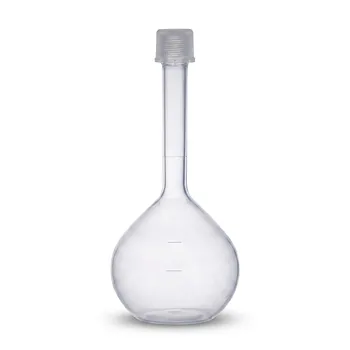
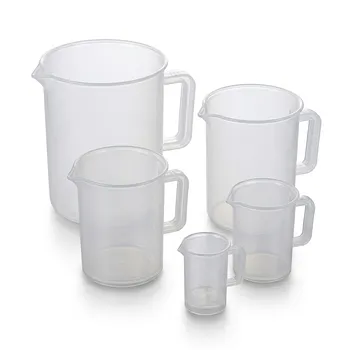
Ready to ensure the highest purity and chemical resistance in your lab? At KINTEK, we specialize in high-performance fluoropolymers, offering a complete range of PTFE and PFA labware—from beakers and digestion vessels to custom CNC machined components. Whether you're performing trace analysis or handling aggressive chemicals, our products minimize contamination and maximize durability. Contact us today to discuss your specific requirements and discover how our tailored solutions can enhance your lab's performance.
Related Products
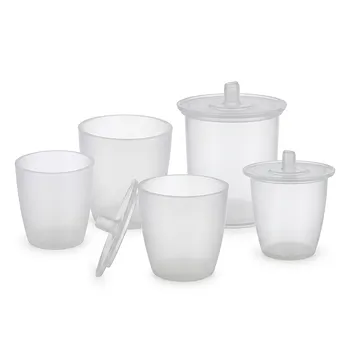
- High Purity PFA Crucible and Corrosion Resistant PTFE Beaker for Trace Analysis and Custom Laboratory Applications
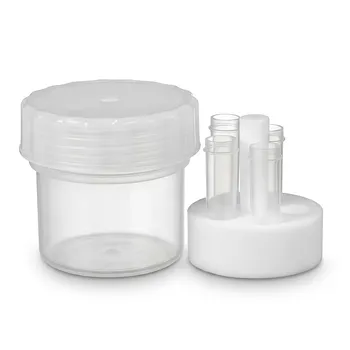
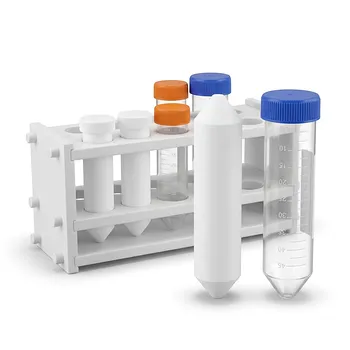
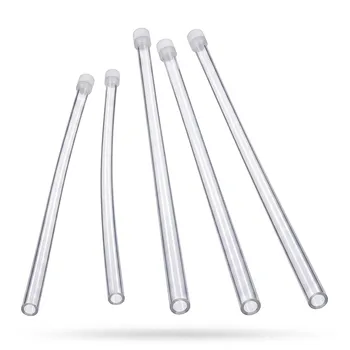
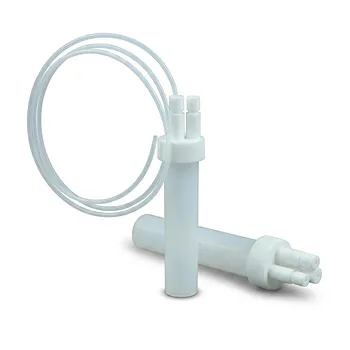
- Corrosion Resistant PTFE Support with PFA Transparent Reaction Tank and High Purity PFA Sampling Tube for Trace Analysis
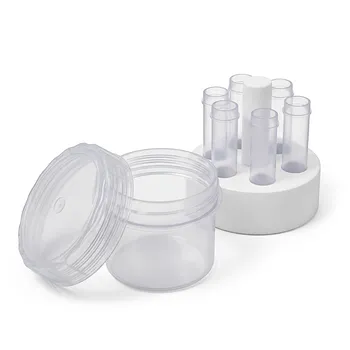
- High Purity Corrosion Resistant PFA Reaction Vessel with PTFE Holder and Integrated Sampling Tube for Trace Analysis
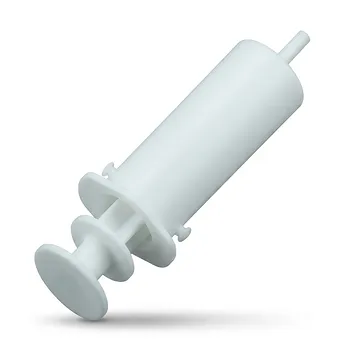
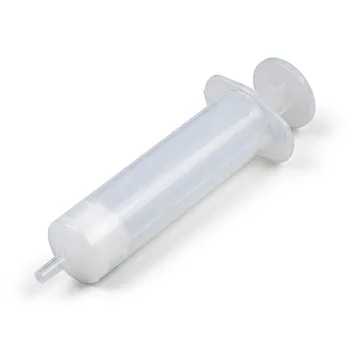
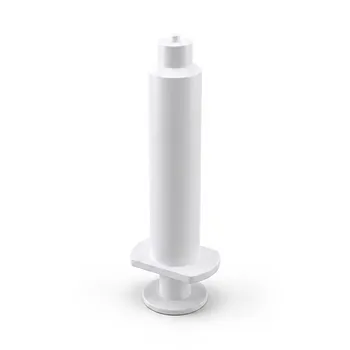
- High Purity Laboratory Grade PTFE Syringe Chemical Resistant Fluoropolymer Injector for Trace Analysis
- High Purity PFA Syringe 10ml Corrosion Resistant Translucent Fluoropolymer Sampling Unit for Trace Analysis
People Also Ask
- Why are high-purity vessels critical for BiFeO3 synthesis? Ensuring Phase Purity
- Why is the use of high-purity PFA or PTFE labware critical during TiO2 nanoparticle purification? Protect Sample Purity
- Why is high-purity PFA trace analysis labware used for MXene? Ensure Superior Material Integrity in Research
- Why is high-purity PFA labware necessary for Znx@LS-2 zeolite ICP-OES analysis? Ensure Trace-Level Precision
- Why is high-purity PFA trace analysis labware recommended for trace element detection? Achieve Gold Standard PPT Accuracy