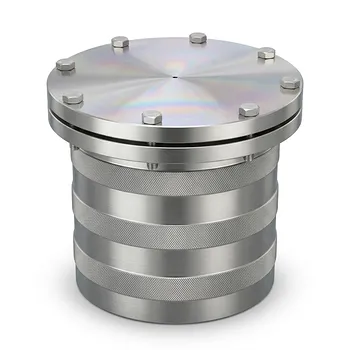
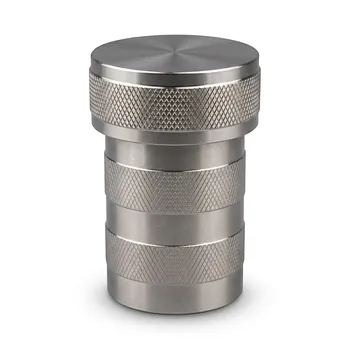
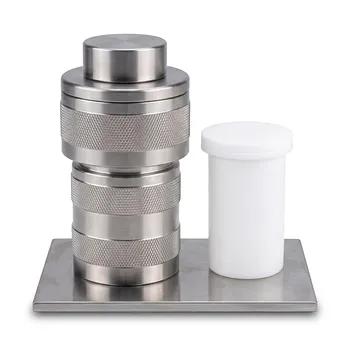
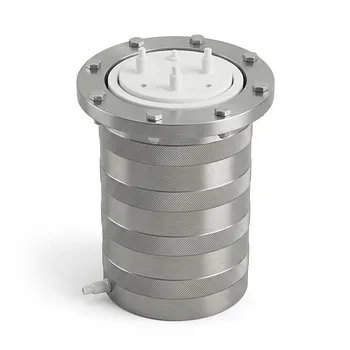
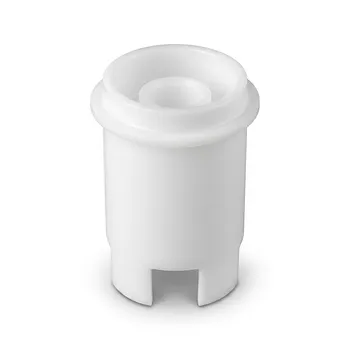
High-pressure stainless steel autoclaves are essential because they create an "autogenous pressure" environment that allows solvents to remain liquid at temperatures far exceeding their normal boiling points. This elevated thermal energy increases the solubility of metal precursors and organic ligands, driving the reaction kinetics necessary to produce high-crystallinity Metal-Organic Frameworks (MOFs). Without this pressurized containment, many MOFs would fail to crystallize or would result in low-quality, amorphous materials.
Core Takeaway: Solvothermal autoclaves enable the precise control of pressure and temperature required to cross the thermodynamic energy barriers of MOF crystallization. This environment ensures precursors dissolve completely and assemble into the highly ordered, porous structures that define these advanced materials.
Overcoming Thermodynamic Barriers
Elevating Boiling Points via Autogenous Pressure
In a sealed autoclave, the vapor pressure generated by heating the solvent—known as autogenous pressure—prevents the liquid from boiling away. This allows researchers to conduct synthesis at temperatures (e.g., 120°C to 180°C) that are significantly higher than the atmospheric boiling points of common solvents like methanol or DMF.
Enhancing Solubility and Reaction Kinetics
High-temperature environments facilitate the dissolution of difficult-to-solve metal salts and organic linkers. By increasing the energy within the system, the autoclave accelerates the chemical interactions between these components, leading to faster and more efficient framework formation.
The Synergy of Reactor Components
Stainless Steel for Structural Integrity
The outer shell of the autoclave is typically constructed from high-grade stainless steel to provide the mechanical strength required to contain internal pressure. This structural integrity is vital for safety, as solvothermal reactions can generate significant force that would rupture standard laboratory glassware.
PTFE Liners for Chemical Purity
Most autoclaves utilize a Polytetrafluoroethylene (PTFE) liner to protect the stainless steel from corrosive reagents and prevent metal leaching. This liner ensures a chemically inert environment, preventing iron or other impurities from the steel walls from contaminating the reaction and disrupting the specific metal-ligand coordination.
Maintaining Subcritical Fluid States
The combination of the steel body and the internal liner maintains the solvent in a subcritical state. This specific physical state is ideal for the slow, orderly growth of single crystals, which is often a primary goal in MOF research for X-ray diffraction analysis.
Understanding the Trade-offs and Limitations
Temperature Limitations of PTFE
While PTFE is chemically inert, it has a physical temperature limit, typically around 250°C. Exceeding this limit can cause the liner to deform or release toxic fumes, meaning extremely high-temperature synthesis requires alternative materials like PEEK or gold-lined reactors.
The "Black Box" Nature of Synthesis
Solvothermal synthesis occurs within a sealed opaque vessel, meaning researchers cannot monitor the reaction in real-time. This requires a "trial and error" approach to timing and temperature, although in-situ X-ray techniques are beginning to bridge this gap.
Cooling Rate Sensitivities
The high thermal mass of stainless steel autoclaves means they cool down slowly. While this slow cooling can often benefit crystal growth by allowing ordered deposition, it can also lead to unwanted secondary phases if the cooling rate is not strictly controlled.
How to Apply This to Your Project
Making the Right Choice for Your Goal
- If your primary focus is obtaining large single crystals: Use a slow-cooling program in a heavy-walled stainless steel autoclave to allow the precursors maximum time to assemble into ordered lattices.
- If your primary focus is high-purity catalytic materials: Prioritize the use of high-quality, unscratched PTFE liners to ensure no metal ions from the reactor wall contaminate the framework's active sites.
- If your primary focus is rapid screening of new MOFs: Utilize smaller-volume "microwave-assisted" solvothermal reactors, which can mimic autoclave pressure but achieve target temperatures in seconds rather than hours.
By mastering the high-pressure environment of the autoclave, you can precisely tune the crystallinity, porosity, and structural integrity of Metal-Organic Frameworks for any application.
Summary Table:
| Component | Material | Function | Primary Benefit |
|---|---|---|---|
| Outer Shell | High-Grade Stainless Steel | Contains internal autogenous pressure | Ensures safety and structural integrity |
| Internal Liner | PTFE (Teflon) | Provides a chemically inert barrier | Prevents metal leaching and contamination |
| Environment | Sealed Pressure Vessel | Raises solvent boiling points | Enhances precursor solubility and kinetics |
| Process | Slow Cooling | Controlled thermal mass | Facilitates orderly growth of single crystals |
Elevate Your MOF Synthesis with KINTEK Precision
Achieving high-crystallinity Metal-Organic Frameworks requires reliable equipment that withstands extreme pressure and chemical stress. At KINTEK, we specialize in high-performance fluoropolymer solutions and precision laboratory supplies tailored for advanced research.
Whether you need standard PTFE liners for your hydrothermal synthesis or custom-machined PFA components for high-purity trace analysis, our expertise ensures your research is never compromised. We offer everything from everyday labware (beakers, tubes, and filtration tools) and fluid transfer components (tubing, valves, and fittings) to advanced derivative apparatus like custom electrochemical cells and microwave digestion vessels.
Why choose KINTEK?
- Expert Fluoropolymer Focus: Absolute specialization in high-performance PTFE and PFA materials.
- Bespoke Fabrication: End-to-end custom CNC machining for non-standard parts and unique laboratory setups.
- Comprehensive Range: From basic consumables like stirring bars and O-rings to complex reaction vessels.
Ready to optimize your lab's performance? Contact KINTEK today to discuss your custom fabrication needs or to source high-quality supplies designed for the most demanding solvothermal applications.
References
- Uzba Dehloon, Ateeq-ur Rehman. Metal-organic-frameworks (MOFs) advanced synthetic strategies and applications, including light emitting diodes, solar cells and photodetectors. DOI: 10.1515/revic-2024-0105
This article is also based on technical information from Kintek Knowledge Base .
Related Products
- Custom TFM Reaction Vessel with Stainless Steel Jacket and PTFE Inner Cup for High Corrosion Resistance
- High Temperature Corrosion Resistant Hydrothermal Synthesis Reactor with TFM Inner Liner and Straight Cylinder Design
- PTFE Lined High Pressure Digestion Vessel 50ml High Temperature Hydrothermal Synthesis Tank
- High Pressure Custom TFM Reactor Stainless Steel Outer Vessel PTFE Inner Cup for Corrosive Synthesis
- High Pressure PTFE Digestion Vessel Inner Cup Holder Custom Corrosion Resistant Low Background Teflon
People Also Ask
- Why are high-performance pressure-resistant reaction vessels required for oxygen-assisted hydrothermal conversion at 150 °C?
- How do magnetic stirring and reaction vessels impact MOF-derived carbon quality? Optimize Your Composite Performance
- Why are high-quality fluoropolymer-lined reaction vessels required for alk-Ti3C2Tx MXene? Ensure Purity & HF Resistance
- Why are PTFE-lined reaction vessels necessary for forced degradation studies? Ensure high-purity results and accuracy.
- Why is a high-purity PTFE lined reaction vessel required for the acidic etching of MXenes? Ensure Material Purity.