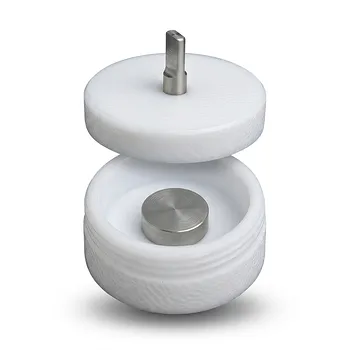
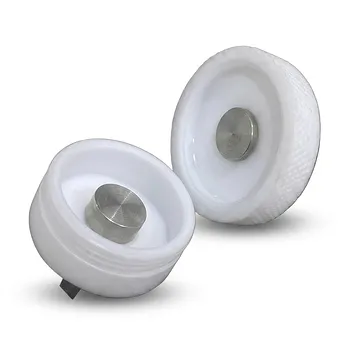
High-precision battery testing fixtures are the bridge between raw material potential and verifiable data. They provide a controlled, standardized environment that ensures electrochemical signals reflect the actual performance of the active materials rather than errors introduced by unstable physical connections, corrosive interference, or atmospheric contamination.
Core Takeaway: To achieve scientific repeatability, researchers must eliminate mechanical and chemical variables; high-precision fixtures do this by providing constant contact pressure, chemical inertness, and airtight sealing to isolate the material's true electrochemical signature.
Eliminating Contact Resistance and Signal Noise
The Role of Constant Contact Pressure
Specialized fixtures apply uniform and constant mechanical pressure to the electrode and separator. This minimizes fluctuations in contact resistance that typically occur with manual setups or low-quality housings.
Minimizing Voltage Drops and Thermal Effects
By maintaining stable physical contact, these fixtures significantly reduce voltage drops and localized heating. This ensures that the energy storage characteristics recorded—such as rate performance and cycle life—are accurate and not distorted by resistive heat.
Isolating Interference Signals
High-precision designs utilize optimized electrical connection structures to isolate interference signals. This allows the testing equipment to capture clean data even during severe electrochemical potential fluctuations.
Material Integrity and Chemical Resistance
Utilizing Engineering Polymers like PTFE and PFA
Fixtures are often precision-machined from PTFE (Polytetrafluoroethylene) or PFA. These materials offer superior electrical insulation and a high dielectric constant across wide temperature ranges.
Preventing Side Reactions and Corrosion
Corrosive electrolytes can react with standard containers, creating "noise" in the data. High-performance fluoropolymers provide a chemically inert environment, ensuring that every electron measured is the result of the intended reaction between the electrode and electrolyte.
Atmospheric Isolation and Sealing
Advanced fixtures incorporate high-performance sealing components to prevent electrolyte leakage and the entry of air. This isolation is critical for long-term testing, where even trace amounts of moisture or oxygen could cause the battery to fail prematurely.
Structural Precision and Repeatability
Standardizing Electrode Spacing
The design precision of a testing cell ensures constant electrode spacing and uniform electrolyte distribution. This standardization allows researchers to compare data across different batches and laboratories with high confidence.
Managing Physical Expansion in Next-Gen Batteries
Materials like Lithium-Sulfur experience significant volume expansion during cycling. High-precision fixtures provide the mechanical support necessary to prevent the separator and electrodes from deforming, which would otherwise lead to premature cell failure.
Accurate Characterization of Interfaces
Precision devices support the monitoring of ion transport resistance at the electrode interface. By keeping physical variables constant, researchers can accurately track how graphene-modified electrolytes or new coatings affect material utilization.
Understanding the Trade-offs
The Cost of Precision
High-precision fixtures require specialized materials and tight machining tolerances, making them significantly more expensive than standard coin cell cases. For high-volume, low-stakes screening, the investment may initially seem prohibitive compared to disposable options.
Complexity and Maintenance
These fixtures often feature intricate sealing structures and multiple components that require careful assembly and cleaning. Improper maintenance of a high-precision fixture can lead to residual contamination, which ironically introduces the very data inconsistencies they are designed to prevent.
Specialized Form Factors
A fixture designed for extreme precision often has a fixed geometry, which may limit the size or type of electrode materials that can be tested. This lack of "universal" fit means labs may need a wider inventory of specific fixtures for different research goals.
Making the Right Choice for Your Goal
To ensure your research yields actionable insights, your choice of testing hardware should align with your specific experimental requirements.
- If your primary focus is material discovery and screening: Standardized high-precision coin cell cases offer a balance of repeatability and cost-effectiveness for high-throughput testing.
- If your primary focus is long-term cycle life or Li-S research: Invest in customized PTFE/PFA fixtures with robust mechanical support to manage material expansion and prevent leakage over hundreds of cycles.
- If your primary focus is fundamental electrochemical kinetics: Use precision-machined cells with fixed electrode spacing to ensure that measurements of ion transport and resistance are not skewed by geometry changes.
By removing the "noise" of inconsistent assembly and chemical interference, high-precision fixtures transform battery testing from a variable-prone craft into a rigorous, repeatable science.
Summary Table:
| Feature | Benefit | Technical Impact |
|---|---|---|
| Constant Pressure | Eliminates contact resistance | Reduces voltage drops and localized thermal effects |
| Chemical Inertness | Prevents side reactions | PTFE/PFA materials isolate true electrochemical signatures |
| Airtight Sealing | Atmospheric isolation | Prevents electrolyte leakage and moisture/oxygen contamination |
| Structural Precision | Standardized geometry | Ensures constant electrode spacing for repeatable results |
Elevate Your Electrochemical Research with KINTEK Precision
At KINTEK, we bridge the gap between material potential and verifiable data. We specialize in high-performance fluoropolymer solutions, manufacturing a comprehensive range of laboratory supplies from PTFE and PFA.
Whether you need everyday essentials like beakers, crucibles, and reagent bottles, or advanced research tools such as high-precision battery testing fixtures, electrochemical cells, and microwave digestion vessels, our end-to-end custom CNC fabrication ensures absolute precision. From high-purity trace analysis instruments to bespoke, non-standard machined parts, we provide the chemical inertness and structural integrity your research demands.
Ready to eliminate variables and achieve superior repeatability? Contact us today to discuss your custom project or high-volume needs with our fluoropolymer experts.
References
- Melena Groß, Hans‐Jürgen Meyer. Hydrothermal Synthesis and Characterization of the Melamine‐Based Second‐Harmonic Generation Material HgCl<sub>2</sub>(C<sub>3</sub>N<sub>6</sub>H<sub>6</sub>). DOI: 10.1002/ejic.202500256
This article is also based on technical information from Kintek Knowledge Base .
Related Products
- Acid Resistant PTFE Button Cell Battery Test Fixture Customizable Machining High Purity Electrochemical Testing Clamp
- Corrosion Resistant PTFE Coin Cell Battery Testing Clamps and Acid Proof Custom Fluoropolymer Battery Fixtures
People Also Ask
- In what ways do PTFE battery testing fixtures enhance laboratory throughput and reliability? Maximize Research Efficiency
- How does the chemical inertness of PTFE benefit laboratory-scale battery testing? Ensure high-purity research results.
- In what industrial manufacturing contexts are PTFE battery clamps or fixtures utilized? Optimize Battery Production.
- What is the thermal operating range for PTFE battery clamps in electrochemical research? Stability from -200°C to +260°C
- What are the primary functions and material compositions of PTFE battery clamps? Ensure Precision & Chemical Resistance