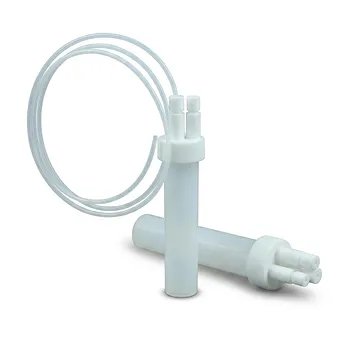
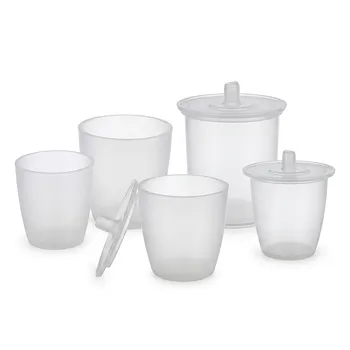
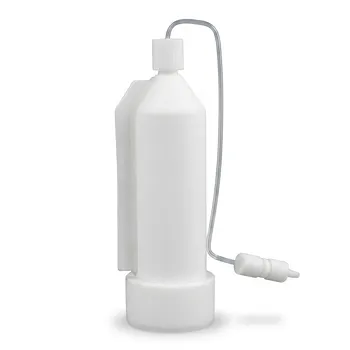
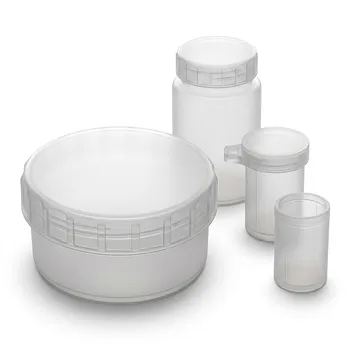
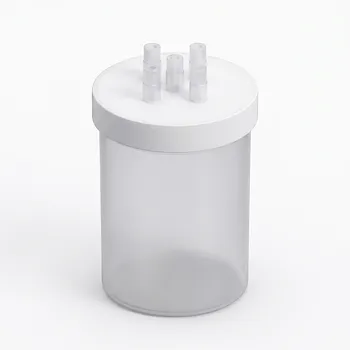
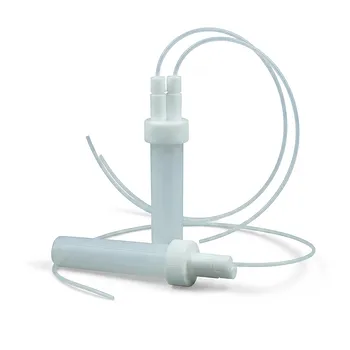
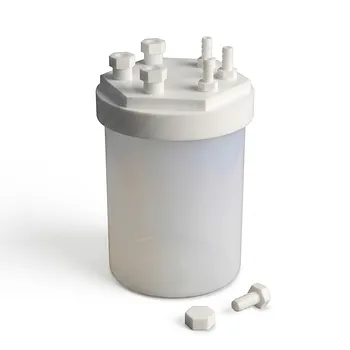
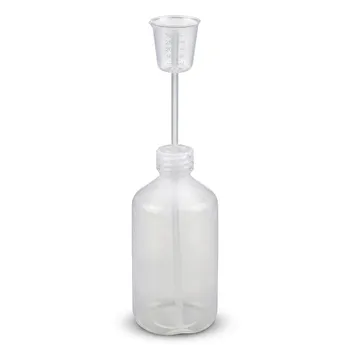
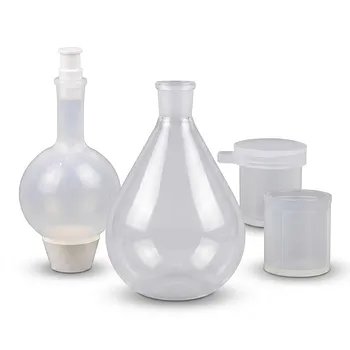
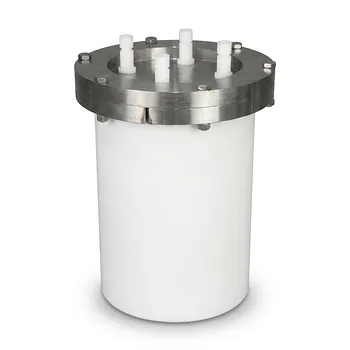
The requirement for fluoropolymer containers is driven by the aggressive reactivity of fluoride anions toward silica. Using high-performance plastics like PTFE (Polytetrafluoroethylene) or PFA (Perfluoroalkoxy) is mandatory because fluoride-containing species chemically attack and "etch" traditional glass vessels. This reaction introduces unwanted silica and metal impurities into the methanesulfonate solution, which can compromise the integrity of sensitive chemical syntheses or analytical results.
Core Takeaway: To prevent chemical erosion and impurity leaching, fluoride-containing solutions must be handled in PTFE or PFA containers. These materials provide the necessary chemical inertness to ensure the purity and precise concentration of the reagents.
The Mechanism of Chemical Attack on Glass
The Vulnerability of Silica Structures
Conventional laboratory glass is primarily composed of silicon dioxide (SiO₂). When fluoride anions are present—even in complex forms like tetrafluoroborate—they react with the silicon atoms to form silicon tetrafluoride or fluorosilicate ions.
The Process of Etching and Corrosion
This chemical reaction effectively dissolves the surface of the glass, a process known as etching. This not only weakens the structural integrity of the container over time but also continuously releases components of the glass into the solution.
Introduction of Impurities
As the glass erodes, it leaches silica and trace metal ions (such as sodium, calcium, or aluminum) into the methanesulfonate solution. In high-precision applications, such as growing optical crystals or preparing electrolytes, these impurities can disrupt molecular coordination and degrade performance.
Maintaining Purity and Surface Integrity
Exceptional Chemical Inertness
PTFE and PFA are fluoropolymers characterized by extremely strong carbon-fluorine bonds. This molecular structure makes them nearly immune to chemical attack from almost all reagents, including the highly corrosive fluoride anions found in methanesulfonate solutions.
Prevention of Trace Metal Leaching
Unlike glass, which acts as a source of inorganic contaminants, high-purity fluoropolymers have extremely low rates of trace metal leaching. This is critical for quasi-solid-state electrolytes or catalysts where even picomolar levels of contamination can alter experimental outcomes.
Low Surface Energy and Adsorption
Fluoropolymers possess low surface energy, which prevents reactants from adhering to the container walls. This ensures that the concentration of the methanesulfonate solution remains precise and minimizes the loss of expensive or sensitive precursors during storage and transfer.
Understanding the Trade-offs
Thermal and Mechanical Limitations
While PTFE and PFA offer superior chemical resistance, they have lower mechanical rigidity compared to glass. They can deform under high pressure or extreme heat, requiring careful consideration when used in pressurized reactor systems.
Cost and Transparency
Fluoropolymer containers are significantly more expensive than standard borosilicate glass. Additionally, PFA is only translucent and PTFE is opaque, which can make it difficult to visually monitor reactions or check for undissolved particulates compared to clear glass.
Potential for Gas Permeability
Certain fluoropolymers can be slightly permeable to gases over long storage periods. While this is rarely an issue for liquid solutions, it is a factor to consider if the methanesulfonate solution is extremely sensitive to atmospheric moisture or oxygen.
How to Apply This to Your Project
When selecting a container for methanesulfonate solutions containing fluoride, your choice should be dictated by the sensitivity of your final application.
- If your primary focus is high-purity synthesis or crystal growth: Use PFA vessels to ensure the lowest possible metal leaching and to allow for some visual monitoring of the solution.
- If your primary focus is routine storage of aggressive fluoride reagents: PTFE is the most cost-effective and chemically robust choice for long-term stability.
- If your primary focus is analytical precision at the picomolar level: Stick exclusively to high-purity PFA to minimize surface adsorption and ensure the integrity of your sample concentration.
Choosing the correct fluoropolymer container is the only way to ensure that your methanesulfonate solutions remain free from the transformative contamination caused by glass erosion.
Summary Table:
| Feature | Laboratory Glass (Silica-based) | PTFE / PFA Fluoropolymers |
|---|---|---|
| Fluoride Resistance | Poor (Chemical etching/corrosion) | Excellent (Chemically inert) |
| Purity Levels | Leaches silica and metal ions | Ultra-low trace metal leaching |
| Surface Energy | High (Risk of sample adsorption) | Low (Prevents reactant adhesion) |
| Durability | Rigid but prone to shattering | Flexible and impact-resistant |
| Application | General chemical storage | High-purity & aggressive reagents |
Protect Your Research with KINTEK’s High-Performance Fluoropolymers
Don't let glass etching compromise your high-precision synthesis or analytical results. KINTEK specializes in providing the laboratory industry’s most comprehensive range of PTFE and PFA solutions, specifically engineered for aggressive chemical environments.
Whether you need everyday basic labware (beakers, measuring cylinders, crucibles, reagent bottles), high-purity trace analysis instruments, or comprehensive fluid transfer components (tubing, valves, fittings), we ensure your reagents remain uncontaminated. Our expertise extends to advanced derivative apparatus like custom electrochemical cells, microwave digestion vessels, and microchannel reactors.
With our end-to-end custom CNC fabrication, KINTEK can deliver everything from high-volume standard orders to complex, non-standard machined parts tailored to your specific experimental setup.
Ensure absolute chemical inertness today—Contact KINTEK to request a quote or custom design consultation!
References
- Eric A. Gabilondo, P. Shiv Halasyamani. Synthesis and large crystal growth of a family of mixed-anionic methanesulfonate salts by anionic site-substitution: Na<sub>5</sub>(SO<sub>3</sub>CH<sub>3</sub>)<sub>4</sub>(X) (X = BF<sub>4</sub><sup>−</sup>, ClO<sub>4</sub><sup>−</sup>, PF<sub>6</sub><sup>−</sup>, I<sup>−</sup>). DOI: 10.1039/d5dt00223k
This article is also based on technical information from Kintek Knowledge Base .
Related Products
- Custom PFA Reaction Bottles High Purity PTFE Reaction Vessels Corrosion Resistant Petrochemical Containers
- High Purity PFA Crucible and Corrosion Resistant PTFE Beaker for Trace Analysis and Custom Laboratory Applications
- Custom PTFE Dissolution Bottle 50ml with PFA Ultra Fine Tubing Corrosion Resistant No Leaching
- PFA Reaction Jar Corrosion Resistant Wide Mouth PTFE Lab Bottle High Purity Chemical Vessel
- Corrosion Resistant PFA Reaction Tank High Purity Laboratory Reaction Bottle Wide Mouth PTFE Jar Multiple Specifications
People Also Ask
- Why are well-sealed reaction vessels necessary for superacid-promoted Friedel-Crafts polycondensation? Optimize Synthesis
- Role of reaction vessels in alkali treatment for oil palm waste: Achieve High-Purity Cellulose with PTFE Vessels
- How do the material choice and sealing integrity of the reaction vessel affect the growth of NiFe-LDH? Optimize Synthesis
- Why are corrosion-resistant vessels needed for alkaline cellulose extraction? Ensure Purity and Process Safety
- How do specialized reaction vessels facilitate floating transfer for graphene? Achieve Uniform 4-SBD Functionalization