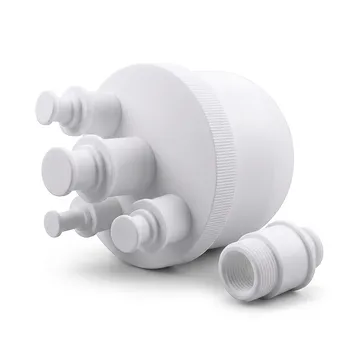
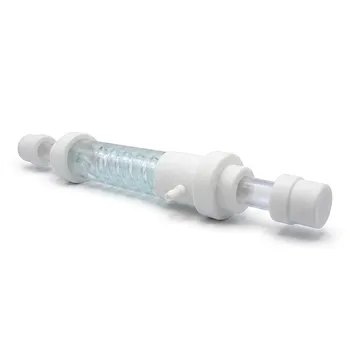
The selection of high-performance fluoropolymers is a strategic necessity in carbon dioxide (CO2) reactor design. These materials, specifically Polytetrafluoroethylene (PTFE) and Perfluoroalkoxy (PFA), are preferred because they provide absolute chemical inertness in the "dual-threat" environment of strongly alkaline electrolytes and corrosive liquid products. By preventing material degradation and trace-metal leaching, they ensure both the structural integrity of the reactor and the extreme purity required for accurate electrochemical measurements.
Core Takeaway: PTFE and PFA are used in CO2 capture and conversion systems to withstand the simultaneous presence of harsh bases and corrosive acids. Their exceptionally low leaching rates are critical for preventing catalyst poisoning and ensuring that experimental data is not skewed by impurities.
Navigating Harsh Chemical Environments
Resistance to Dual-Phase Corrosion
During CO2 electrolysis, the cathode environment becomes highly alkaline, while the resulting liquid products, such as formic acid or acetic acid, are inherently corrosive. PTFE and PFA are among the few materials capable of remaining stable when exposed to these alternating or concurrent strong acid and base environments.
Longevity in Salt-Rich Electrolytes
Carbon dioxide reduction often involves high-concentration salt solutions, such as potassium hydroxide (KOH) or sodium bicarbonate. These electrolytes can rapidly degrade traditional materials, but high-performance fluoropolymers maintain their structural integrity over long-term operation.
Ensuring Leak-Free Stability
Because these materials do not degrade when exposed to harsh chemicals, they are ideal for sealing gaskets, fluid lines, and reactor bodies. This chemical resilience prevents the development of micro-leaks that could compromise the safety and pressure balance of the reactor system.
Protecting Catalyst Integrity and Data Accuracy
Preventing Trace Metal Contamination
Electrocatalytic systems are extremely sensitive to trace metal impurities, which can "poison" the active sites of catalysts like copper. PTFE and PFA have extremely low leaching rates, ensuring that no metal ions from the reactor walls migrate into the electrolyte.
Eliminating "False Activity" in Results
Impurity leaching from inferior containers can cause pseudo-activity, where the impurities themselves appear to catalyze the reaction. Utilizing high-purity fluoropolymers ensures that the recorded performance and reproducibility of the experiment are strictly due to the catalyst being tested.
Minimizing Adsorption via Low Surface Energy
These fluoropolymers possess exceptionally low surface energy, which prevents the adsorption of metal ions onto the reactor surfaces. This characteristic is vital for maintaining the precise concentration of reagents and preventing cross-contamination between different experimental runs.
Understanding the Trade-offs
Mechanical Deformation and Cold Flow
While PTFE is chemically superior, it is susceptible to "cold flow," meaning it can slowly deform under constant mechanical pressure. This requires careful engineering when using PTFE for high-pressure seals to ensure the reactor remains gas-tight over time.
Thermal Management Limitations
Fluoropolymers have significantly lower thermal conductivity than metal alternatives. In large-scale reactors where heat dissipation or precise temperature control is required, engineers must compensate for the insulating properties of PTFE and PFA.
Manufacturing and Cost Constraints
High-purity PFA is generally more expensive than PTFE and requires specialized processing for complex shapes. However, the cost is usually justified by the long-term corrosion resistance and the prevention of experimental failure due to hardware degradation.
Making the Right Choice for Your Goal
- If your primary focus is analytical precision: Use high-purity PTFE or PFA for all surfaces in contact with the electrolyte to eliminate catalyst poisoning and false activity.
- If your primary focus is long-term stability: Choose fluoropolymer fluid lines and seals to prevent degradation from the concurrent presence of strong bases and organic acids.
- If your primary focus is complex reactor design: Opt for PFA where melt-processability is required for intricate components that still demand the chemical inertness of a fluoropolymer.
Integrating high-performance fluoropolymers is the most effective way to ensure that CO2 conversion hardware remains durable while producing reliable, high-fidelity experimental data.
Summary Table:
| Key Property | Advantage for CO2 Reactors | Benefit to Research |
|---|---|---|
| Chemical Inertness | Resists strong KOH bases and organic acids | Prevents material degradation and leaks |
| Ultra-Low Leaching | Zero trace metal migration | Protects catalyst integrity and data accuracy |
| Low Surface Energy | Minimal reagent/ion adsorption | Prevents cross-contamination and reagent loss |
| Thermal Stability | Maintains integrity in salt-rich environments | Ensures long-term reliability and reactor safety |
Elevate Your CO2 Research with KINTEK’s Fluoropolymer Expertise
Don’t let material degradation or catalyst poisoning compromise your experimental results. KINTEK specializes in high-performance fluoropolymer solutions tailored for the most demanding electrochemical environments. From everyday basic labware like beakers, reagent bottles, and centrifuge tubes to advanced custom-engineered components, we provide the purity and durability your research demands.
Our extensive range includes:
- Analytical Essentials: High-purity trace analysis instruments, filtration tools, and digestion vessels.
- Fluid Management: Tubing, fittings, valves, and comprehensive fluid transfer components.
- Advanced Reaction Hardware: Standard and custom electrochemical cells, battery testing fixtures, and hydrothermal synthesis liners.
- Precision Fabrication: End-to-end custom CNC machining for complex, non-standard parts and bespoke laboratory setups.
Whether you need high-volume consumables or a unique, one-off reactor design, KINTEK’s absolute focus on PTFE and PFA ensures your hardware maintains the highest performance standards.
Ready to optimize your reactor design? Contact KINTEK today for high-purity, custom-machined laboratory solutions!
References
- Yongbin Hua, Kun Jiang. Ambient CO<sub>2</sub> Capture and Valorization Enabled by Tandem Electrolysis Using Solid-state Electrolyte Reactor. DOI: 10.61558/2993-074x.3547
This article is also based on technical information from Kintek Knowledge Base .
Related Products
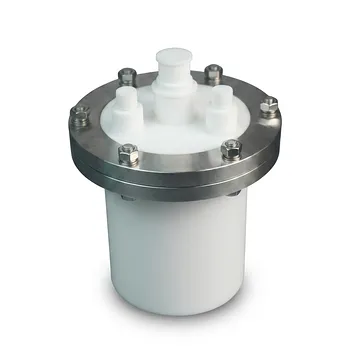
- Custom PTFE Reaction Kettle 2L Flanged Fluoropolymer Reactor Tank Acid and Alkali Resistant Polytetrafluoroethylene Vessel
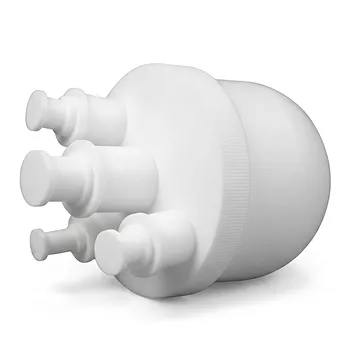
- High Purity PTFE Single Neck Reaction Flask Acid Resistant Customizable Fluoropolymer Laboratory Reactor
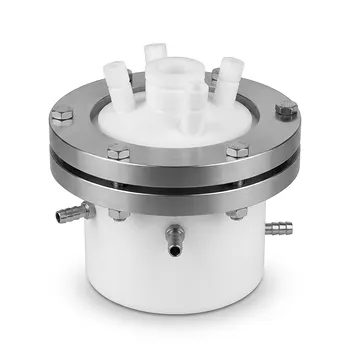
- Custom PTFE Reaction System with Hose Barb Fittings Corrosion Resistant High Sealing 2L 4L Lab Reactor with Separatory Funnel
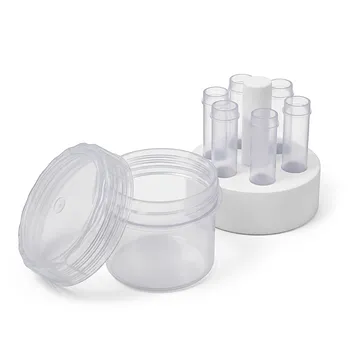
- High Purity Corrosion Resistant PFA Reaction Vessel with PTFE Holder and Integrated Sampling Tube for Trace Analysis
- PFA Reaction Tank 6L Customizable Fittings Corrosion Resistant Solvent Resistant PFA Reaction Bottle for New Material Synthesis
People Also Ask
- What reaction vessel and fluid handling considerations are necessary for living cationic polymerization of fluorinated monomers involving Lewis acid catalysts? Key design and safety tips
- Why are high-purity PTFE or PFA reaction vessels recommended for the synthesis of PANI-TiC hybrid materials? - Guide
- Ion Activation Reaction Vessel Requirements: Why PTFE is Critical for Membrane Performance
- Why are fluoroplastic (PTFE) reaction vessels recommended for Methylene Blue (MB) adsorption kinetic experiments?
- Why is a PTFE reaction vessel required for Ti3C2Tx MXene synthesis? Ensure Safe HF Etching & High Purity