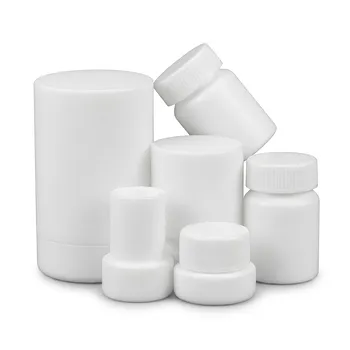
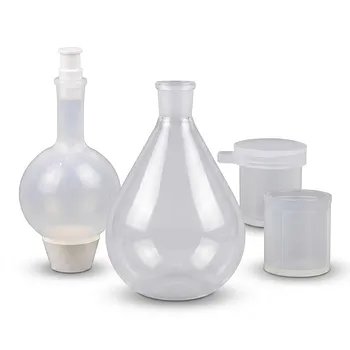
Fluoropolymers are used because they protect both the process and the measurement. PTFE and PFA combine exceptionally low contamination potential with resistance to strong acids, bases, solvents, and elevated temperatures. That combination is critical when even trace metal ions, particles, organic residues, or sample losses can invalidate semiconductor processes or analytical results.
The central reason is control: PTFE and PFA are chemically inert, low-extractable materials that remain stable under aggressive processing conditions. They prevent the container, tubing, or fitting from becoming a source of contamination or analyte loss.
Why Ordinary Materials Are Not Enough
Contamination can come from the hardware
In semiconductor manufacturing and ultra-trace analysis, the fluid itself may be highly pure, but the equipment can reintroduce contamination.
Metallic ions, organic residues, particles, and other extractables can migrate from a vessel or fluid-handling component into an ultrapure chemical or analytical sample. At trace concentrations, contamination from the container can be comparable to—or greater than—the material being measured.
The sample can also be lost to the container
A container does not merely risk adding contaminants. Its surface can adsorb analytes, retain droplets, or make cleaning incomplete.
This is especially important when measuring micro-level elemental concentrations. If part of the analyte remains on the vessel wall, the reported concentration may be artificially low and the result may be difficult to reproduce.
The Material Properties That Matter
A stable fluorinated backbone
PTFE and PFA have highly stable, fully fluorinated polymer structures. Their chemical stability limits degradation and reduces the release of extractable and leachable substances into the process fluid or sample.
This produces very low background contamination, which is essential for detecting trace metals and other species at very low concentrations.
Resistance to aggressive chemicals
Fluoropolymers resist many strong acids, bases, organic solvents, and aggressive etching chemicals, including hydrofluoric-acid-containing chemistries.
That resistance allows them to retain structural integrity where less-resistant plastics could swell, crack, soften, degrade, or release impurities.
Low surface energy and non-wetting behavior
PTFE and PFA have low surface energy, giving them non-stick and low-wetting characteristics.
Liquids are less likely to adhere to the surface, which helps reduce sample retention, improve transfer completeness, simplify cleaning, and minimize cross-contamination between analytical steps.
Thermal stability
Both materials remain useful across a broad operating-temperature range and tolerate demanding thermal processing conditions better than many conventional plastics.
Thermal stability matters during heated digestion, chemical processing, cleaning, and other steps where temperature can accelerate material degradation or leaching.
Electrical insulation
Fluoropolymers also provide excellent electrical insulation.
This is valuable in semiconductor equipment, where materials may need to resist chemicals while remaining electrically nonconductive and compatible with tightly controlled process environments.
Why These Properties Matter in Semiconductor Manufacturing
Ultrapure fluids must stay ultrapure
Semiconductor fabrication uses ultrapure water, concentrated acids, solvents, and specialized etchants. These fluids contact tubing, valves, fittings, storage tanks, cleaning vessels, and other components.
PFA and PTFE help prevent those components from introducing metal ions, organic contaminants, or particles into the fluid stream.
Process surfaces must be cleanable
A smooth, low-energy fluoropolymer surface reduces particle retention and chemical hold-up.
That supports more reliable rinsing and cleaning, helping prevent residues from one process step from carrying into the next.
Chemical integrity must be maintained over time
Fluid-handling components must not only survive a single chemical exposure. They must maintain their properties through repeated contact with aggressive reagents and cleaning cycles.
Fluoropolymers provide the chemical and thermal stability needed for storage tanks, transfer tubing, fittings, valves, and process vessels operating under these conditions.
Why These Properties Matter in Trace Analysis
The blank must be exceptionally low
Analytical accuracy depends partly on the background introduced by the laboratoryware itself.
PFA and PTFE labware offer extremely low levels of extractable metal ions and organic contaminants, helping keep the procedural blank low enough to distinguish the analyte from the container’s contribution.
Digestion reagents are often highly aggressive
Sample preparation may involve strong acids and heated digestion. The vessel must withstand these conditions without reacting with the reagent or releasing contaminants.
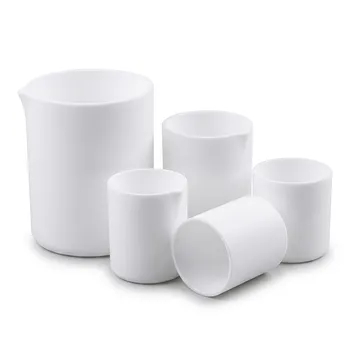
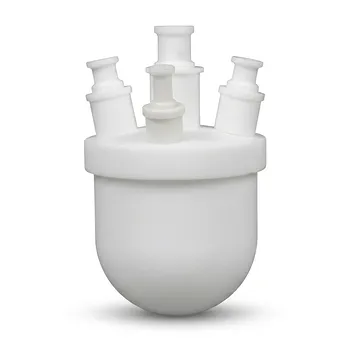
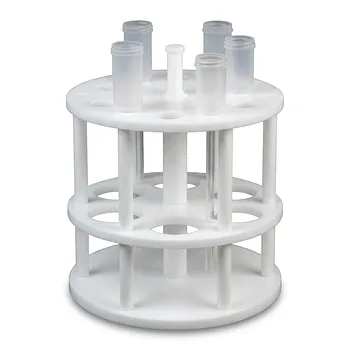
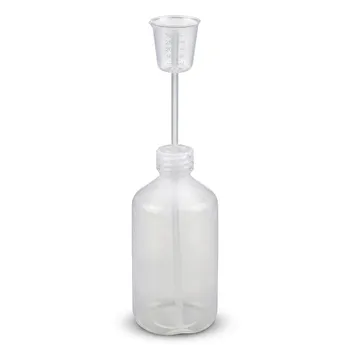
Fluoropolymer beakers, digestion vessels, reagent bottles, and tubes are therefore used to preserve sample integrity during preparation.
Complete transfer improves quantitative accuracy
Low adhesion and low wetting reduce the amount of sample left behind on vessel walls.
That supports more complete transfer and more consistent recovery, which is particularly important when the original analyte concentration is extremely small.
PTFE and PFA Are Similar, but Not Identical
PTFE is valued for chemical inertness
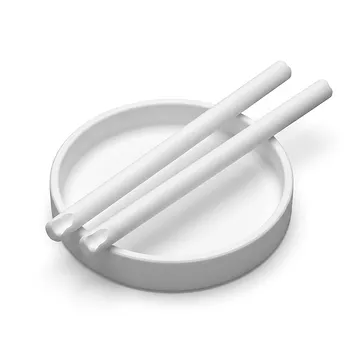
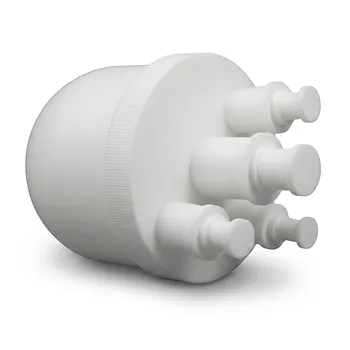
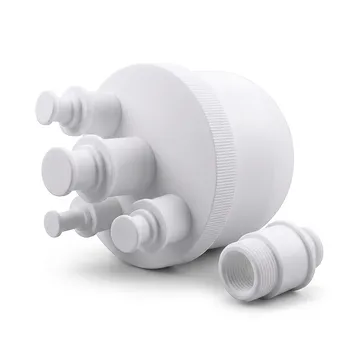
PTFE is highly resistant to chemical attack and is widely used for seals, machined components, vessels, and other parts exposed to aggressive reagents.
It is particularly useful when chemical resistance and low contamination are the dominant requirements.
PFA is well suited to high-purity fluid handling
PFA provides the same general family of fluoropolymer benefits—chemical inertness, low extractables, low surface energy, and thermal stability—while being commonly used in high-purity tubing, bottles, vessels, fittings, and other fluid-contact components.
Its use in these applications reflects the need for clean, chemically stable components throughout the fluid path.
Understanding the Trade-offs
“Chemically resistant” does not mean indestructible
PTFE and PFA resist a very broad range of chemicals, but no material is immune to every chemical, temperature, pressure, or mechanical condition.
Compatibility must be checked against the exact reagent concentration, temperature, exposure time, pressure, and stress state.
Material purity is not the same as system cleanliness
A high-purity fluoropolymer can still be contaminated by manufacturing residues, poor handling, unsuitable machining, or inadequate cleaning.
Component fabrication, surface treatment, packaging, installation, and cleaning protocols are all part of the contamination-control strategy.
Low adsorption is not universal for every analyte
Fluoropolymer surfaces generally minimize retention compared with many conventional materials, but adsorption can still depend on the analyte, solvent, concentration, pH, exposure time, and surface condition.
Critical methods should therefore validate recovery and blanks using the actual labware and chemistry.
Performance comes with practical limitations
Fluoropolymers can be more expensive than commodity plastics, and their mechanical behavior, joining methods, dimensional stability, and permeability may require engineering review.
The correct choice is based on the complete application—not chemical resistance alone.
How to Apply This to Your Project
The best material decision starts with the contamination limit and chemical duty cycle, not simply the name of the polymer.
- If your primary focus is semiconductor chemical purity: Use qualified PTFE or PFA components throughout the wetted fluid path, and control fabrication, cleaning, packaging, and installation as carefully as material selection.
- If your primary focus is ultra-trace elemental analysis: Choose low-extractable PTFE or PFA labware and verify procedural blanks, recovery, and analyte retention under the actual digestion and transfer conditions.
- If your primary focus is aggressive chemical exposure: Confirm compatibility for the specific reagent, concentration, temperature, and exposure time rather than relying on a general claim of chemical resistance.
- If your primary focus is minimizing cross-contamination: Favor low-surface-energy fluoropolymer surfaces, while validating cleaning effectiveness and sample recovery for the analytes being measured.
PTFE and PFA are preferred because they keep demanding chemicals, ultrapure fluids, and trace-level samples closer to their intended composition.
Summary Table:
| Property | Why It Matters |
|---|---|
| Chemical inertness | Prevents contamination from vessel or tubing materials. |
| Low extractables | Keeps background contamination minimal for trace detection. |
| Low surface energy | Reduces sample retention and improves cleaning. |
| Thermal stability | Withstands aggressive digestion and high-temperature processes. |
| Electrical insulation | Essential for semiconductor equipment compatibility. |
Ready to enhance the purity and reliability of your labware? At KINTEK, we specialize in high-performance PTFE and PFA products, from basic beakers and digestion vessels to custom CNC-machined components. Our solutions are designed to minimize contamination and maximize chemical resistance, ensuring accurate results in your semiconductor or analytical applications. Contact us today to discuss your specific needs and discover how our expertise can benefit your workflow. Get in touch with our team.
Related Products
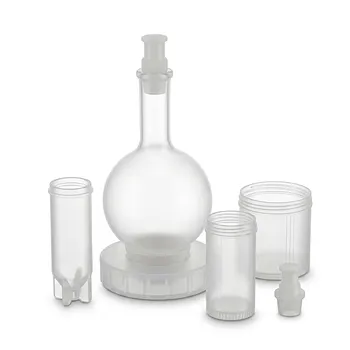
- Custom PFA Pear Shaped Flask High Purity Corrosion Resistant Labware Custom Molded Fluoropolymer Flask Glass Replacement Solution
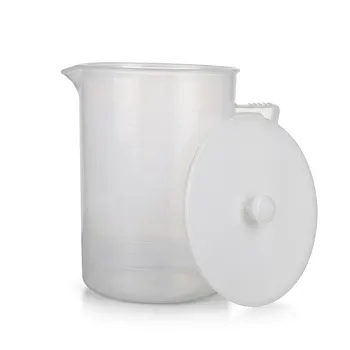
- High Purity PFA Beaker with Handle and Large Capacity Washable Soak Basket Multi Spec Teflon Laboratory Labware
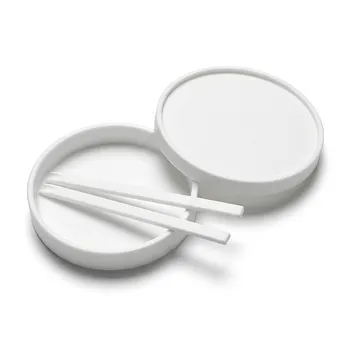
- Custom PTFE Petri Dish 30mm Corrosion Resistant Low Background Non Leaching Laboratory Ware
- Custom Polytetrafluoroethylene PTFE Petri Dishes 60mm Corrosion Resistant Low Background Labware
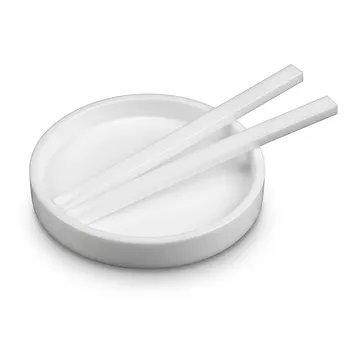
- Custom PTFE Petri Dish 120mm Diameter Corrosion Resistant Low Background High Purity Labware
People Also Ask
- Why Use PFA Labware for MnFe2O4/rGO Precursors? Ensure Stoichiometric Precision and Purity
- What are the primary properties of PFA for high-performance labware? Achieve ultra-trace purity & thermal stability.
- Why is PFA labware recommended for CuBi2O4? Protect high-purity precursors and ensure semiconductor bandgap accuracy.
- How does PFA labware enhance the accuracy of ultra-trace element analysis? Achieving PPT Precision with Zero Leaching
- What role does PFA labware play in semiconductor manufacturing? Ensuring Ultra-Pure Yields and Zero Contamination