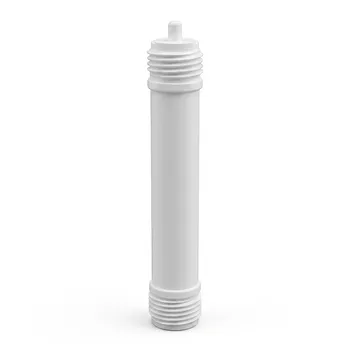
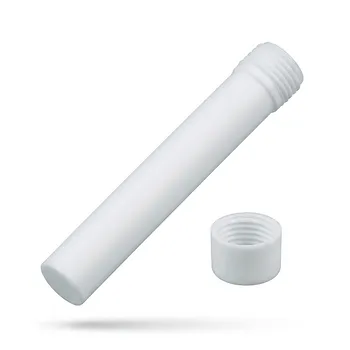
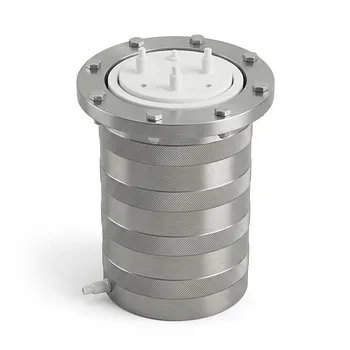
Corrosion-resistant PFA and PTFE components are mandatory for biomass Carbon Quantum Dot (CQD) synthesis because they withstand the extreme pH levels and high temperatures required for biomass carbonization. These materials prevent the leaching of metal ion impurities from laboratory vessels into the reaction, which would otherwise quench the fluorescence and degrade the optical properties of the resulting nanomaterials.
Core Takeaway: PFA and PTFE act as chemically inert barriers that protect both the synthesis environment from metallic contamination and the equipment from corrosive reagents. Their use is critical for ensuring the purity, stability, and high fluorescence quantum yield of Carbon Quantum Dots.
The Chemical Challenge of Biomass Conversion
Managing Extreme pH Environments
The synthesis of biomass CQDs often involves adding strong bases like Sodium Hydroxide (NaOH) or strong acids like Nitric Acid (HNO3). These reagents promote the formation of small dots and increase quantum yield through oxidative treatment.
Protecting the Reaction Vessel
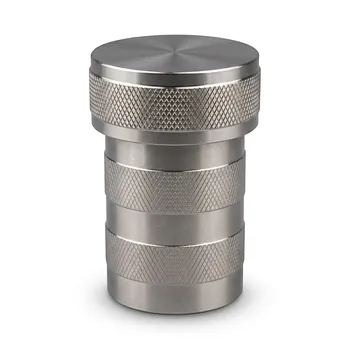
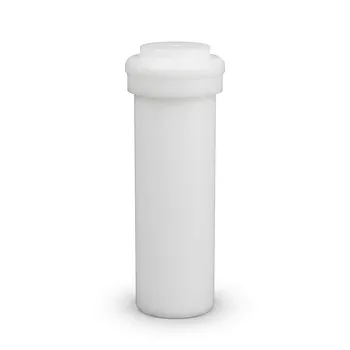
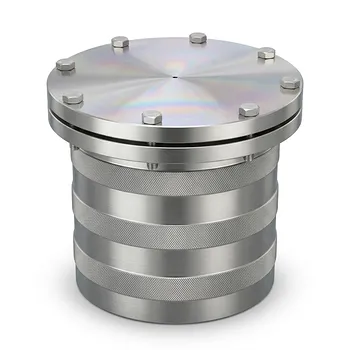
In hydrothermal synthesis, biomass precursors like corncob or coal powder are mixed with concentrated acids such as sulfuric or phosphoric acid. PFA or PTFE liners prevent these aggressive chemicals from corroding the stainless steel walls of the autoclave or digestion vessel.
Facilitating Precursor Breakdown
The conversion process requires the oxidative cleavage of complex biomass molecular structures. Only fluoropolymers like PTFE can maintain structural integrity when exposed to the high-pressure, acidic environments necessary for this chemical breakdown.
Safeguarding Optical Performance
Eliminating Metal Ion Quenching
Carbon Quantum Dots are highly sensitive to their environment, and trace metal ions introduced via leaching can interact with the dots' surface. These impurities act as "quenchers," significantly reducing the fluorescence intensity and overall quality of the CQDs.
Preserving Surface Functional Groups
The unique properties of CQDs depend on specific surface functional groups and doping (such as nitrogen or phosphorus). PFA and PTFE are chemically inert, ensuring that no unintended chemical species interfere with the precise surface modification occurring during synthesis.
Ensuring Batch-to-Batch Consistency
Using non-reactive components eliminates variables associated with vessel degradation. This leads to high reproducibility and consistency in the optical properties of the CQDs across different synthesis runs.
Structural Advantages in Hydrothermal Conditions
Thermal and Pressure Stability
Hydrothermal reactions typically reach temperatures up to 180 °C under autogenous pressure. PTFE and PFA liners are specifically designed to withstand these high-temperature conditions without releasing impurities or failing structurally.
Microwave Transparency
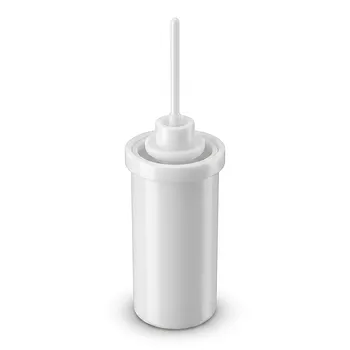
In microwave-assisted hydrothermal synthesis, PTFE and PFA are used because they possess superior microwave transparency. This allows microwave energy to pass through the liner and reach the internal reaction liquid without loss, ensuring efficient heating.
Resistance to Organic Solvents
Beyond aqueous acids and bases, these materials resist ethanol and other organic solvents used during biomass carbonization. This versatility makes them the standard for various solvothermal and hydrothermal synthesis routes.
Understanding the Trade-offs
Temperature Limitations
While PTFE is highly resistant, it has a functional upper limit, typically around 250 °C–260 °C. Exceeding these temperatures can lead to material softening or the release of toxic fluorinated vapors, necessitating careful temperature monitoring.
Mechanical Deformation
PTFE is subject to "cold flow" or creep under sustained high pressure. Over time, liners may deform, requiring users to inspect them regularly to ensure a proper seal within the stainless steel jacket.
Cleaning and Memory Effects
Although highly inert, the porous nature of some PTFE grades can lead to cross-contamination if not cleaned rigorously. PFA is often preferred for ultra-trace analysis because its smoother surface finish makes it even more resistant to "remembering" previous reaction components.
How to Apply This to Your Project
Selecting the Right Material for Your Goal
- If your primary focus is high-purity fluorescence: Utilize high-purity PFA components to minimize metal leaching to the lowest possible levels.
- If your primary focus is standard hydrothermal synthesis at 180°C: Choose PTFE liners for their cost-effectiveness and proven stability in high-pressure autoclaves.
- If your primary focus is microwave-assisted synthesis: Ensure your reaction vessels are made of microwave-transparent PTFE or PFA to allow for uniform heating of the biomass precursor.
- If your primary focus is phosphorus or nitrogen doping: Use PTFE liners to resist the corrosive effects of concentrated phosphoric acid or ammonia-based dopants.
Selecting the appropriate fluoropolymer component is the single most effective way to ensure the chemical purity and optical brilliance of your synthesized Carbon Quantum Dots.
Summary Table:
| Key Requirement | Role of PFA/PTFE Components | Benefit to CQD Quality |
|---|---|---|
| Chemical Resistance | Withstands extreme pH (NaOH, HNO3, H2SO4) | Prevents vessel corrosion and structural failure. |
| Trace Purity | Eliminates metal ion leaching | Prevents fluorescence quenching and ensures optical clarity. |
| Thermal Stability | Maintains integrity at 180°C+ | Reliable performance during high-pressure hydrothermal runs. |
| Energy Transfer | Superior microwave transparency | Enables uniform heating in microwave-assisted synthesis. |
| Inert Surface | Minimizes "memory effects" and cross-contamination | Ensures high batch-to-batch consistency and reproducibility. |
Maximize Your Research Precision with KINTEK Fluoropolymer Solutions
Don't let metal contamination compromise the fluorescence of your Carbon Quantum Dots. KINTEK specializes in high-performance PTFE and PFA laboratory supplies designed to withstand the most aggressive hydrothermal conditions.
Our extensive range covers everything your lab needs:
- Basic Labware: Beakers, measuring cylinders, crucibles, and reagent bottles.
- Sample Prep: Centrifuge tubes, digestion vessels, filters, and separatory funnels.
- Fluid Transfer: High-purity tubing, fittings, and valves.
- Advanced Apparatus: Custom electrochemical cells, hydrothermal synthesis liners, and microchannel reactors.
Whether you need high-volume consumables or complex, non-standard parts delivered via our end-to-end custom CNC fabrication, KINTEK provides the material expertise required for cutting-edge nanomaterial synthesis.
Ready to upgrade your lab's performance? Contact us today to discuss your custom requirements!
References
- Xiangping Xu, Yabin Zhou. Hydrothermal synthesis of biomass-derived CQDs: Advances and applications. DOI: 10.1515/ntrev-2025-0184
This article is also based on technical information from Kintek Knowledge Base .
Related Products
- High Temperature Corrosion Resistant Hydrothermal Synthesis Reactor with TFM Inner Liner and Straight Cylinder Design
- PTFE Lined High Pressure Digestion Vessel 50ml High Temperature Hydrothermal Synthesis Tank
- Custom High Purity TFM Microwave Digestion Vessel 100ml Capacity Compatible Replacement Liner for Professional Analytical Instruments
- High Purity TFM Microwave Digestion Vessels for Trace Analysis and Custom Sample Preparation Systems
- Custom TFM Reaction Vessel with Stainless Steel Jacket and PTFE Inner Cup for High Corrosion Resistance
People Also Ask
- What is the role of a corrosion-resistant reactor in the synthesis of lignin-based carbon dots? Ensure Maximum Purity
- What are the technical advantages of using hydrothermal synthesis reactors for advanced electronic & optical nanomaterials?
- How does a hydrothermal synthesis reactor facilitate the production of crystalline materials with tailored morphologies? Precision Crystal Growth
- Why is the sealing reliability of a hydrothermal synthesis reactor critical for 24-hour cycles? Ensure Nano-Precision
- What role do hydrothermal synthesis reactors play in CQD preparation? Achieve High-Purity Nanomaterial Synthesis