Aqueous dispersions are preferred because they make fluoropolymer application safer and more practical at industrial scale. They greatly reduce solvent exposure, volatile organic compound (VOC) emissions, flammability risks, solvent-recovery requirements, and the need for explosion-proof equipment. They are also especially useful for PTFE, which is insoluble in conventional solvents and cannot be processed through ordinary solution coating. Common application methods include Nip-Dip immersion and squeezing, foam processing, and supercritical carbon dioxide processing.
Aqueous fluoropolymer dispersions combine a water-based processing medium with a heat-treatment step that fuses deposited polymer particles into a continuous protective film. Their main advantages are safety and scalability, while their principal limitations are slower drying and the need to remove surfactants during baking and sintering.
Why Aqueous Systems Dominate Industrial Application
They reduce safety hazards
Waterborne dispersions are generally non-flammable and significantly reduce worker exposure to organic solvents. This is important in industrial coating lines, where large volumes of formulation may be stored, circulated, heated, and dried.
Solvent-based systems can require ventilation, solvent recovery, ignition control, and explosion-proof equipment. These requirements increase both capital cost and operating complexity.
They lower environmental impact
Aqueous systems produce substantially fewer VOC emissions than organic solvent formulations. This helps reduce atmospheric emissions and simplifies compliance with workplace and environmental regulations.
The water-based medium also avoids the handling and disposal burden associated with recovered or contaminated solvent.
They enable processing of insoluble fluoropolymers
PTFE does not dissolve in conventional solvents and has extremely high melt viscosity. It therefore cannot be applied reliably through ordinary solution coating or processed like a conventional thermoplastic melt.
An aqueous PTFE dispersion instead suspends submicron polymer particles in water. The dispersion can be deposited onto a substrate, after which heating removes water and fuses the particles into a continuous fluoropolymer film.
They support uniform thin films
A well-formulated dispersion can distribute fluoropolymer particles evenly across a surface. This is important when the treatment must form a thin, continuous layer that provides chemical resistance, low surface energy, or fluid repellency without adding substantial thickness.
Industrial fluoropolymer treatments may form films ranging from several nanometers to tens of nanometers, depending on the formulation and application process.
How Aqueous Fluoropolymer Treatments Are Processed
Nip-Dip immersion and squeezing
The Nip-Dip method immerses the substrate in the fluoropolymer dispersion and then passes it through opposing rollers, or a nip, to remove excess liquid and control wet pickup.
The method is suitable for continuous materials such as textiles, films, webs, and other substrates that can pass through a processing line. Coating uniformity depends on factors such as dispersion concentration, immersion time, roller pressure, line speed, and substrate absorbency.
After application, the coated material is dried and typically subjected to a higher-temperature bake or sintering stage.
Foam processing
In foam processing, the fluoropolymer dispersion is converted into a stable foam and applied to the substrate. The foam structure allows treatment of larger areas while limiting the amount of liquid introduced into the material.
This approach can be useful for porous or absorbent substrates because it may reduce saturation, drying demand, and chemical consumption. Process control must maintain consistent foam density, stability, collapse behavior, and coating distribution.
Supercritical carbon dioxide processing
Supercritical carbon dioxide (scCO2) can act as an advanced processing medium for fluoropolymer treatment. In its supercritical state, carbon dioxide has liquid-like solvating or transport behavior combined with gas-like diffusivity.
This method can reduce reliance on conventional organic solvents and may improve penetration into complex or porous structures. It requires specialized high-pressure equipment and careful control of pressure, temperature, and material compatibility, so it is generally more technically demanding than conventional aqueous processing.
Drying, baking, and sintering
Application is only the first stage of an aqueous fluoropolymer process. The coated substrate must be dried to remove water, then heated sufficiently to remove residual processing additives and consolidate the polymer.
For PTFE dispersions, sintering fuses the particles into a continuous film. The temperature profile must be controlled so that the coating develops the required integrity without damaging the substrate.
Why Solvent-Based Systems Remain in Use
They dry rapidly
Organic solvents generally evaporate faster than water. This can be valuable when a treatment must be applied and handled immediately, or when the application is localized and production volume is small.
They suit localized sprays
Solvent-based fluoropolymer formulations are commonly reserved for small-area treatments, rapid-drying applications, and specialized sprays. These uses can justify the handling controls because the total formulation volume is limited.
They can support soluble fluoropolymers
Some amorphous fluoropolymers can be dissolved and applied by methods such as spin coating, dip coating, or spray coating. These techniques are distinct from aqueous PTFE dispersion processing and are selected when the polymer chemistry allows solution formation.
The choice therefore depends on the fluoropolymer grade, substrate geometry, required film thickness, drying constraints, and available safety infrastructure.
Understanding the Trade-offs
Aqueous systems dry more slowly
Water requires more drying energy and often more residence time than a volatile organic solvent. In high-throughput operations, the drying stage can become a significant equipment and productivity constraint.
Drying conditions must also prevent defects caused by uneven evaporation, foam collapse, particle migration, or incomplete water removal.
Surfactants can create coating defects
Aqueous dispersions commonly contain nonionic surfactants and other stabilizing components. These additives help maintain dispersion stability, but residual surfactant may remain in the deposited film.
If it is not adequately removed during baking and sintering, it can cause dark discoloration, contamination, optical defects, or reduced thermal stability. The risk is especially important for clean, transparent, or high-temperature applications.
Formulation stability matters
Aqueous systems may use mechanical emulsification and compatibilizing components such as acetone or propylene glycol to maintain a stable dispersion. The formulation must remain uniform during storage, pumping, application, and drying.
Poor stability can produce nonuniform coating thickness, agglomerates, blocked equipment, or inconsistent surface performance.
scCO2 requires specialized equipment
Supercritical carbon dioxide can reduce conventional solvent use, but it is not a simple drop-in replacement for water. High-pressure operation increases equipment cost, process-control requirements, and operator-training needs.
It is most appropriate when its penetration, drying, or environmental advantages justify the additional complexity.
Making the Right Choice for Your Goal
The application method should be selected according to the substrate, production scale, fluoropolymer chemistry, drying requirements, and required surface performance.
- If your primary focus is industrial safety and environmental compliance: Use an aqueous dispersion with controlled drying and sintering to minimize VOC emissions, flammability risks, and solvent-handling requirements.
- If your primary focus is processing PTFE: Use an aqueous PTFE dispersion because PTFE is not conventionally soluble and must be deposited as particles before sintering.
- If your primary focus is continuous web or textile treatment: Evaluate Nip-Dip immersion and squeezing for controlled, repeatable liquid pickup.
- If your primary focus is low-liquid application to porous substrates: Consider foam processing, provided foam stability and coverage can be controlled.
- If your primary focus is rapid drying for a small localized treatment: A solvent-based spray may be appropriate when suitable ventilation, ignition control, and handling procedures are available.
- If your primary focus is advanced penetration with reduced conventional solvent use: Evaluate supercritical carbon dioxide processing, recognizing its high-pressure equipment and process-control requirements.
The right fluoropolymer system balances material compatibility, coating uniformity, production efficiency, safety, and final surface performance.
Summary Table:
| Aspect | Aqueous Dispersions | Solvent-Based Systems |
|---|---|---|
| Safety | Non-flammable, low solvent exposure | Flammable, requires explosion-proof equipment |
| Environmental Impact | Low VOC emissions | High VOC emissions, solvent recovery needed |
| PTFE Processing | Suitable (insoluble in solvents) | Not suitable for PTFE |
| Drying Speed | Slower | Faster |
| Typical Applications | Industrial coating lines, continuous webs | Small-area sprays, rapid-drying applications |
| Processing Methods | Nip-Dip, foam, scCO2, sintering | Spray, spin, dip coating |
Need high-performance fluoropolymer coatings for your lab or industry? KINTEK offers a wide range of PTFE and PFA labware, custom CNC machined parts, and advanced processing equipment to optimize your coating processes. Our aqueous dispersion solutions ensure safety, environmental compliance, and superior film quality. Contact us today to discuss your specific needs and benefit from our expertise in fluoropolymer applications. Contact us now!
Related Products
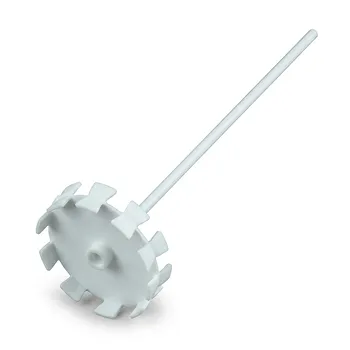
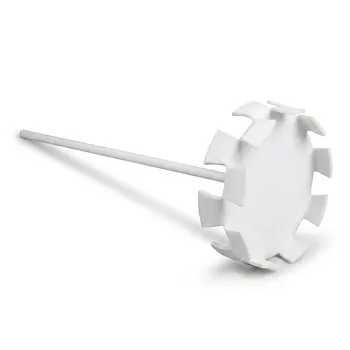
- High Purity Corrosion Resistant PTFE Dispersion Disk and Inert Stirring Paddle for Food Pharmaceutical and Cosmetic Mixing
- High Purity PTFE Dispersion Disk for Food and Cosmetic Processing Non Stick Corrosion Resistant Large Stirring Paddle Customizable Fluoropolymer Impeller
- Corrosion Resistant PTFE Turbine Stirring Disk and High Performance Fluoropolymer Dispersion Impeller for Industrial Chemical Mixing
- Corrosion Resistant PTFE Dispersing Disc and High Temperature Propeller Stirring Paddle for Laboratory Chemical Mixing
- Corrosion Resistant PTFE Stirring Paddle and Customizable Toothed Dispersion Disk for Chemical Pharmaceutical Mixing
People Also Ask
- What is Dispersion PTFE used for? Creating Thin, High-Performance Coatings and Films
- How many variations of PTFE disks are available and what parameters do they differ in? Choose the Right Material for Your Application
- What key properties are measured under ASTM D4441 to classify and evaluate PTFE dispersions?
- What is PTFE dispersion, and how is it used? A Guide to Non-Stick Coatings & Chemical Resistance
- What is the dispersion method of producing PTFE and what are its products? Ideal for Thin Coatings and Films