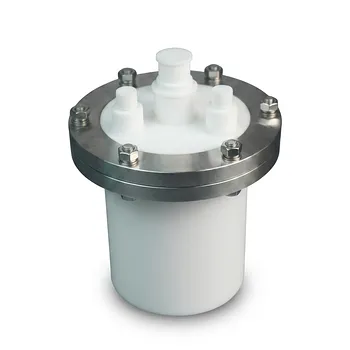
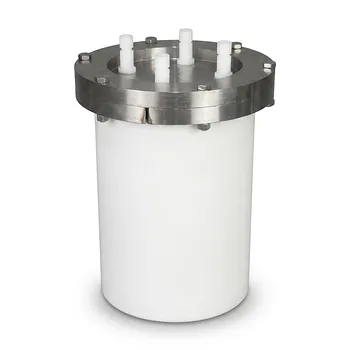
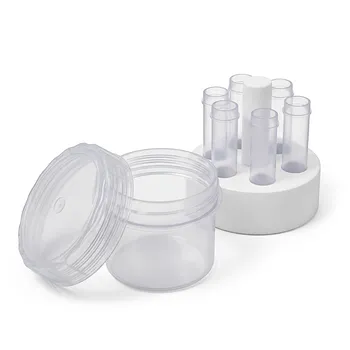
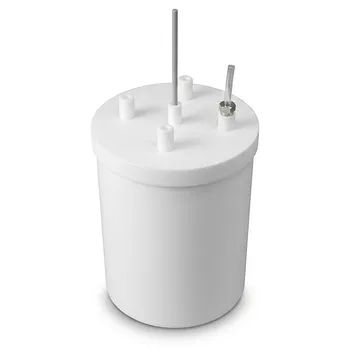
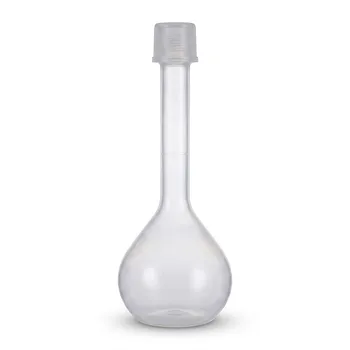
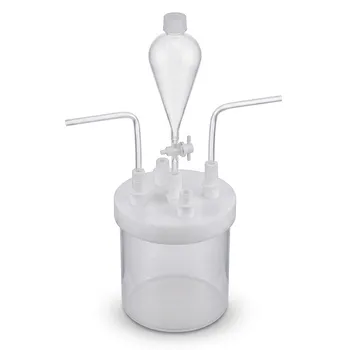
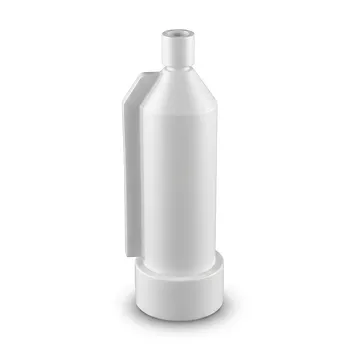
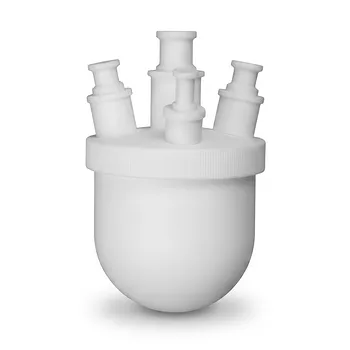
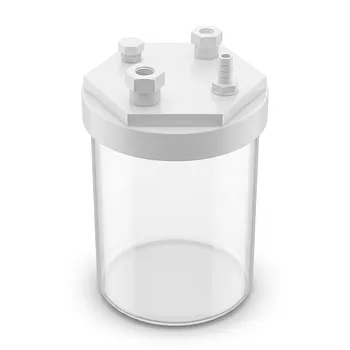
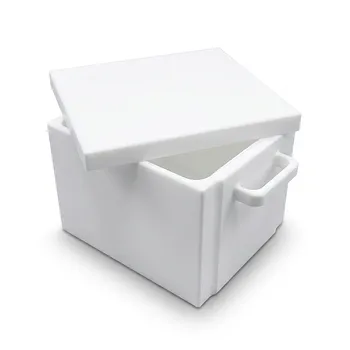
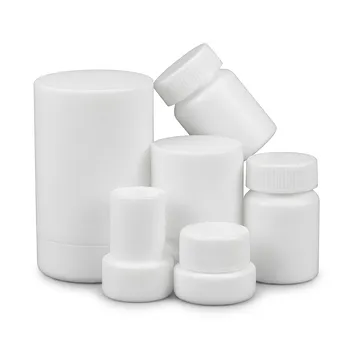
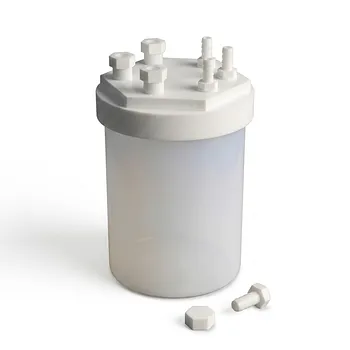
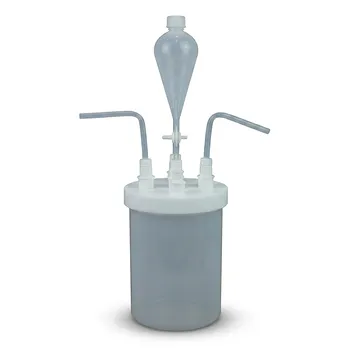
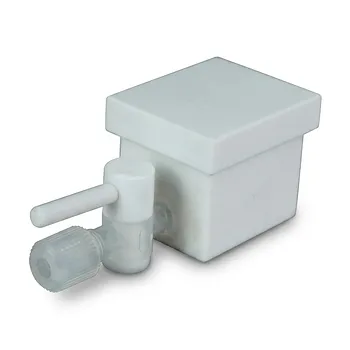
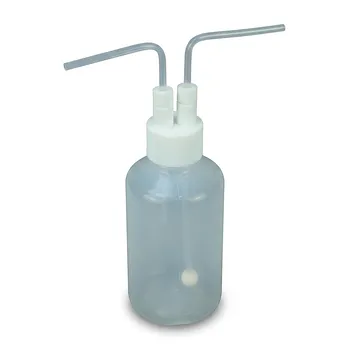
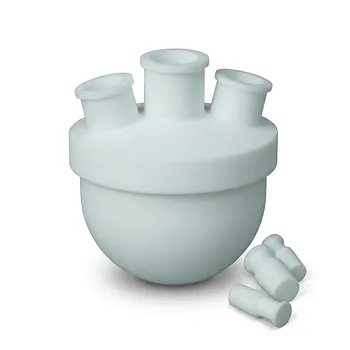
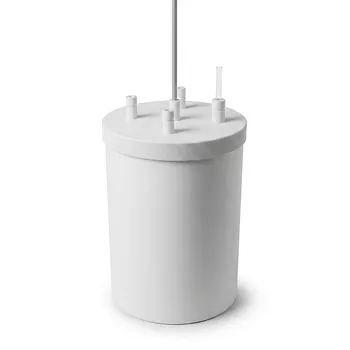
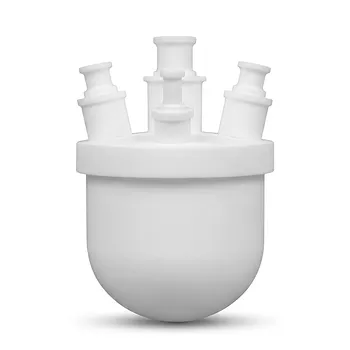
The requirement for acid-resistant reaction vessels is driven by the corrosive nature of hydrochloric acid (HCl) and the extended duration of the immersion process. These specialized containers safely facilitate the chemical etching of calcium carbonate (CaCO3) from a Gas Diffusion Layer's (GDL) microporous layer. This precise chemical reaction is necessary to transform the internal structure of the GDL into a high-performance material capable of advanced water management.
Using acid-resistant vessels ensures the integrity of the long-term HCl etching process, which is essential for selectively removing pore-forming agents. This creates a heterogeneous pore network that balances gas transport and water removal within fuel cell systems.
The Role of HCl in GDL Pore Engineering
Chemical Removal of Pore-Forming Agents
The primary function of the hydrochloric acid treatment is to selectively dissolve calcium carbonate (CaCO3) pre-embedded within the microporous layer. This chemical etching process turns solid pore-forming agents into soluble salts, effectively "carving out" new pathways within the material.
The Necessity of Long-Term Immersion
The etching process typically requires long-term immersion, often lasting up to 24 hours to ensure complete penetration and reaction. Standard containers would degrade or contaminate the solution, whereas acid-resistant vessels maintain chemical purity throughout this extended duration.
Creating Hydrophilic Microporous Channels
By removing the CaCO3, the acid treatment generates precise hydrophilic microporous channels. These channels are strategically placed within an otherwise hydrophobic network to create a specialized path for liquid water movement.
Engineering a Heterogeneous Pore Structure
Balancing Hydrophilic and Hydrophobic Pathways
The core goal of this treatment is to achieve a heterogeneous structure where both hydrophilic and hydrophobic pores coexist. This duality is critical because it allows the GDL to handle two conflicting tasks: liquid water transport and gas diffusion.
Superior Water Management Capabilities
This engineered structure allows fuel cells to maintain high performance across a wide range of humidity levels. The hydrophilic channels draw excess water away from the catalyst layer, while the hydrophobic pores remain clear to allow oxygen and hydrogen to reach the reaction sites.
Facilitating Efficient Gas Diffusion
Without this etching process, water buildup can "flood" the GDL, blocking the path for reactant gases. The HCl treatment ensures that gas diffusion remains efficient even in high-humidity conditions where liquid water accumulation is most prevalent.
Understanding the Trade-offs and Risks
Material Integrity and Contamination
Using non-resistant vessels can lead to leached impurities from the container walls into the acid solution. These impurities can poison the GDL or the fuel cell catalyst, significantly reducing the lifespan and efficiency of the overall system.
Process Consistency and Safety
Maintaining a specific concentration of HCl is vital for accurate pore generation. Acid-resistant vessels prevent unintended chemical reactions with the container itself, which could otherwise alter the acid's concentration and lead to inconsistent etching results.
Environmental and Safety Hazards
Hydrochloric acid is a highly corrosive substance that poses significant safety risks if containment fails. The use of specialized reaction vessels is a non-negotiable safety requirement to protect personnel and laboratory infrastructure during the 24-hour etching cycle.
How to Apply This to Your Project
Recommendations for Material Processing
- If your primary focus is maximizing fuel cell power density: Ensure the HCl immersion time is strictly controlled within acid-resistant vessels to create the optimal balance of hydrophilic channels.
- If your primary focus is long-term GDL durability: Use high-grade acid-resistant polymers (like PTFE) for your vessels to prevent any trace metal contamination during the 24-hour etching process.
- If your primary focus is operating in low-humidity environments: Focus on the precision of the CaCO3 removal to ensure that the generated hydrophilic channels can still retain enough moisture to keep the membrane hydrated.
By utilizing acid-resistant containment, you ensure the precise chemical environment necessary to transform a standard GDL into a high-performance, water-managing component.
Summary Table:
| Feature | Why It Matters for GDL Etching | Impact on Performance |
|---|---|---|
| Chemical Inertness | Prevents vessel degradation during 24h HCl immersion | Maintains acid concentration & purity |
| Contamination Control | Eliminates leaching of impurities from container walls | Prevents catalyst poisoning in fuel cells |
| Safety Compliance | Provides secure containment for corrosive substances | Protects laboratory personnel and equipment |
| Thermal Stability | Resists potential exothermic reactions during etching | Ensures process consistency and safety |
Upgrade Your Fuel Cell Research with KINTEK’s Precision Fluoropolymer Solutions
Don't let contamination or vessel failure compromise your Gas Diffusion Layer (GDL) development. At KINTEK, we specialize in high-performance fluoropolymer labware designed for the most demanding chemical processes. From everyday basic labware like beakers, crucibles, and digestion tubes to advanced reaction apparatus such as custom electrochemical cells and microwave digestion vessels, we provide the tools you need for reliable results.
Whether you require high-purity trace analysis instruments, comprehensive fluid transfer components (tubing, fittings, valves), or custom CNC-fabricated non-standard parts, KINTEK delivers unmatched durability using PTFE and PFA. Our end-to-end manufacturing ensures that your high-volume orders or bespoke laboratory setups maintain an absolute focus on performance and purity.
Ready to optimize your HCl etching process? Contact us today to discuss your custom labware requirements!
References
- Ke Zhou, Kejian Wang. Optimizing the hydrophobicity of GDL to improve the fuel cell performance. DOI: 10.1039/d0ra09658j
This article is also based on technical information from Kintek Knowledge Base .
Related Products
- Custom PTFE Reaction Kettle 2L Flanged Fluoropolymer Reactor Tank Acid and Alkali Resistant Polytetrafluoroethylene Vessel
- PTFE Hydrofluoric Acid Dilutor and Corrosion Resistant Reaction Vessel with Flange Sealing White PTFE Raw Material Storage Barrel
- High Purity Corrosion Resistant PFA Reaction Vessel with PTFE Holder and Integrated Sampling Tube for Trace Analysis
- Large Corrosion Resistant PTFE Reaction Tank Integrated Digestion Barrel Leak Proof Vessel
- High Purity PFA Volumetric Flask 1000ml 2000ml Constant Volume Bottle Acid Resistant Trace Analysis Custom Laboratory Labware
People Also Ask
- What toxicological hazards and safe handling protocols must be established when PTFE fluoropolymer reaction vessels are subjected to pyrolysis temperatures? Learn essential safety measures now.
- What reaction vessel and fluid handling considerations are necessary for living cationic polymerization of fluorinated monomers involving Lewis acid catalysts? Key design and safety tips
- Why are high-purity PTFE or PFA reaction vessels recommended for the synthesis of PANI-TiC hybrid materials? - Guide
- Ion Activation Reaction Vessel Requirements: Why PTFE is Critical for Membrane Performance
- Why are fluoroplastic (PTFE) reaction vessels recommended for Methylene Blue (MB) adsorption kinetic experiments?