PTFE seal rings provide near-universal chemical resistance, remaining inert when exposed to virtually all industrial acids, bases, and solvents across the entire pH scale (0–14). While they are the gold standard for aggressive media, they are not entirely indestructible. Specific exceptions include molten alkali metals, elemental fluorine, and certain halogenated compounds under extreme temperature and pressure conditions.
PTFE (Polytetrafluoroethylene) is chemically inert to almost all substances due to its exceptionally strong carbon-fluorine bonds. Its resistance is nearly total, except when facing highly reactive fluorinating agents or molten alkali metals that can strip fluorine atoms from the polymer chain.
Broad Spectrum Chemical Resistance
Resistance to Acids and Bases
PTFE is virtually immune to attack from both concentrated and dilute acids, as well as strong alkalis. It maintains its structural integrity in environments where other elastomers would swell, harden, or dissolve.
Compatibility with Solvents and Hydrocarbons
These seals are resistant to a wide array of organic solvents, including alcohols, ketones, and aromatic hydrocarbons. They are also unaffected by greases, oils, and various halogens, making them ideal for complex chemical processing.
Performance Across the pH Scale
Because PTFE is non-reactive, it is suitable for use with fluids across the full pH range of 0 to 14. This versatility allows a single seal material to be used in diverse applications, from sulfuric acid processing to caustic soda handling.
The Scientific Foundation of Inertness
The Strength of the Carbon-Fluorine Bond
The primary reason for PTFE's resistance is the Carbon-Fluorine (C-F) bond, one of the strongest in organic chemistry. This bond requires massive amounts of energy to break, preventing most chemicals from reacting with the material.
The Shielding Effect of Fluorine Atoms
In a PTFE molecule, the large fluorine atoms form a protective sheath around the carbon backbone. This physical and chemical barrier prevents reactive molecules from reaching the carbon core of the polymer.
Thermal Stability and Chemical Integrity
PTFE retains its chemical resistance at temperatures up to approximately 260°C (500°F). Beyond this limit, the material may begin to soften, though its chemical inertness remains largely intact until thermal decomposition begins.
Critical Exceptions and Limitations
Reactive Alkali Metals
Molten alkali metals, such as sodium, potassium, and lithium, are the primary exceptions to PTFE's resistance. These substances are powerful reducing agents that can strip the fluorine atoms away, causing the material to char and degrade.
Elemental Fluorine and Fluorinating Agents
PTFE is susceptible to attack by elemental fluorine gas and highly reactive fluorinating agents like chlorine trifluoride (ClF3). These substances can react with the polymer chain, especially at elevated temperatures and pressures.
Extreme Pressure and Halogenated Compounds
Certain halogenated hydrocarbons can affect PTFE under specific "extreme" conditions. When high pressure is combined with high temperature, these specific compounds may cause slight swelling or physical changes, though this is rare in standard industrial applications.
Understanding the Trade-offs
Mechanical Limitations (Cold Flow)
The greatest drawback of PTFE is not chemical, but mechanical; it is prone to "cold flow" or creep under constant load. This means the seal may gradually deform over time, potentially leading to leaks if the housing is not designed to compensate for this movement.
Lack of Elastic Memory
Unlike traditional rubber O-rings, pure PTFE has very little "memory" or elasticity. Once it is deformed or compressed, it does not easily return to its original shape, which often necessitates the use of "spring-energized" designs for dynamic sealing.
Thermal Expansion Rates
PTFE has a high coefficient of thermal expansion compared to metals. In applications with wide temperature swings, the seal may expand and contract significantly, requiring careful groove design to prevent bypass leakage or over-compression.
Making the Right Choice for Your Goal
- If your primary focus is Extreme Chemical Purity: PTFE is the ideal choice as it is non-contaminating and does not leach additives into the process media.
- If your primary focus is High-Temperature Acid Handling: Utilize PTFE seals up to 260°C, ensuring the hardware is designed to handle the material's thermal expansion.
- If your primary focus is Sealing Molten Sodium or Lithium: Avoid PTFE entirely and consult with a materials specialist for metallic or specialized ceramic sealing solutions.
- If your primary focus is Long-Term Dynamic Sealing: Use a spring-energized PTFE seal to compensate for the material's inherent "cold flow" and lack of elasticity.
By respecting the few chemical exceptions while accounting for its unique mechanical properties, you can leverage PTFE to solve the most demanding sealing challenges in the industry.
Summary Table:
PTFE Chemical Resistance Summary
| Feature | Details |
|---|---|
| pH Range Compatibility | Full spectrum (pH 0–14) |
| Compatible Substances | Concentrated acids, strong bases, organic solvents, hydrocarbons, and oils |
| Temperature Limit | Stable up to approx. 260°C (500°F) |
| Chemical Exceptions | Molten alkali metals (Sodium, Lithium), Elemental Fluorine, Chlorine Trifluoride |
| Mechanical Limitations | Prone to "cold flow" (creep) and lacks elastic memory |
| Primary Strength | Ultra-strong Carbon-Fluorine (C-F) bonds |
Upgrade Your Lab with KINTEK’s High-Performance Fluoropolymers
From everyday basic labware—including beakers, crucibles, and reagent bottles—to advanced reaction apparatus like electrochemical cells, battery testing fixtures, and microwave digestion vessels, KINTEK delivers the ultimate in chemical inertness.
We specialize exclusively in high-performance fluoropolymers (PTFE and PFA), offering everything from standard consumables (O-rings, gaskets, and stirring bars) to complex, non-standard parts via our end-to-end custom CNC fabrication. Whether you are handling aggressive acids or require high-purity fluid transfer components, our bespoke laboratory setups are engineered to solve your toughest sealing and contamination challenges.
Ready to optimize your chemical resistance? Contact us today to receive expert guidance and high-volume or custom-machined solutions tailored to your specific application.
Related Products
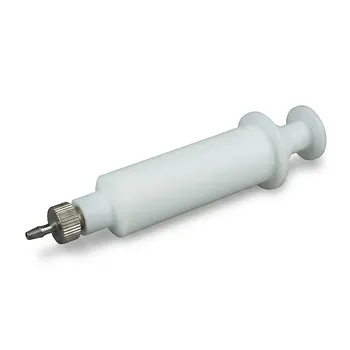
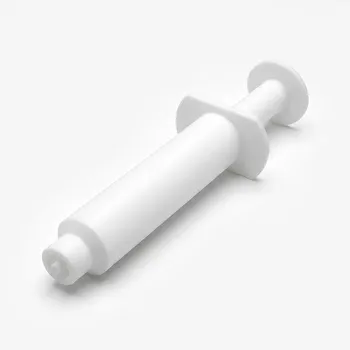
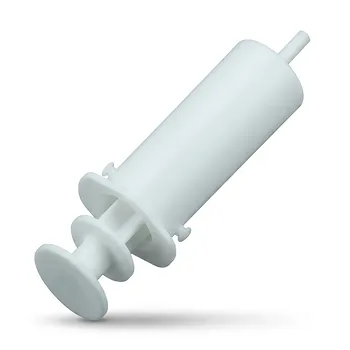
- High Temperature Chemical Resistant 50ml PTFE Syringe Customized Teflon Injector with Threaded Seal for Trace Analysis
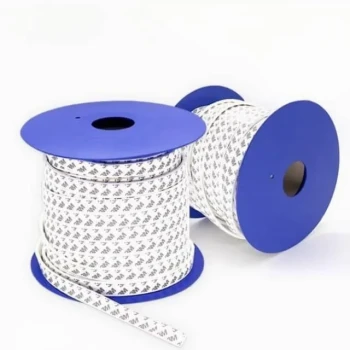
- Custom PTFE Sealing Tapes for Industrial and High Tech Applications
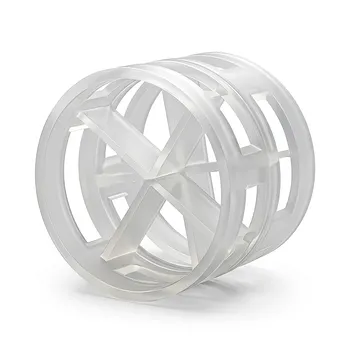
- High Purity PFA PTFE Raschig Rings for Chemical Distillation Tower Packing in Acidic and Alkaline Environments
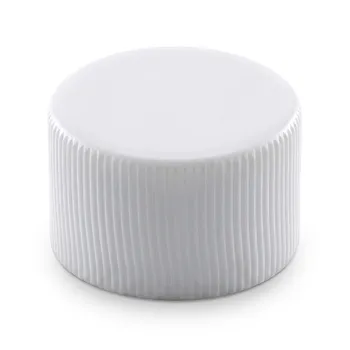
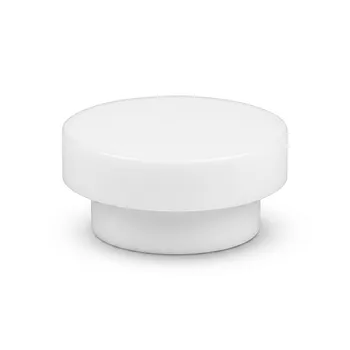
- Custom PTFE Sealing Caps and Corrosion Resistant Low Background Teflon Adapters
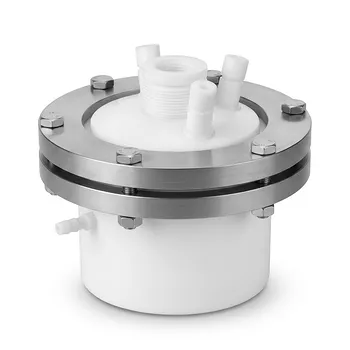
- Customizable PTFE Seals Filter Holders for Versatile Applications
People Also Ask
- In what medical devices is PTFE commonly used? Essential Components for Safety and Reliability
- Is PTFE approved for food contact applications? Ensuring Food Safety with Compliant PTFE
- Why is PTFE classified as non-melt-processible?
- Why is PTFE highly resistant to chemicals? Unmatched Inertness for Demanding Applications
- What is notable about the coefficient of friction of PTFE? Achieve Unmatched Low-Friction Performance