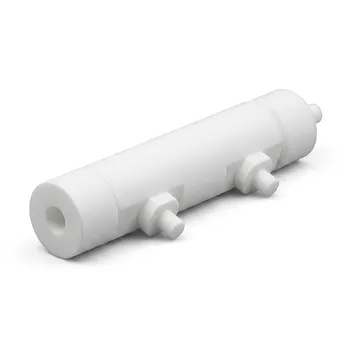
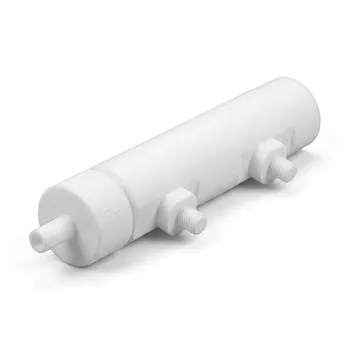
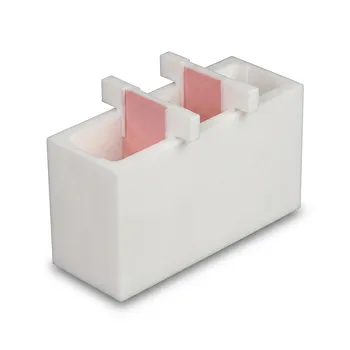
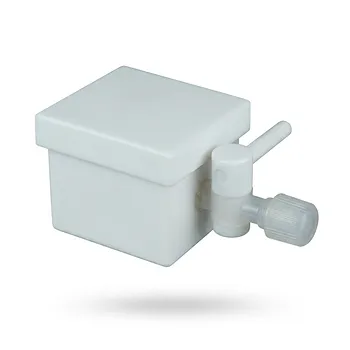
The dual-chamber H-type electrolytic cell is the fundamental hardware configuration for nitrate electroreduction (NO3RR) because it provides rigorous physical isolation between the cathode and anode. By using an ion-exchange membrane to separate the two compartments, it ensures that reaction products and intermediates remain in their respective chambers. This architecture is essential for preventing cross-contamination that would otherwise invalidate calculations for ammonia yield and Faradaic efficiency.
Core Takeaway: The H-type cell acts as a chemical barrier that prevents produced ammonia from being destroyed at the anode while blocking anodic oxygen from interfering with the cathodic reduction, thereby ensuring the integrity of all quantitative performance metrics.
Preventing Product Loss through Re-oxidation
The Barrier Against Ammonia Migration
During NO3RR, the primary goal is often the production of ammonia (NH3/NH4+) at the cathode. Without a physical barrier, these products would naturally diffuse through the electrolyte to the anode.
Eliminating Anodic Re-oxidation
Once the ammonia reaches the anode, it can undergo re-oxidation back into nitrogen gas or nitrates. This "shuttle effect" destroys the product you are trying to measure, leading to a significant underestimation of the catalyst's actual performance.
Protecting Reaction Intermediates
The H-type design also traps reaction intermediates at the cathode. Preventing these intermediates from reacting at the anode allows researchers to study the full step-by-step reduction mechanism without external interference.
Mitigating Chemical and Atmospheric Interference
Blocking Oxygen Evolution Products
The anode typically performs the oxygen evolution reaction (OER), producing oxygen gas and potentially other oxidative impurities. The dual-chamber design prevents these anodic products from migrating to the cathode, where they could interfere with the nitrate reduction process.
Maintaining a Controlled Gas Environment
High-quality H-type cells are often hermetically sealed to allow for precise gas control. This prevents atmospheric nitrogen (N2) or oxygen (O2) from entering the system, which is critical when trying to distinguish between nitrate-derived ammonia and potential contaminants from the air.
Independent Electrolyte Environments
Because the chambers are separated, researchers can sometimes use different electrolytes or concentrations in each chamber. This flexibility allows for the optimization of the electrochemical environment for the working electrode independently of the counter electrode.
Ensuring Accuracy in Quantitative Analysis
Reliability of Faradaic Efficiency (FE)
Faradaic efficiency measures how effectively electrical current is used to create the desired product. If ammonia is lost to re-oxidation at the anode, the calculated FE will be falsely low, making a high-performing catalyst appear inefficient.
Determining True Catalyst Yield Rates
The physical separation ensures that every milligram of ammonia detected in the cathode chamber represents the true yield of the catalyst. This is the only way to produce the repeatable, high-fidelity data required for peer-reviewed electrochemical research.
Understanding the Trade-offs
Membrane Resistance and Ohmic Drop
While the ion-exchange membrane is necessary for separation, it introduces internal resistance to the cell. This can lead to a significant voltage drop (iOHM), meaning the power source must work harder to maintain the desired potential at the electrode.
Ion Crossover and pH Gradients
Over long experiments, the membrane may not be 100% efficient, leading to ion crossover or the development of pH gradients between the two chambers. These shifts can alter the local environment of the catalyst and must be monitored to ensure long-term stability data is accurate.
How to Apply This to Your Project
Recommendations for Experimental Design
- If your primary focus is high-precision quantification: Use a sealed H-type cell with a high-quality cation or anion exchange membrane to ensure no ammonia escapes the cathode chamber during testing.
- If your primary focus is mechanistic study: Utilize the dual-chamber setup to sample intermediates from the cathode chamber at specific intervals without worrying about anode-side degradation.
- If your primary focus is industrial scaling: Recognize that while H-type cells are perfect for the lab, they are often replaced by flow cells in industrial applications to minimize the ohmic losses caused by the separation distance.
By strictly isolating the cathodic and anodic environments, the H-type cell transforms a chaotic mixture of competing reactions into a controlled, measurable, and scientifically valid system.
Summary Table:
| Feature | Technical Role | Impact on NO3RR Results |
|---|---|---|
| Ion-Exchange Membrane | Physical isolation of cathode/anode | Prevents ammonia re-oxidation at the anode |
| Dual-Chamber Design | Traps reaction intermediates | Allows precise mechanistic study without interference |
| Hermetic Sealing | Atmospheric & gas control | Blocks $N_2$ and $O_2$ contamination from air |
| Independent Electrolytes | Separates pH/concentration environments | Optimizes conditions for specific electrodes |
| Quantitative Integrity | Accurate FE & Yield measurement | Ensures high-fidelity data for peer-reviewed research |
Elevate Your Electrochemical Research with KINTEK Precision
Precision in nitrate electroreduction requires more than just a good catalyst; it demands high-performance hardware that eliminates variables. KINTEK specializes in manufacturing an exhaustive range of laboratory supplies crafted exclusively from high-performance fluoropolymers like PTFE and PFA, ensuring zero contamination and maximum chemical resistance for your most sensitive experiments.
From essential basic labware (beakers, crucibles, reagent bottles) and sample prep tools (filtration units, pipettes, tweezers) to advanced reaction apparatus—including standard and custom electrochemical cells, battery testing fixtures, and microwave digestion vessels—we provide the tools you need for repeatable, high-fidelity data.
Why choose KINTEK?
- End-to-End Customization: Our advanced CNC fabrication can deliver everything from bespoke laboratory setups to complex non-standard machined parts.
- Fluoropolymer Experts: We maintain an absolute focus on PTFE and PFA for superior thermal and chemical stability.
- Comprehensive Support: Whether you need high-volume consumables like stirring bars and O-rings or sophisticated fluid transfer components, we have you covered.
Ready to optimize your lab setup? Contact us today to discuss your custom project or volume requirements!
References
- Pandi Muthukumar, Chundong Wang. Unlocking a Water Coordination Environment in Co-Based Metal–Organic Frameworks for Advanced Nitrate-to-Ammonia Electroreduction. DOI: 10.1021/jacs.5c07066
This article is also based on technical information from Kintek Knowledge Base .
Related Products
- White PTFE Electrolytic Cell with Movable Slider and Insulated Lid for Fluorine Corrosion Resistance
- Custom PTFE Electrolytic Cell Corrosion Resistant Low Background Reaction Vessel with Inlet Outlet Ports
- High Purity Custom PTFE Reaction Cell Electrolytic Tank for Semiconductor and Polysilicon Industrial Applications
- Square PTFE Electrochemical Cell for Silicon Wafer Processing and Hydrofluoric Acid Resistance in Semiconductor and New Energy Research
- Flame Retardant Electrophoresis Cell Corrosion Resistant PTFE Evaporating Dish Customizable White Hydrolysis Cell
People Also Ask
- What makes PTFE an ideal construction material for custom electrochemical cells and electronic analytical instrumentation housings? Discover superior chemical resistance and electrical insulation
- How do custom PTFE electrochemical cells improve the accuracy of stability testing for alkaline catalysts compared to glass cells?
- How does the hydrophobicity of PTFE benefit electrochemical measurements? Enhance Stability and Precision in Your Lab
- How are electrolytic cells utilized in the Hall-Héroult process? Optimizing Purity and Energy Efficiency
- What are the primary components required for the construction of a standard electrolytic cell? Essential Hardware Guide