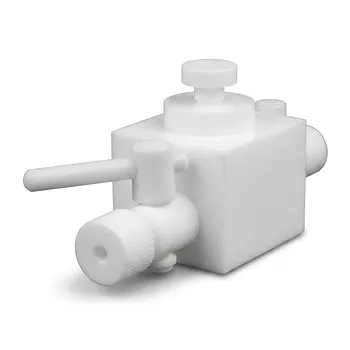
Addressing PTFE creep in valve design requires transitioning from static sealing strategies to active mechanical compensation. To effectively mitigate cold flow, engineers must implement live-loading components like Belleville washers, utilize reinforced material grades (RPTFE), and employ mechanical containment techniques such as dovetail grooves or backup rings to physically prevent material displacement under load.
Core Takeaway: Because PTFE lacks strong intermolecular cross-links, it behaves as a viscoelastic fluid that "flows" away from high-pressure areas. Successful valve design must treat PTFE as a dynamic material, using constant-force mechanisms and physical barriers to ensure seal longevity.
Implementing Mechanical Compensation Strategies
The Role of Live-Loading Components
Standard bolting often fails as PTFE thins over time, leading to a loss of preload and subsequent leaks. Live-loading, typically achieved through Belleville washers, maintains a constant sealing force by acting as a spring that "follows" the material as it deforms.
Seat Energizers and Elastomeric Backups
In high-cycle applications, internal seat energizers are used to maintain contact pressure. These can be metal springs or elastomeric O-rings encapsulated within the PTFE, providing the resilience that the base polymer lacks.
Redundant Sealing Interfaces
To account for potential material relaxation, designs often incorporate redundant seals. This may include secondary internal O-rings or two-ferrule systems that separate the gripping function from the sealing function, ensuring that cold flow at one point does not compromise the entire assembly.
Mechanical Containment and Geometric Design
Using Locking Grooves and Dovetail Recesses
One of the most effective ways to stop cold flow is to give the material nowhere to go. Mechanical locking grooves or dovetail recesses machined into the valve body trap the PTFE, preventing the radial extrusion that typically occurs under compressive stress.
Engineered Liner Thickness and Backup Rings
The thickness of the PTFE liner must be precisely calculated; while thicker walls can provide better structural integrity in lab settings, they can also increase the total volume of material susceptible to flow. Metal-backed PTFE washers or backup rings are used to provide a rigid boundary that supports the softer polymer.
High-Contact-Pressure Interfaces
Maintaining precise machining tolerances is critical for creating high-contact-pressure zones. By concentrating the load on specific, contained areas, designers can ensure a leak-proof interface even as the material begins its slow, time-dependent deformation.
Material Modifications for Stability
Reinforced PTFE (RPTFE) and Fillers
Standard virgin PTFE is often replaced with Reinforced PTFE (RPTFE) containing fillers like glass, carbon, or bronze. These additives significantly improve the material's abrasion tolerance and structural stability, reducing the rate of creep under high temperatures and pressures.
Expanded PTFE (ePTFE)
In gasket and sealing applications, expanded PTFE is used to create a multidirectional, fibrillar structure. This unique physical form is much more resistant to cold flow and thinning than standard PTFE, making it ideal for large-diameter flanges or irregular surfaces.
Understanding the Trade-offs
Chemical Compatibility vs. Mechanical Strength
While fillers like glass or carbon increase resistance to cold flow, they can compromise the chemical inertness or high-purity standards of the valve. Designers must ensure that the chosen reinforcement does not react with the process media.
Complexity and Maintenance Costs
Implementing live-loading and complex internal spring mechanisms increases the initial cost and complexity of the valve. These systems require precise installation and may introduce more failure points if not correctly specified for the operating environment.
Temperature-Induced Acceleration
Creep is highly temperature-dependent; a design that is stable at room temperature may fail rapidly at elevated temperatures. Engineers must calculate the "relaxation rate" based on the maximum possible operating temperature, not just the nominal pressure.
Applying Technical Mitigations to Your Project
Recommendations for Design Implementation
Successful valve design depends on matching the mitigation strategy to the specific stresses of the application.
- If your primary focus is extreme chemical purity: Use virgin PTFE but prioritize mechanical containment like dovetail grooves and live-loading to avoid using reactive fillers.
- If your primary focus is high-cycle reliability: Implement spring-energized seals or RPTFE with carbon fillers to ensure the seat maintains its shape over thousands of operations.
- If your primary focus is high-temperature sealing: Utilize expanded PTFE (ePTFE) and live-loaded bolt sets to compensate for the accelerated rate of cold flow at thermal peaks.
By treating PTFE as a material in motion rather than a static solid, engineers can build high-performance valves that remain leak-free over years of industrial service.
Summary Table:
| Mitigation Category | Key Technique/Material | Primary Engineering Benefit |
|---|---|---|
| Mechanical Compensation | Belleville Washers (Live-loading) | Maintains constant sealing force as PTFE thins. |
| Physical Containment | Dovetail Grooves / Locking Recesses | Prevents radial extrusion and material migration. |
| Material Modification | Reinforced PTFE (RPTFE) | Fillers like glass/carbon reduce creep rate. |
| Active Energizing | Spring-energized / Elastomeric Backups | Ensures seal resilience in high-cycle use. |
| Geometric Design | Metal-backed Washers / Backup Rings | Provides rigid boundaries to support soft polymer. |
Optimize Your Fluid Systems with KINTEK’s Fluoropolymer Expertise
Don’t let PTFE creep compromise your critical lab operations. KINTEK specializes in high-performance fluoropolymer solutions, offering an exhaustive range of laboratory supplies crafted from PTFE and PFA. From everyday basics like beakers, reagent bottles, and centrifuge tubes to advanced fluid transfer components including precision valves, tubing, and fittings, we provide the materials necessary to maintain seal integrity.
Whether you require standard consumables like O-rings and gaskets, high-purity trace analysis instruments, or bespoke laboratory setups—such as custom electrochemical cells and microwave digestion vessels—our end-to-end custom CNC fabrication ensures your specific design challenges are met with absolute precision.
Ready to upgrade your laboratory setup with high-performance, creep-resistant components?
Contact KINTEK Today to Discuss Your Custom Project
Related Products
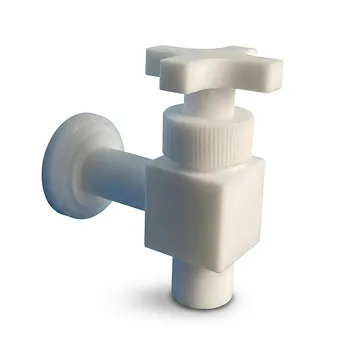
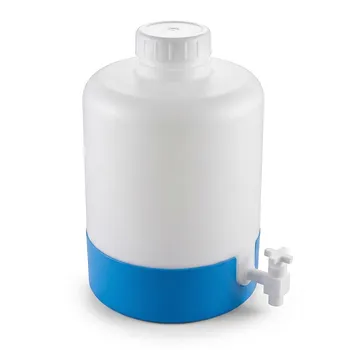
- Corrosion Resistant PTFE Polytetrafluoroethylene Valve and Customizable Laboratory Fluid Dispensing Faucet for Aggressive Chemical Handling in Industrial Storage Tanks and Plastic Drums
- High Corrosion Resistant PTFE Faucet Polytetrafluoroethylene Valve for Chemical Storage Drums and Fluid Transfer Systems Customizable Industrial Grade
- High Purity PTFE Faucet Corrosion Resistant Polytetrafluoroethylene Drum Valve Customizable Lab Chemical Fluid Control
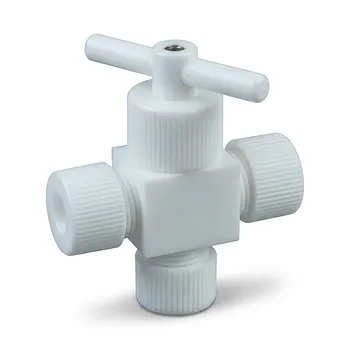
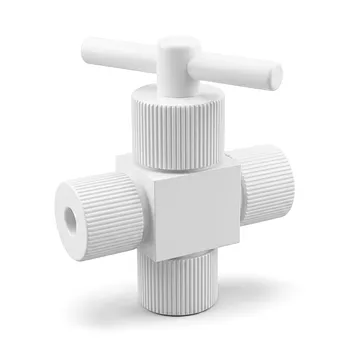
- Custom PTFE Valve 2-Way 3-Way Corrosion Resistant Low Background Virgin Fluoropolymer Industrial Fluid Control
- Corrosion Resistant PTFE Valves Customizable 2 Way 3 Way 4 Way High Temperature Teflon Fluid Control Solutions
People Also Ask
- How do PTFE valves and components support high-purity liquid transfer? Ensure Product Integrity with Inert Materials
- What industries commonly use PTFE valves and components? Essential for Chemical & Purity Applications
- What specific advantages do PTFE valves offer? Unmatched Corrosion Resistance for Industrial Chemical Handling
- What are the key properties of PTFE valves? Ensure Purity, Safety, and Reliability in Demanding Processes
- What is the typical operating temperature and pressure range for PTFE valves? Key Specs for Optimal Performance