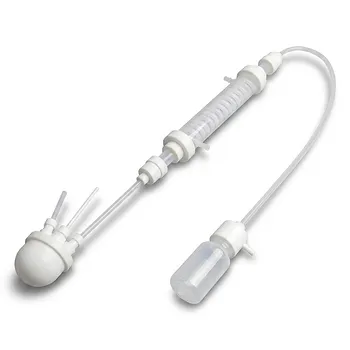
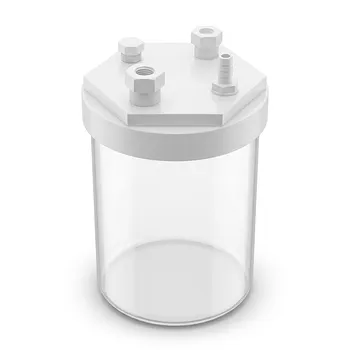
Synthesizing main-chain fluorinated polymers is difficult because the chemistry combines volatile monomers, demanding reaction conditions, and highly reactive fluorinated intermediates. Monomers such as vinylidene fluoride (VDF), tetrafluoroethylene (TFE), and hexafluoropropene (HFP) are gaseous or highly volatile near room temperature, while their polymerizations may require pressure, careful radical control, and specialized initiation methods. Fluoropolymer-based apparatus made from high-purity PTFE and PFA helps address these challenges through chemical inertness, low contamination risk, and reliable containment of aggressive reagents and volatile feeds.
The central challenge is controlling reactive fluorinated chemistry without losing monomer, compromising seals, or introducing contamination. PTFE and PFA equipment provides chemically resistant contact surfaces and specialized transfer and sealing components, although pressure, temperature, and mechanical design limits still require independent engineering verification.
Why Main-Chain Fluorinated Polymer Synthesis Is Technically Demanding
Volatile monomers are difficult to contain
VDF has a boiling point near -83 to -86 °C, and TFE and HFP are also gaseous under ordinary laboratory conditions. Their use therefore requires pressure-rated systems, controlled transfer, leak-tight connections, and accurate monitoring of monomer inventory.
Low-boiling monomers can also complicate dosing and reaction reproducibility. Small changes in temperature or pressure may alter the monomer concentration available for polymerization.
Polymerization often occurs under pressure
Conventional synthesis routes for high-molecular-weight fluoropolymers may use elevated temperatures and high pressures in metal reactors. These conditions increase equipment cost, complicate catalyst screening, and amplify the consequences of leaks or seal failure.
High-pressure operation also makes small-scale experimentation inefficient when large amounts of monomer are required for each test. Lower-pressure approaches, including some visible-light photopolymerization methods, can reduce these burdens when the specific chemistry is compatible.
Fluorinated radicals can cause side reactions
Radical polymerization involves highly reactive species that must add to the intended monomer rather than react with the solvent or other components. Fluorinated radicals can promote severe solvent chain-transfer reactions, which interrupt chain growth and reduce molecular weight.
The result may be poor conversion, broad molecular-weight distributions, or polymers that do not meet the intended performance targets. Solvent choice, initiator selection, temperature, pressure, and monomer feed rate must therefore be controlled together.
Feed composition affects polymer structure
When fluorinated and non-fluorinated monomers are combined, the feed ratio and addition rate influence composition, sequence distribution, and phase behavior. Poor control can produce unwanted phase separation or an imbalanced combination of electronic, thermal, and mechanical properties.
Controlled feeding is particularly important when one monomer is gaseous or substantially more volatile than the others. The nominal formulation may differ from the actual composition inside the reaction vessel if transfer and dissolution are not well managed.
Why PTFE and PFA Apparatus Are Well Suited
Chemically inert surfaces reduce reaction interference
High-purity PTFE and PFA resist many aggressive fluorinated reagents, strong initiators, acids, and solvents. Their low-reactivity surfaces reduce the likelihood that the apparatus will participate in the reaction or degrade during processing.
This matters when trace side reactions can affect molecular weight or when sensitive catalyst and monomer systems are being screened. Equipment compatibility must still be checked against the exact reagent, temperature, concentration, and exposure time.
They reduce metallic contamination
Metal reactors, valves, and fittings can introduce trace elements through corrosion, wear, or leaching. Such contamination can interfere with catalysts, initiators, analytical measurements, or downstream polymer properties.
Fluoropolymer contact components, including PTFE vessels and PFA tubing, help create a cleaner reaction path. This is especially valuable in catalyst screening, organometallic intermediate preparation, digestion, and trace analysis.
They support volatile-fluid transfer
PFA tubing, PTFE adapters, corrosion-resistant valves, and custom manifolds can be assembled into transfer paths for volatile monomers, solvents, and intermediates. Properly designed components help limit dead volume, reduce adsorption or contamination, and maintain controlled material movement.
Leak-tight fittings are essential because a chemically resistant material does not compensate for poor connection design. Sealing geometry, tubing support, thermal expansion, and compatibility with the operating pressure must all be considered.
They protect against aggressive chemical environments
Fluoropolymer equipment can maintain its integrity when exposed to chemically aggressive solvents, fluorinated compounds, and strong initiator systems. This makes it useful for reaction vessels, reagent containers, digestion vessels, and fluid-transfer assemblies.
The benefit is both operational and analytical: the apparatus is less likely to degrade, contaminate the sample, or require frequent replacement during demanding synthesis and purification cycles.
They enable customized experimental hardware
PTFE and PFA can be machined into specialized reaction vessels, electrochemical cell bodies, manifold blocks, adapters, and transfer components. Custom hardware can support unusual geometries, small-volume screening, or integrated feed and sampling arrangements.
Machining requires care because fluoropolymers have a relatively low modulus, a high coefficient of thermal expansion, and a tendency to creep under sustained stress. Sharp tooling, controlled feed rates, temperature management, and precise finishing are necessary to preserve dimensional accuracy and seal performance.
How Equipment Design Supports Better Process Control
Sealing integrity is part of reaction control
A seal failure can change pressure, monomer concentration, and reagent composition at the same time. It can also expose personnel to toxic or reactive gases and allow atmospheric moisture or oxygen to enter the process.
Custom-machined seals and appropriately selected fluoropolymer components help maintain containment. For pressure processes, however, the complete assembly must be validated as a pressure system rather than judged solely by the chemical resistance of its materials.
Small-scale screening reduces process burden
Traditional high-temperature, high-pressure polymerization can require substantial monomer quantities and expensive reactors. Small-scale systems using inert transfer components and, where appropriate, mild photopolymerization conditions can make catalyst and formulation screening more practical.
This approach can reduce monomer consumption and improve experimental throughput. It does not remove the need for pressure relief, gas detection, compatible illumination equipment, or validated operating procedures.
Clean hardware improves comparability
When different experiments use consistent, low-contamination reaction paths, changes in conversion or molecular weight are more likely to reflect chemistry rather than equipment artifacts. This is important when comparing initiators, solvents, catalysts, feed rates, or light-driven reaction conditions.
High-purity components therefore contribute to experimental reproducibility, not merely equipment longevity.
Understanding the Trade-offs
PTFE and PFA are not universal pressure vessels
PTFE and PFA offer strong chemical resistance, but their mechanical properties impose limits. Creep, thermal expansion, low stiffness, and reduced dimensional stability under load can affect threads, flanges, and seals.
High-pressure applications may require a hybrid design in which fluoropolymer components provide the chemically resistant wetted surface while an appropriately engineered external structure provides mechanical support. Pressure and temperature ratings must be established for the complete assembly.
Chemical resistance depends on conditions
No material should be treated as resistant to every fluorinated reagent under every condition. Temperature, pressure, concentration, mechanical stress, radiation exposure, and contact duration can alter compatibility.
A compatibility review should cover the specific monomer, initiator, solvent, catalyst, cleaning agent, and expected operating cycle.
Fluoropolymer fabrication can affect reliability
Poor machining can distort sealing surfaces or create dimensional changes during assembly and heating. Because fluoropolymers expand and creep more than many metals, tolerances designed for rigid materials may not remain reliable during operation.
Machining parameters and thermal conditioning should be treated as part of the apparatus design, particularly for custom vessels and manifold systems.
Inert materials do not replace process safeguards
PTFE and PFA can reduce corrosion and contamination, but they do not by themselves control runaway polymerization, toxic exposure, overpressure, or oxygen-sensitive chemistry. Appropriate relief systems, remote operation, temperature and pressure monitoring, ventilation, and validated procedures remain necessary.
Making the Right Choice for Your Goal
The apparatus should be selected around the reaction hazards, the required purity, and the scale of experimentation.
- If your primary focus is volatile-mononer containment: Use a sealed, pressure-appropriate system with validated fluoropolymer transfer lines, fittings, valves, and seals, supported by suitable pressure relief and monitoring.
- If your primary focus is molecular-weight control: Prioritize precise monomer feed, solvent and initiator compatibility, temperature control, and apparatus surfaces that do not promote chain-transfer or contamination.
- If your primary focus is catalyst or formulation screening: Use small-volume PTFE/PFA vessels and controlled transfer assemblies to reduce monomer consumption while maintaining consistent reaction conditions.
- If your primary focus is trace purity: Minimize metallic wetted surfaces and use high-purity fluoropolymer components to reduce leaching, corrosion products, and cross-contamination.
- If your primary focus is custom process integration: Design the fluoropolymer parts together with their seals, supports, thermal behavior, and pressure boundaries so machining accuracy translates into reliable operation.
With the chemistry, containment strategy, and mechanical design evaluated together, fluoropolymer-based apparatus can make challenging main-chain fluorinated polymer syntheses cleaner, more controllable, and more practical to develop.
Summary Table:
| Challenge | Impact on Synthesis | How PTFE/PFA Apparatus Helps |
|---|---|---|
| Volatile monomers (VDF, TFE, HFP) | Difficult to contain, dosing issues | Leak-tight transfer lines, valves, and seals; inert surfaces reduce adsorption |
| High-pressure operation | Equipment cost, leaks, safety risks | Pressure-rated systems with PTFE/PFA wetted parts; hybrid designs for support |
| Reactive fluorinated radicals | Side reactions, chain transfer, low molecular weight | Chemically inert surfaces minimize interference |
| Feed composition control | Phase separation, inconsistent properties | Controlled feeding with PFA tubing and custom manifolds |
| Metallic contamination | Catalyst interference, analytical errors | High-purity PTFE/PFA components reduce leaching |
| Custom hardware needs | Specialized geometries for screening | Custom CNC machining of PTFE/PFA parts |
Ready to overcome the challenges of fluoropolymer synthesis? At KINTEK, we specialize in high-performance PTFE and PFA labware, from basic beakers and digestion vessels to custom electrochemical cells and microwave digestion vessels. Our end-to-end CNC machining capabilities ensure you get the exact components you need for reliable, contamination-free reactions. Contact our experts today to design your ideal reaction setup – Get in touch now!
Related Products
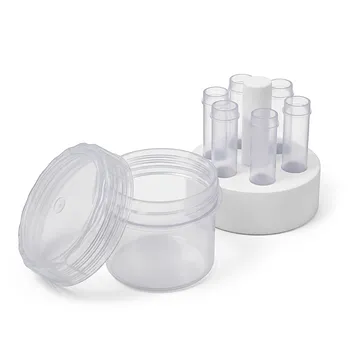
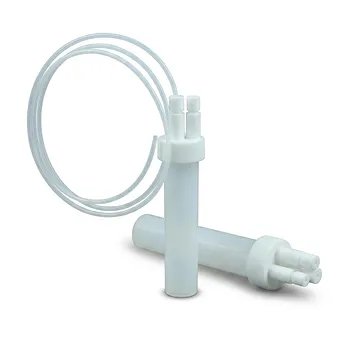
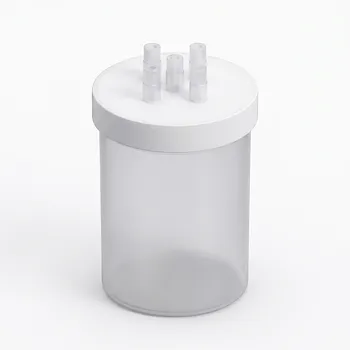
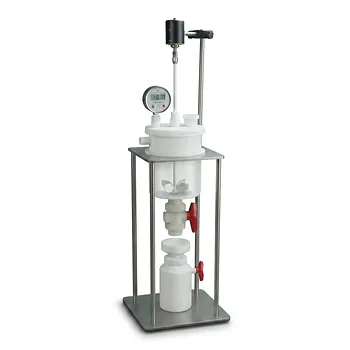
- High Purity Corrosion Resistant PFA Reaction Vessel with PTFE Holder and Integrated Sampling Tube for Trace Analysis
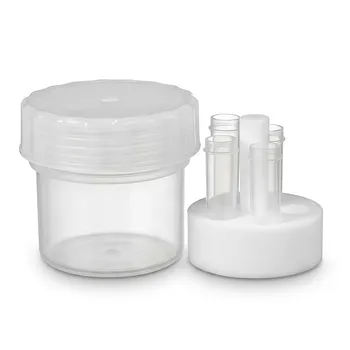
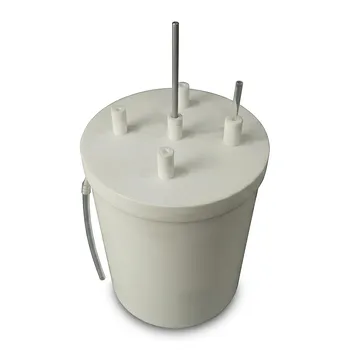
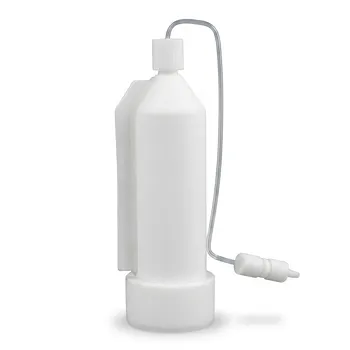
- Corrosion Resistant PTFE Support with PFA Transparent Reaction Tank and High Purity PFA Sampling Tube for Trace Analysis
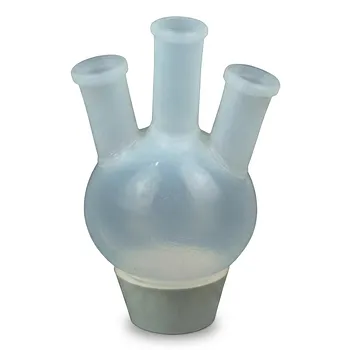
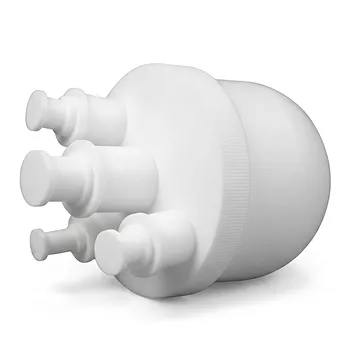
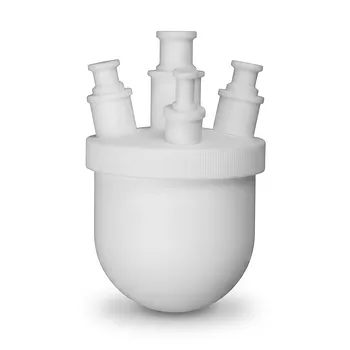
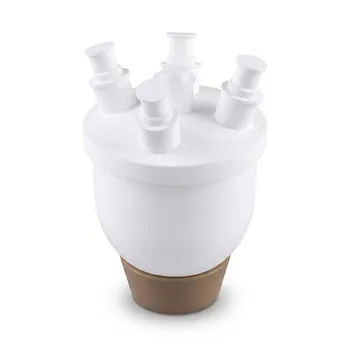
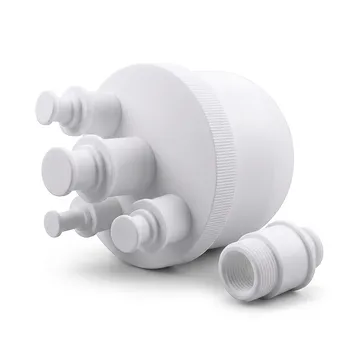
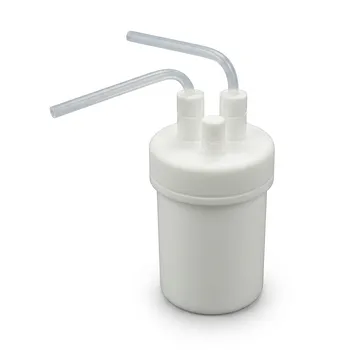
- Custom Corrosion Resistant PFA PTFE Multi Neck Laboratory Reaction Flask GL Standard Mouth Fluoropolymer Flasks
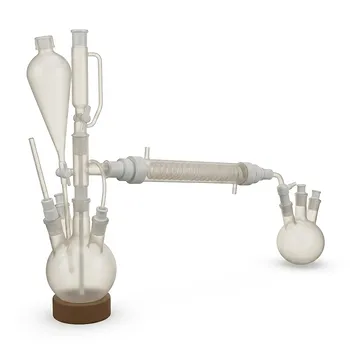
- PTFE Distillation Condensation Apparatus High Temperature Hydrofluoric Acid Resistant Fluorination Reaction Flask
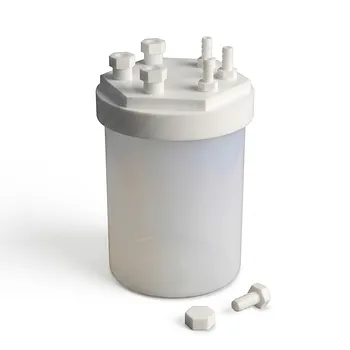
- Custom PFA Reaction Bottles High Purity PTFE Reaction Vessels Corrosion Resistant Petrochemical Containers
People Also Ask
- Why is the choice of reaction vessel material critical during B-NiBDC synthesis? Optimize MOF Purity & Performance
- How do the material choice and sealing integrity of the reaction vessel affect the growth of NiFe-LDH? Optimize Synthesis
- Why are well-sealed reaction vessels necessary for superacid-promoted Friedel-Crafts polycondensation? Optimize Synthesis
- Role of reaction vessels in alkali treatment for oil palm waste: Achieve High-Purity Cellulose with PTFE Vessels
- What is the role of high chemical inertness reaction vessels in the organic synthesis of acylhydrazone ligands? | Guide