The essential controls are low reaction concentration and slow multifunctional-monomer feeding. For A2 + B3 or AB2 + A2 polycondensations, maintain the reaction at approximately 2.7-4 wt.% solids and add the multi-reactive monomer gradually over several hours. This reduces the instantaneous concentration of branching sites, delays the critical gel point, and allows formation of soluble hyperbranched fluoropolymers with molecular weights above 100,000 g/mol.
Solubility depends on controlling local branching density, not simply on achieving high conversion. Dilute solution conditions and a controlled feed of multifunctional monomer allow molecular weight to increase while postponing the intermolecular network formation that causes macro-gelation.
Why Premature Gelation Occurs
Multifunctional monomers create network connectivity
In systems such as A2 + B3 and AB2 + A2, individual monomers carry more than two reactive groups. As conversion increases, these groups connect growing polymer molecules and eventually create a system-spanning network.
That transition is the gel point. Material formed beyond this point may become insoluble, nonuniform, or impossible to process as a solution resin.
Local concentration matters
Even when the overall formulation appears controlled, rapid addition of a B3 or AB2 monomer can create a temporary region with a high concentration of reactive groups. That local concentration promotes intermolecular crosslinking and can trigger gelation before the target molecular weight is reached.
The synthesis must therefore control both the average solids content and the instantaneous feed concentration.
Required Synthesis Controls
Maintain a dilute solution
Keep the polymerization mixture at approximately 2.7-4 wt.% solids during the critical growth period. The solvent separates reactive polymer chains and lowers the probability that multiple growing molecules will connect into a continuous network.
This dilution shifts the effective gel point to a higher conversion, creating more processing latitude before insolubility develops.
Feed the multifunctional monomer slowly
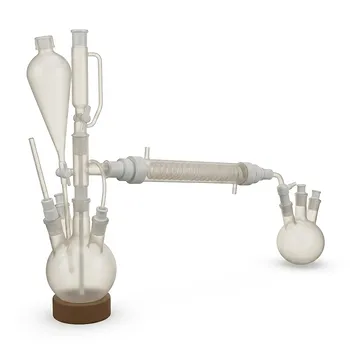
Add the multi-reactive component over several hours, rather than charging it all at once. Slow addition limits the concentration of branching functionality present at any one time and distributes branch formation more evenly throughout the reaction.
The feed system should be sufficiently precise to maintain a controlled addition rate, particularly when fluorinated and non-fluorinated monomers are being combined.
Control the feed location and mixing
The feed must enter a region with effective mixing so that the added multifunctional monomer is rapidly dispersed through the reaction solution. Poor mixing can produce local overconcentration even when the nominal feed rate is slow.
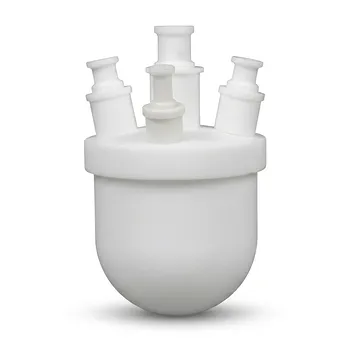
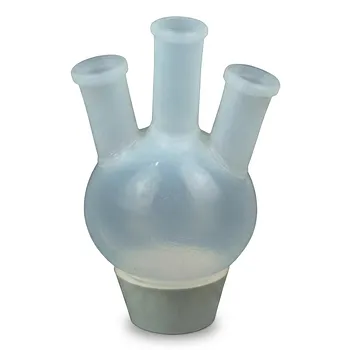
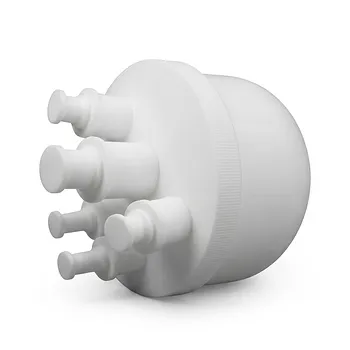
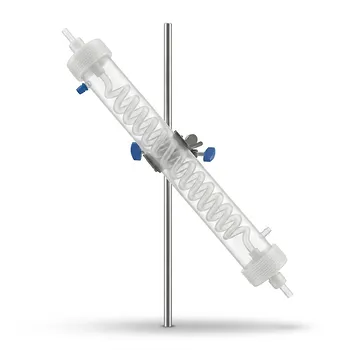
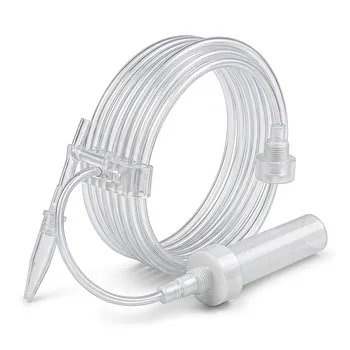
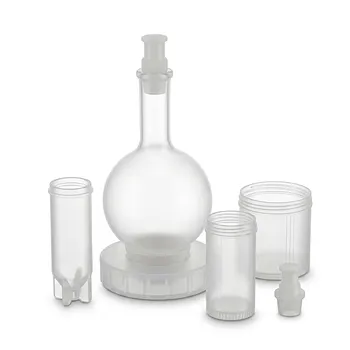
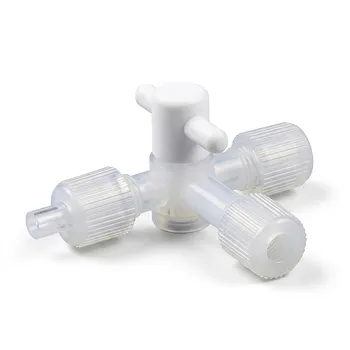
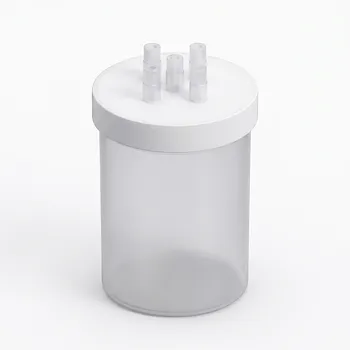
For fluorinated systems, the reaction vessel, transfer lines, valves, and related components should be compatible with aggressive fluorinated monomers and solvents. PTFE or PFA equipment and corrosion-resistant fluid-handling components can help preserve purity and process reliability.
Keep the concentration control continuous
The target solids range should be treated as an operating constraint throughout the reaction, not merely as an initial formulation value. Polymer growth, solvent loss, and monomer addition can all change the effective concentration of reactive species.
Maintaining dilution during the branching stage is central to obtaining a fully soluble product.
How the Controls Preserve High Molecular Weight
They delay network formation
The combination of dilution and slow feed reduces the rate at which independent polymer molecules become connected to one another. This allows substantial molecular growth before the system reaches the gel threshold.
The result is a high-molecular-weight, branched resin rather than a permanently crosslinked network.
They improve molecular uniformity
Gradual incorporation of multifunctional monomer avoids a sudden burst of branching and produces a more controlled distribution of branch points. This supports more uniform resin formation and improves the likelihood of consistent coating and component processing.
They support soluble end products
The objective is not simply to suppress all branching. Hyperbranching is retained, but macro-gelation is avoided by controlling how quickly branching functionality enters the reaction environment.
A successful process therefore balances high conversion and molecular weight against the need to remain below the insoluble network-forming regime.
Additional Process Considerations
Use a compatible reaction environment
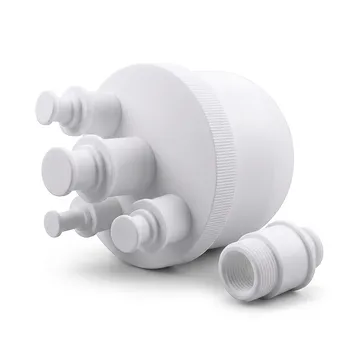
Fluorinated monomers and solvents can be chemically demanding. Fluoropolymer-compatible vessels, high-purity transfer lines, digestion containers, and corrosion-resistant valves help prevent contamination, material degradation, and uncontrolled side reactions.
Equipment compatibility is a process-control issue because contamination or material attack can alter polymer quality and reaction reproducibility.
Use precise monomer metering
When fluorinated and non-fluorinated units are copolymerized, controlled metering helps regulate composition and prevents excessive local incorporation of fluorinated monomer. The feed strategy should account for the desired substitution pattern and overall composition.
This is separate from gel control, but it affects phase behavior, stability, backbone structure, and thermal performance.
Match the method to the target architecture
Emulsion polymerization and supercritical carbon dioxide emulsion techniques can produce high-molecular-weight fluoropolymers through controlled dispersed phases. However, for the multifunctional polycondensation systems described here, dilute solution operation and staged multifunctional-monomer addition are the primary controls for maintaining solubility.
Understanding the Trade-offs
Excessive dilution lowers process efficiency
Operating at 2.7-4 wt.% solids improves gel resistance, but it also increases solvent demand and may require more solvent removal after polymerization. The benefit is greater control over molecular architecture and solution processability.
Faster addition increases gel risk
A rapid or single-shot addition of the multifunctional monomer can increase local branching density and cause premature macro-gelation. The process may reach a high apparent conversion while producing an unusable insoluble fraction.
Slow feeding can extend batch time
Adding the branching monomer over several hours requires accurate pumping, stable mixing, and longer reaction operation. Those costs are justified when the product specification requires both high molecular weight and complete solubility.
High conversion is not the only success criterion
Driving conversion aggressively without considering the gel point can compromise the final resin. The correct endpoint is a high-molecular-weight polymer that remains uniformly soluble, not merely the highest possible conversion.
How to Apply This to Your Synthesis
The practical controls should be designed around the branching stage and maintained until the reaction is complete.
- If your primary focus is preventing premature gelation: Maintain approximately 2.7-4 wt.% solids and feed the multifunctional monomer slowly over several hours with effective mixing.
- If your primary focus is achieving molecular weight above 100,000 g/mol: Use the dilute, controlled-feed process to postpone the gel point while allowing conversion and branched-chain growth to continue.
- If your primary focus is producing uniform coatings or molded components: Preserve complete solubility through the end of the reaction and use fluoropolymer-compatible equipment to avoid contamination and material incompatibility.
- If your primary focus is copolymer composition: Use precise, incremental monomer feeding to regulate fluorinated-unit incorporation while maintaining the same concentration and gelation controls.
High-molecular-weight soluble hyperbranched fluoropolymers are produced by controlling local branching concentration long enough for molecular growth to occur before the gel point is reached.
Summary Table:
| Control | Specification | Purpose |
|---|---|---|
| Reaction concentration | 2.7-4 wt.% solids | Reduces intermolecular crosslinking, delays gel point |
| Multifunctional monomer feed | Slow addition over several hours | Prevents local branching density spike, distributes branches evenly |
| Mixing | Effective, rapid dispersion | Prevents local overconcentration |
| Equipment compatibility | PTFE/PFA components | Maintains purity, prevents contamination or degradation |
| Continuous monitoring | Maintain solids throughout reaction | Ensures consistent dilution, avoids concentration drift |
Optimize your fluoropolymer synthesis with KINTEK's precision PTFE/PFA labware and custom CNC-machined parts. From reaction vessels to high-purity transfer lines, our products ensure reliable process control. Contact us today for solutions tailored to your high-performance needs.
Related Products
- High Purity PFA Chromatography Columns and Collection Bottles Corrosion Resistant Fluoropolymer Filtration Systems for Trace Analysis
- High Purity PFA Chromatography Column with Collection Bottle Corrosion Resistant Fluoropolymer Filtration System for Trace Analysis
- High Purity PFA PTFE Flare Stop Valves Customizable 2-Way 3-Way Reducing Fluoropolymer Fluid Control Solutions
- High Purity PFA Coiled Tubing Custom PTFE Machining PFA Welding and Precision Bending Solutions
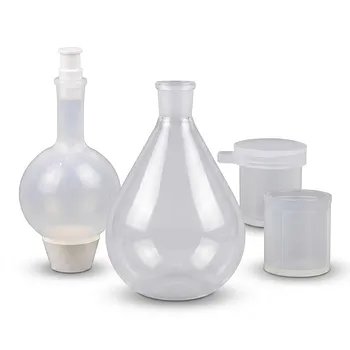
- Custom PTFE Flask 250ml High Purity Fluoropolymer Laboratory Vessel for Chemical Research
People Also Ask
- Why use high-purity PFA bottles for Carbon Quantum Dots? Ensure Ink Stability and Prevent Fluorescence Quenching
- Why is PFA often selected over traditional PTFE for manufacturing complex fluoropolymer fluid components, custom fittings, and sealed laboratory digestion vessels? Discover the key advantages for your lab.
- What are the primary functional and temperature differences between PFA and FEP when selecting melt-processible fluoropolymers for custom laboratory apparatus?
- Why is the chemical stability of polymer endgroups critical when selecting melt-processible fluoropolymers like PFA for high-purity laboratory apparatus? Choose Stable Endgroups for Reliable Performance
- What are the characteristics of PFA material? A Guide to Its High-Performance Balance