PTFE aqueous dispersions should be kept cool, protected from freezing, and handled with minimal mechanical shear. Storage, transportation, transfer, and formulation temperatures should ideally remain below 19°C (66°F), while freezing must be strictly avoided because it can cause irreversible particle coagulation. Pumps, mixers, and transfer systems must also avoid high shear, which can trigger premature agglomeration and fibrillation. These controls preserve coating uniformity, chemical resistance, and surface quality on fluoropolymer-treated labware.
The essential controls are temperature, shear, and dispersion condition. Keep the material cool but unfrozen, use gentle handling, prevent unauthorized chemical additions, and verify that the suspension remains free of visible coagulum before coating.
Why PTFE Dispersion Stability Matters
Submicron Particles Are Easily Disturbed
PTFE aqueous dispersions contain submicron particles, commonly near 0.2 µm, suspended at roughly 60% solids by weight. Surfactants help maintain this suspension, but the system remains sensitive to excessive mechanical force and temperature changes.
Instability Directly Affects Coating Quality
Agglomerated or fibrillated particles can produce roughness, pinholes, poor wetting, and nonuniform film build. Those defects may reduce chemical resistance and compromise the flaw-free lining expected on specialized laboratory equipment.
Formulation Properties Must Remain Consistent
Particle size, solids content, viscosity, pH, and surfactant concentration influence application behavior. Changes in these properties can affect substrate wetting, drying, film thickness, and the final sintered coating.
Controlling Temperature During Storage and Handling
Keep the Material Below 19°C
Storage, transportation, and processing should ideally be maintained below 19°C. A controlled range around 5°C to below 19°C is consistent with the supplied guidance, provided the dispersion does not freeze.
Prevent Freezing at All Times
Freezing can cause irreversible particle coagulation. Do not place the dispersion in conditions where it can freeze, and inspect any material exposed to suspected freezing before use.
Avoid Excessive Heat
High temperatures can accelerate aggregation and reduce dispersion quality. Heating during coating or curing requires additional controls because fluoropolymer materials processed near or above their melting point may require the same ventilation and thermal-decomposition precautions as solid fluoropolymer resins.
Minimizing Mechanical Shear
Use Low-Shear Transfer Equipment
Pumping, mixing, and transfer operations should be designed around low shear rates. Avoid aggressive impellers, high-speed recirculation, narrow restrictions, and transfer methods that create excessive turbulence.
Agitate Only as Much as Necessary
The dispersion must remain uniform without being subjected to violent mixing. Where settling control is needed, drums can be rolled or gently agitated approximately monthly, using the least force necessary to restore uniformity.
Protect the Dispersion During Formulation
Additives should be introduced only when authorized by the formulation procedure. Unapproved chemical additions can destabilize the surfactant system and trigger particle aggregation.
Storage Practices That Preserve Usability
Use a Controlled Shelf-Life Program
Liquid PTFE dispersions are commonly assigned a maximum shelf life of approximately one year under suitable storage conditions. Record receipt dates, storage temperatures, container identity, and inspection results so older material is not used without review.
Inspect for Coagulum Before Application
A sample can be examined microscopically for coagulated particles. Numerous white lumps indicate spoilage or severe instability, while a uniform suspension supports further evaluation against the product specification.
Confirm Key Properties Before Critical Work
For high-value labware coatings, verify relevant properties such as solids content, viscosity, pH, and particle condition. The material should meet the supplier's specification before it is applied to production surfaces.
Protecting Operators and the Work Area
Treat the Liquid Phase as an Irritant
Surfactants and other aqueous-phase additives can irritate the skin and eyes. Operators should wear appropriate protective clothing, safety goggles, or a face shield during handling and application.
Account for Formulation-Specific pH
Many dispersions are neutral to moderately alkaline, but some specialty primers or metal-coating formulations can be strongly acidic. The product-specific safety data sheet must determine the required chemical-protection measures.
Respond Immediately to Contact
Flush skin or eyes with water immediately after contact. Eye exposure requires prompt medical attention after initial flushing, in accordance with the product safety data sheet.
Control Heated Processing
When the dispersion is heated near or above the polymer's melting point, provide adequate local exhaust ventilation and vapor control. Thermal precautions should follow the product's SDS or MSDS and the facility's fluoropolymer-processing requirements.
Understanding the Trade-offs
Cooling Improves Stability but Requires Freeze Protection
Lower temperatures generally help preserve dispersion stability, but cooling below the product's safe limit can create a freezing hazard. The objective is a controlled, unfrozen temperature rather than simply the lowest possible temperature.
Agitation Prevents Settling but Can Damage the Dispersion
Gentle rolling or agitation can help restore uniformity after storage. Excessive mixing, however, can create the shear conditions that cause agglomeration and fibrillation.
Higher Solids Improve Film Build but Increase Application Sensitivity
Higher solids content can support thicker protective barriers, particularly when the dispersion also has a higher critical cracking thickness. Applying too much material in one coat can still cause mud-cracking, so film thickness must remain within the product's specified limit.
Visual Inspection Is Useful but Not Sufficient
A uniform appearance is a helpful initial indicator, but it does not replace specification testing. Critical coating work should also consider microscopic particle condition, viscosity, solids content, pH, and application behavior.
How to Apply This to Your Project
The appropriate controls depend on whether the priority is material preservation, coating consistency, operator safety, or maximum film performance.
- If your primary focus is storage stability: Maintain temperatures below 19°C, prevent freezing, use a controlled shelf-life system, and gently agitate containers only when necessary.
- If your primary focus is coating consistency: Minimize shear during transfer and formulation, and verify particle condition, viscosity, solids content, and pH before application.
- If your primary focus is surface protection: Control film build and critical cracking thickness so the cured layer remains continuous, crack-free, and chemically resistant.
- If your primary focus is operator safety: Use eye and skin protection, review the formulation's pH and SDS, and provide local exhaust ventilation for heated processing.
Reliable PTFE-coated labware begins with disciplined control of temperature, shear, material condition, and worker exposure throughout the entire handling process.
Summary Table:
| Condition | Control | Reason |
|---|---|---|
| Temperature | Keep below 19°C, avoid freezing | Prevent irreversible particle coagulation |
| Mechanical shear | Use low-shear pumps and gentle agitation | Prevent agglomeration and fibrillation |
| Chemical additives | Only authorized additions | Avoid destabilizing surfactant system |
| Storage time | Use within 1 year, record dates | Ensure material remains within spec |
| Inspection | Check for coagulum before use | Detect spoilage or instability |
| Operator safety | Wear protective gear, follow SDS | Protect from irritants and acids |
Ensure your fluoropolymer labware coatings perform flawlessly with KINTEK's high-purity PTFE and PFA products. From standard labware to custom CNC-machined parts, our expertise in dispersion handling preserves material stability and coating integrity. Contact us today to discuss your specific application and elevate your lab's performance. Reach out now.
Related Products
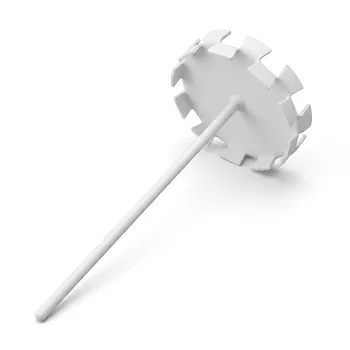
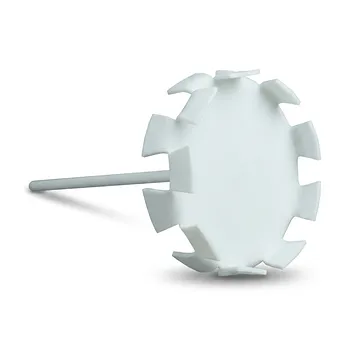
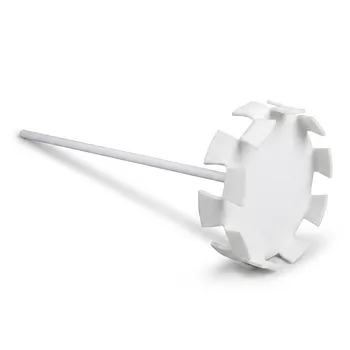
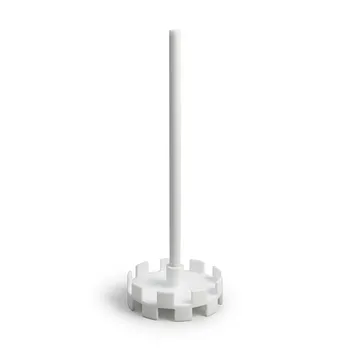
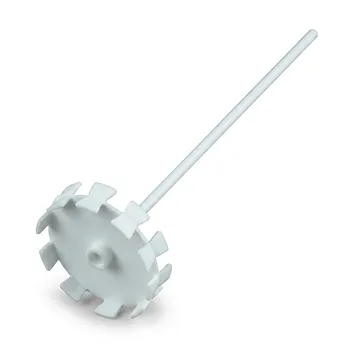
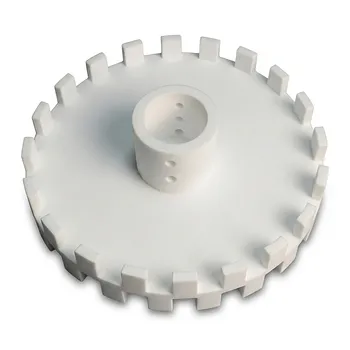
- High Purity Corrosion Resistant PTFE Dispersion Disk and Inert Stirring Paddle for Food Pharmaceutical and Cosmetic Mixing
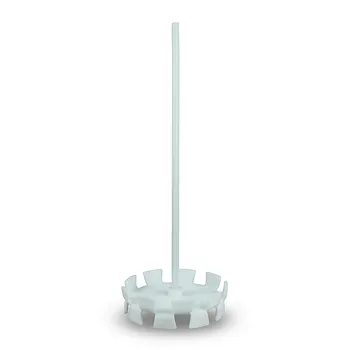
- High Purity PTFE Dispersion Disk for Food and Cosmetic Processing Non Stick Corrosion Resistant Large Stirring Paddle Customizable Fluoropolymer Impeller
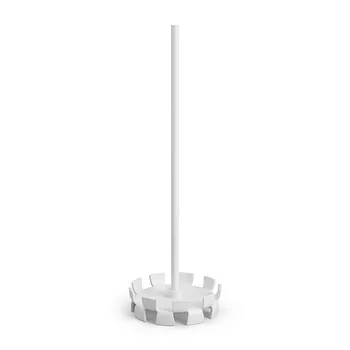
- PTFE Dispersion Disk Food Cosmetic Grade Non Stick Corrosion Resistant Large Stirring Paddle Customizable Impeller
- Corrosion Resistant PTFE Stirring Impeller and Customizable Polytetrafluoroethylene Dispersion Disk
- Corrosion Resistant PTFE Stirring Paddle and Customizable Toothed Dispersion Disk for Chemical Pharmaceutical Mixing
People Also Ask
- What is Dispersion PTFE used for? Creating Thin, High-Performance Coatings and Films
- How many variations of PTFE disks are available and what parameters do they differ in? Choose the Right Material for Your Application
- What key properties are measured under ASTM D4441 to classify and evaluate PTFE dispersions?
- What is PTFE dispersion, and how is it used? A Guide to Non-Stick Coatings & Chemical Resistance
- What is the dispersion method of producing PTFE and what are its products? Ideal for Thin Coatings and Films