Fluoropolymer fabrication requires specialized high-temperature, corrosion-resistant equipment, strict ventilation, and material-specific processing controls. Melt-processable grades can use compression molding, injection molding, extrusion, blow molding, and fusion welding, but equipment must tolerate temperatures approaching 500°C, corrosive decomposition products, and unusually high melt viscosity. PTFE and other non-melt-processable grades require powder preforming and sintering or paste extrusion rather than conventional melt processing.
The correct equipment depends first on the fluoropolymer grade. Melt-processable materials need high-torque, high-pressure machinery made from corrosion-resistant alloys, while PTFE requires powder-metallurgy or paste-extrusion methods. Across all processes, temperature control, local exhaust ventilation, precision machining, and post-curing are essential for producing chemically inert, dimensionally stable labware and industrial components.
Match the Fabrication Method to the Fluoropolymer
Melt-processable fluoropolymers
Melt-processable fluoropolymers can be formed using compression molding, injection molding, extrusion, and blow molding. These methods are suitable for products such as tubing, valves, fittings, vessels, manifolds, and other fluid-handling components.
Their melt viscosity is substantially higher than that of many conventional thermoplastics. Processing equipment therefore needs higher torque and pressure ratings than standard plastic-processing machinery.
PTFE and other non-melt-processable grades
PTFE generally cannot be processed by ordinary melt molding because it does not flow conventionally at its melting point. Fabrication instead uses powder compaction followed by high-temperature sintering or paste extrusion with a volatile lubricant.
Powder processing is commonly used to produce solid billets, tubes, and other stock forms. Paste extrusion is particularly relevant to tubing and wire insulation.
Preforming and sintering
Granular resin can be compacted under hydraulic pressure into a preform or billet. The preform is then sintered above its melting point to create a homogeneous, void-free structure.
This equipment must provide controlled pressure, uniform heating, and accurate temperature profiles. Poor control can produce internal voids, distortion, or inconsistent mechanical and chemical performance.
Specify Equipment for High Temperature and Corrosive Byproducts
High-temperature heating capability
Processing equipment, hot presses, extruders, molding systems, and curing ovens must tolerate temperatures approaching 500°C, depending on the resin and operation. Temperature control must be precise enough to avoid overheating the polymer.
Thermal overshoot is particularly hazardous because fluoropolymers can generate corrosive and toxic decomposition products when heated above their intended processing range.
Corrosion-resistant construction
Equipment exposed to polymer vapors, residues, or discharge gases should use corrosion-resistant alloys and compatible internal components. Ordinary carbon-steel construction can suffer accelerated degradation in areas exposed to corrosive fluorinated compounds.
This applies not only to the processing chamber but also to dies, barrels, tooling, exhaust connections, condensate areas, and downstream handling systems.
High-torque and high-pressure drives
Because fluoropolymer melts resist flow, extruders, injection units, and related machinery require higher drive torque and pressure capacity. The system must also be designed to manage pressure consistently without excessive shear heating.
A machine that is adequate for ordinary thermoplastics may be undersized for fluoropolymer processing, even when the part geometry appears similar.
Control the Processing Conditions
Strict thermal control
Compounding, mixing, molding, extrusion, hot pressing, sintering, and post-curing require controlled temperature ramps and stable operating temperatures. Operators must prevent localized hot spots and avoid holding the material at excessive temperatures for unnecessary periods.
Thermal control protects both product quality and worker safety by limiting decomposition and volatile emissions.
Controlled pressure and compaction
Powder preforming requires consistent hydraulic pressure to achieve uniform density. Variations in compaction can lead to dimensional differences, trapped voids, or weak areas after sintering.
For melt processing, pressure must be sufficient to fill the mold or die while avoiding excessive residence time and thermal degradation.
Post-curing and cooling
Post-curing or controlled thermal treatment may be necessary to stabilize the finished component and complete the required material conditioning. Cooling must also be managed because fluoropolymers have a relatively high coefficient of thermal expansion.
Uncontrolled cooling can create warpage, residual stress, or dimensional changes that affect sealing surfaces and precision fits.
Use Precision CNC Equipment for Custom Components
Suitable machining operations
Custom labware and industrial parts are often produced from sintered billets or molded stock using CNC turning, milling, drilling, skiving, sawing, and related operations. This approach is useful for electrochemical cell bodies, manifold blocks, reaction vessels, custom fittings, and components with intricate internal channels.
CNC machining enables tight-tolerance threads, sealing faces, bores, and non-standard geometries that are difficult to produce directly through molding.
Tooling and cutting conditions
Machining should use sharp, purpose-selected tooling, optimized feeds and speeds, and effective temperature control. Dull tools or excessive cutting heat can deform the polymer rather than cut it cleanly.
The low modulus of many fluoropolymers makes them more susceptible to deflection during clamping and cutting. Workholding must therefore support the part without creating permanent distortion.
Account for expansion and creep
Design and machining must consider the material’s high thermal expansion, low stiffness, and tendency to creep under sustained stress. Dimensions measured immediately after machining may change as the component returns to service temperature or experiences long-term loading.
These effects are especially important for threaded fittings, valve seats, gaskets, precision bores, and components that must maintain leak-tight seals.
Provide Joining and Finishing Capability
Fusion bonding
For compatible melt-processable grades, fusion bonding can create weld lines with strength comparable to the base material. Joining equipment must provide controlled heat, pressure, alignment, and cooling.
Surface cleanliness and controlled thermal exposure are essential to prevent weak joints or localized degradation.
Adhesive and specialized joining
Epoxy adhesives can be used where the design and service environment permit them. However, fluoropolymers have low surface energy and strong chemical inertness, so conventional adhesive bonding is often difficult and may require specialized surface preparation.
Some fluoropolymers can also be joined using radiofrequency or dielectric heating, particularly where their dielectric loss characteristics are suitable.
Surface and dimensional finishing
Machining, polishing, deburring, and inspection equipment should be selected around the required purity and sealing performance. Finished surfaces must be free of embedded contamination, burrs, and damage that could compromise fluid handling or laboratory cleanliness.
Build in Safety and Environmental Controls
Local exhaust ventilation
Dedicated local exhaust ventilation is required near extruders, hot presses, molding equipment, curing ovens, welding stations, and other hot-process discharge points. The system should capture emissions at their source rather than relying only on general room ventilation.
Potential byproducts include hydrogen fluoride, carbon monoxide, carbonyl fluoride, and volatile monomer traces. The exact emissions depend on the polymer, additives, contaminants, and thermal conditions.
Controls for machining dust
Grinding, drilling, sawing, and machining can generate fine polymer particulates. These operations require effective dust extraction and appropriate personal protective equipment, including safety glasses, protective gloves, and suitable respiratory protection where airborne exposure cannot otherwise be controlled.
Collected dust and residues should be handled according to the applicable workplace and waste-management requirements.
Controls for thermal joining and decomposition operations
Thermal welding, pyrolysis cleaning, soldering, or other operations that can decompose fluoropolymer require dedicated exhaust and carefully defined operating procedures. Higher-risk welding environments may require supplied-air or self-contained respiratory protection and protective clothing, based on the hazard assessment.
Smoking must be prohibited in processing areas because contaminated dust carried on tobacco can contribute to fluoropolymer fume exposure.
Monomer synthesis controls
If fabrication is integrated with fluorinated monomer synthesis, the hazards extend beyond polymer processing. Reactive monomers such as tetrafluoroethylene require elimination of ignition sources, electrical arcs, hot spots, and residual oxygen because explosive conditions may result.
These synthesis-stage controls are distinct from the equipment requirements for converting finished resin into labware or components.
Understanding the Trade-offs
Conventional molding is not universally suitable
Using ordinary thermoplastic equipment can cause inadequate filling, excessive pressure, unstable dimensions, or premature equipment corrosion. The resin grade must be confirmed before selecting the processing route.
Chemical resistance complicates joining
The same inertness that gives fluoropolymer components excellent chemical resistance also produces poor adhesion and limited chemical modification. Complex assemblies may therefore require fusion bonding, specialized heating, mechanical fastening, or a carefully qualified adhesive system.
Precision does not eliminate dimensional movement
CNC machining can produce highly accurate components, but fluoropolymers remain relatively flexible and thermally expansive. Inspection should account for temperature, fixturing forces, recovery after machining, and long-term creep.
Safety controls are part of the process design
Ventilation, thermal interlocks, corrosion-resistant exhaust paths, dust control, and emergency procedures are not optional additions. They are necessary process infrastructure whenever the material may be overheated, decomposed, welded, or mechanically reduced to fine particles.
Making the Right Choice for Your Goal
The best process is determined by the resin grade, geometry, tolerance, service temperature, chemical exposure, and required production volume.
- If your primary focus is PTFE tubing or wire insulation: Use paste extrusion with a suitable volatile lubricant, followed by controlled removal and thermal treatment.
- If your primary focus is solid PTFE labware or complex custom vessels: Use powder compaction and high-temperature sintering to create stock billets, then finish them with precision CNC machining.
- If your primary focus is high-volume melt-processable components: Select compression, injection, extrusion, or blow-molding equipment with high torque, high pressure, high-temperature capability, and corrosion-resistant wetted surfaces.
- If your primary focus is tight-tolerance custom parts: Use sharp CNC tooling, controlled feeds and speeds, stable workholding, temperature management, and inspection procedures that account for expansion and creep.
- If your primary focus is safe production: Install dedicated local exhaust ventilation, control machining dust, prevent thermal excursions, and define specialized procedures for welding, post-curing, and any operation that can generate decomposition gases.
With the right material-specific process, equipment design, and safety controls, fluoropolymers can be fabricated into reliable, pure, corrosion-resistant laboratory and industrial components.
Summary Table:
| Fabrication Method | Suitable Materials | Key Equipment Requirements | Processing Conditions |
|---|---|---|---|
| Compression molding | Melt-processable (e.g., PFA, FEP) | High-temperature, corrosion-resistant press; precise temperature control | Uniform heating/cooling; controlled pressure |
| Injection molding | Melt-processable | High-torque, high-pressure injection unit; corrosion-resistant barrel | Precise melt temperature; adequate pressure |
| Extrusion | Melt-processable | High-torque extruder; corrosion-resistant die | Controlled temperature profile; consistent feed |
| Blow molding | Melt-processable | High-temperature blow molding machine | Uniform parison thickness; controlled air pressure |
| Powder compaction & sintering | PTFE (non-melt) | Hydraulic press; sintering oven up to 500°C | Controlled compaction pressure; precise sintering temperature profile |
| Paste extrusion | PTFE (non-melt) | Paste extruder; volatile lubricant handling | Controlled lubricant content; extrusion pressure; thermal treatment |
| CNC machining | All finished parts | CNC mill/lathe; sharp tooling; effective coolant | Feeds/speeds optimized; workholding to prevent distortion; temperature control |
Elevate your fluoropolymer fabrication with KINTEK's precision-crafted PTFE and PFA components. From labware to complex custom parts, our end-to-end CNC machining and expert process support ensure purity, precision, and performance. Contact us today to discuss your requirements and discover how we can optimize your lab or industrial processes!
Related Products
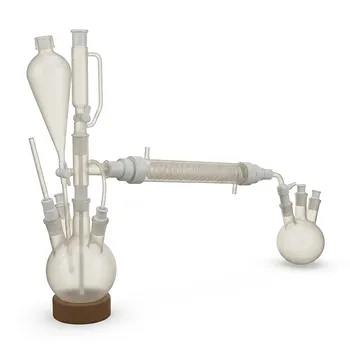
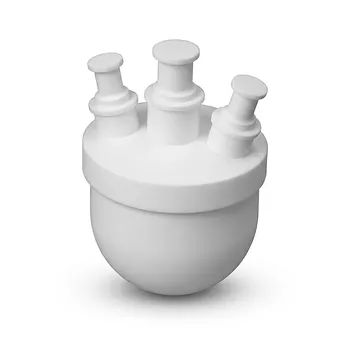
- PTFE Distillation Condensation Apparatus High Temperature Hydrofluoric Acid Resistant Fluorination Reaction Flask
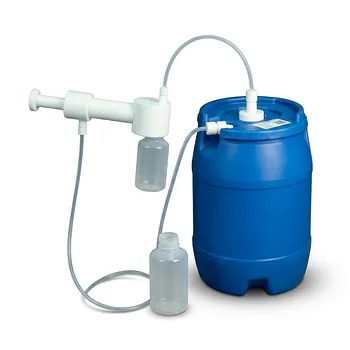
- PTFE Ultrapure Liquid Sampler Corrosion Resistant Acid Sampling Tool for 200L Reactors Custom Fluoropolymer Sampling Device
- Corrosion Resistant Hydrogen Fluoride Reflux Apparatus PTFE Flask Condenser Separatory Funnel Collection Bottle High Temperature Laboratory System
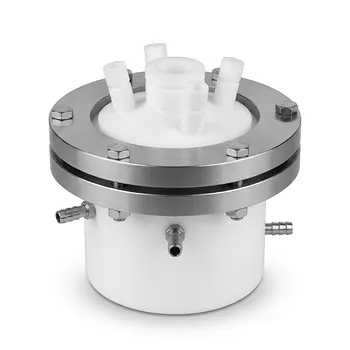
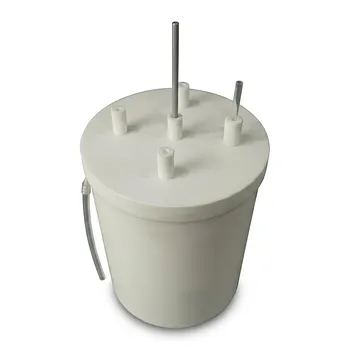
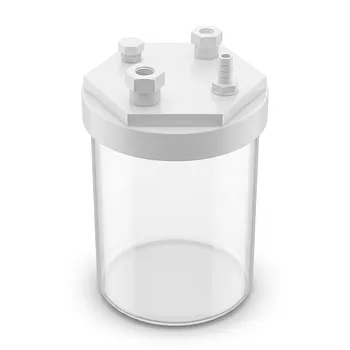
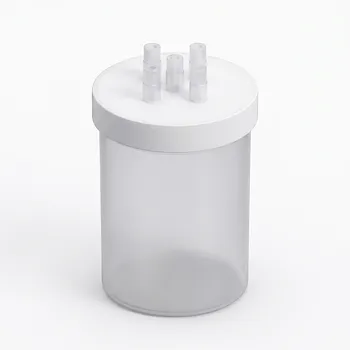
- Custom PTFE Reaction System with Hose Barb Fittings Corrosion Resistant High Sealing 2L 4L Lab Reactor with Separatory Funnel
- Custom PTFE Flask Large Volume 18L Corrosion Resistant Low Background High Purity Chemical Vessel
People Also Ask
- How does the low surface energy of PTFE benefit the condensation process? Boost Heat Transfer and Prevent Fouling
- What structural characteristics provide PTFE fluoropolymer laboratory apparatus with high thermal stability? Strong C-F bonds, dense fluorine shielding, and rigid helical conformation ensure stability during high-temperature analysis.
- How can autopolymerization of TFE gas be prevented during storage and handling? Master TFE safety with oxygen control, inhibitors, and robust system design.
- When synthesizing fluorinated polymers using volatile and toxic monomers like octafluorocyclopentene (OFCP) or decafluorocyclohexene (DFCH), what material safety and thermal features are required for fluoropolymer laboratory reaction apparatus and fluid h
- How do pyrolysis temperature and steam diluent ratios influence tetrafluoroethylene (TFE) conversion and yield in fluoropolymer monomer reaction apparatus? Optimize TFE yield with temperature and steam control