TFE polymerization presents a dual challenge: controlling a severe process hazard while protecting the resin’s purity and molecular structure. The reaction releases approximately 41.12 kcal/mol of heat, and TFE can undergo violent self-decomposition into carbon and carbon tetrafluoride at elevated temperature and pressure, even without air. Oxygen contamination creates an additional explosion hazard, so strict oxygen control, thermal management, impurity removal, and controlled initiator use are essential for producing PTFE with consistent molecular weight, low extractables, and the defect-free structure required for laboratory labware.
The same variables that make TFE polymerization dangerous also determine PTFE quality. Uncontrolled heat, pressure, oxygen, initiator residues, metal contamination, or chain-transfer impurities can cause decomposition, molecular-weight variation, discoloration, structural defects, or increased leachables in finished labware.
Why TFE Polymerization Requires Exceptional Control
The reaction releases substantial heat
TFE polymerization is highly exothermic, releasing about 41 kcal/mol, or approximately 170 kJ/mol, depending on the reference basis and reporting convention. This is significantly greater than the polymerization heat of common monomers such as vinyl chloride or styrene.
The heat must be removed continuously. If heat generation exceeds the reactor’s cooling capacity, the temperature can rise rapidly, accelerating reaction rates and creating a potential thermal runaway.
TFE can decompose independently of oxygen
At elevated temperatures and pressures, TFE can decompose violently into carbon and carbon tetrafluoride. This reaction is distinct from ordinary polymerization and can occur even in an oxygen-free environment.
Localized overheating is especially dangerous because TFE gas may reach decomposition conditions at a hot spot before the bulk reactor temperature indicates a problem.
Oxygen contamination increases explosion risk
TFE can form explosive mixtures with oxygen over a broad concentration range. The supplied reference identifies hazardous mixtures at approximately 14% to 43% oxygen by mole, with detonation potentially increasing pressure dramatically.
For this reason, oxygen levels in TFE storage and polymerization systems must be maintained at extremely low concentrations, commonly below 20 ppm in the stated process guidance. Inert-gas blanketing, leak prevention, gas purification, oxygen monitoring, and validated purge procedures are central safety controls.
How Reaction Conditions Affect PTFE Quality
Temperature and pressure influence molecular weight
Aqueous TFE polymerization commonly operates at approximately 40°C to 80°C and 0.7 to 2.8 MPa, although the precise window depends on the process and product grade.
Temperature, pressure, initiator concentration, and monomer feed rate influence radical concentration and propagation. Poor control can produce inconsistent molecular weight, which affects melt behavior, mechanical performance, creep resistance, and processing characteristics.
Hot spots can create structural defects
PTFE is thermally insulating, so heat generated within polymerizing material may not dissipate evenly. A localized hot spot can initiate TFE decomposition or cause nonuniform polymer growth.
The result may include carbonaceous contamination, altered particle morphology, incomplete polymerization, or defects within the resin. Specialized reactor design, agitation or circulation, heat-transfer surfaces, and continuous temperature monitoring help prevent these localized failures.
Initiator fragments can become contaminants
PTFE is commonly produced through free-radical polymerization using water-soluble initiators such as peroxydisulfates, organic peroxides, or redox activation systems.
Initiator selection and dosing affect polymerization rate and molecular weight. Uncontrolled initiator fragments or residual reaction products can reduce thermal stability, contribute to discoloration, or increase the potential for extractables if purification is inadequate.
Additives must be tightly controlled
Dispersion processes may use highly fluorinated surfactants or related additives to control particle formation and suspension stability.
These substances must be selected and managed carefully. An additive that promotes chain transfer or inhibits propagation can generate undesirable low-molecular-weight material, alter particle properties, or leave residues that compromise the low-background performance expected from high-purity labware.
Feedstock and Equipment Purity Matter
TFE impurities can limit polymer chain growth
High-molecular-weight PTFE requires exceptionally pure TFE feedstock. The supplementary reference identifies a target monomer purity of approximately 99.99995% and emphasizes the reduction of telogenic chain-transfer impurities, such as trifluoroethylene, to roughly 0.2 to 0.3 ppm or below.
Hydrogen-bearing, chlorine-bearing, or other reactive impurities can interfere with high-degree polymerization. They may terminate growing chains, reduce molecular weight, or introduce end groups that affect thermal and chemical performance.
Trace metals can affect the final resin
Metal ions, including iron, may enter through raw materials, water, reactor surfaces, corrosion, or processing equipment.
Even trace contamination can contribute to discoloration, instability, or unwanted extractables. Equipment materials, cleaning procedures, water quality, and process-contact surfaces therefore require controls appropriate to the intended purity grade.
Water quality affects aqueous polymerization
Aqueous processes depend on the reaction medium as well as the monomer. The supplied references identify ultra-pure water, such as 18 MΩ·cm deionized water, as an important control for high-purity fluoropolymer synthesis.
Inorganic ions and organic residues in the water can become process contaminants or interfere with initiator behavior. Using purified water reduces the risk of introducing background contamination into PTFE intended for trace analysis vessels, tubing, and fluid-handling components.
Why Purity Is Critical in Laboratory Labware
Low extractables protect analytical measurements
Laboratory vessels and tubing may contact aggressive reagents, samples, digestion mixtures, or high-purity process fluids.
Residual metals, organic compounds, surfactants, initiator fragments, or carbonaceous material can leach into those fluids. Even small amounts may create background signals or compromise trace-level analytical results.
Molecular structure supports chemical inertness
High molecular weight and a controlled PTFE structure contribute to the material’s chemical resistance, mechanical integrity, and resistance to deformation.
Polymerization irregularities do not necessarily make the material visibly defective, but they can reduce performance under thermal cycling, pressure, mechanical loading, or prolonged chemical exposure.
Defect control improves service reliability
Carbon particles, voids, inclusions, discoloration, and nonuniform morphology can indicate contamination or inadequate reaction control.
For critical labware, defect-free resin is important because failures may involve more than appearance. A defect can become a leak path, a stress concentrator, or a source of contamination during repeated use.
Understanding the Trade-offs
Faster reaction rates increase thermal risk
Higher temperature or initiator concentration can increase productivity by accelerating polymerization.
The trade-off is reduced thermal margin and greater sensitivity to hot spots, runaway behavior, molecular-weight variation, and decomposition. Production speed must remain subordinate to cooling capacity and validated process limits.
Additives improve processing but complicate purity
Surfactants and other additives can support dispersion stability and particle control.
However, every additive creates a potential source of residual contamination, chain transfer, inhibition, or extractables. The appropriate choice depends on the required balance between polymer morphology, process stability, purification burden, and final laboratory purity.
Strict containment limits operational flexibility
TFE requires specialized containment, inerting, pressure protection, remote monitoring, rupture protection, and carefully designed reactor systems.
These controls increase capital and operating complexity. They are nevertheless necessary because a failure can involve both polymerization runaway and energetic TFE decomposition.
Purification improves performance but adds process demands
Removing trace metals, telogenic impurities, residual additives, and reaction by-products improves PTFE quality.
Additional purification, analytical testing, and controlled handling increase cost and production time. For trace-analysis and high-purity applications, that burden is justified by the need for low leachable backgrounds and predictable chemical behavior.
Making the Right Choice for Your Goal
The relevant quality controls should be matched to the labware’s intended use and contamination sensitivity.
- If your primary focus is explosion prevention: Prioritize oxygen control below the validated process limit, inert-gas purging, leak-tight containment, hot-spot detection, continuous heat removal, pressure relief, and specialized reactor safeguards.
- If your primary focus is molecular-weight consistency: Control temperature, pressure, monomer feed, initiator concentration, and heat removal so that reaction rate remains uniform throughout the vessel.
- If your primary focus is trace analytical purity: Specify highly purified TFE, ultra-pure water, low-contamination equipment, controlled additives, and testing for metals, organics, residual initiator products, and extractables.
- If your primary focus is mechanical and chemical durability: Select resin produced with controlled high-molecular-weight polymerization and verify it for structural defects, inclusions, discoloration, and thermal stability.
- If your primary focus is reliable labware manufacturing: Treat monomer purity, reactor safety, polymerization control, post-reaction purification, and finished-part inspection as one connected quality system.
Safe, tightly controlled TFE polymerization is the foundation for PTFE labware that remains chemically inert, mechanically reliable, and clean enough for demanding laboratory applications.
Summary Table:
| Factor | Safety Risk | Quality Impact |
|---|---|---|
| Heat release | Thermal runaway, decomposition | Molecular weight variation, defects |
| Oxygen contamination | Explosive mixtures | Discoloration, reduced purity |
| Impurities (telogens) | Reduced process control | Low molecular weight, extractables |
| Trace metals | Corrosion, contamination | Instability, discoloration |
| Initiator residues | Residual chemicals | Thermal instability, extractables |
Ensure the purity and safety of your PTFE labware. At KINTEK, we specialize in high-performance fluoropolymers, offering PTFE and PFA labware crafted with meticulous attention to material quality. From beakers to custom CNC-machined parts, our products are designed for demanding applications. Contact us today to discuss your requirements and experience the KINTEK difference. Get in touch with us.
Related Products
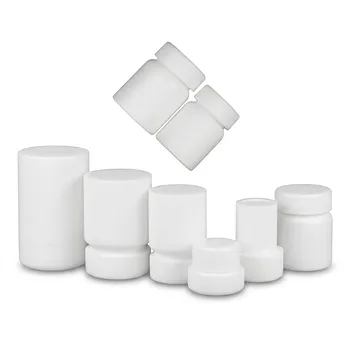
- PTFE Small Reaction Bottle Corrosion Resistant Teflon Sample Dissolution Tank One Piece Molded Fluoropolymer Storage Container
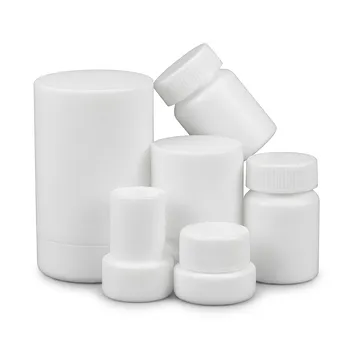
- Corrosion Resistant PTFE Small Reaction Bottle One Piece Molded Teflon Sample Storage Tank
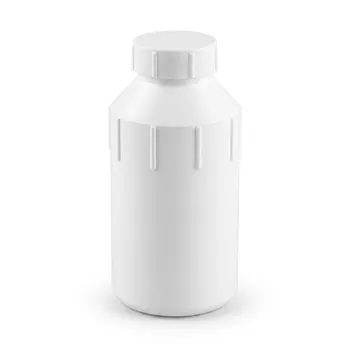
- Custom PTFE Wide Mouth Reagent Reaction Bottle Corrosion Resistant High Temperature Large Capacity Straight Body Laboratory Vessel
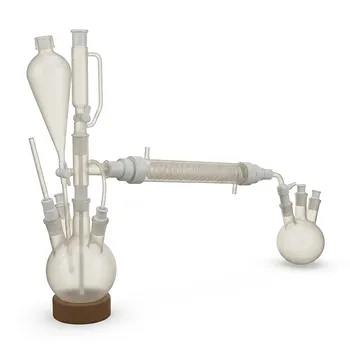
- PTFE Distillation Condensation Apparatus High Temperature Hydrofluoric Acid Resistant Fluorination Reaction Flask
- High Performance Customizable PTFE Reaction Vessel and Corrosion Resistant Polytetrafluoroethylene Flask for Chemical Laboratory Use
People Also Ask
- What are the temperature limits for the PTFE bottle? Ensure Safety from -200°C to 260°C
- What are the advantages of the PTFE bottle's non-stick surface? Ensure Purity and Efficiency in Your Lab
- How do Polytetrafluoroethylene (PTFE) containers perform regarding gas permeation? Expert Insights on Solvent Absorption
- What key inherent material properties make PTFE fluoropolymers suitable for demanding lab applications? Discover chemical inertness, thermal stability, and more for reliable storage and reactions.
- What are the key features of PTFE reagent bottles? Superior Chemical Resistance and Durability