High-pressure fluoromonomer polymerization requires engineered containment, pressure-rated equipment, explosion protection, and rigorously controlled operating procedures. For monomers such as vinylidene fluoride (VDF), the reactor and piping must be designed for operating pressures commonly ranging from 27–55 barg for emulsion processes and 70–100 barg for suspension processes. Because VDF can form flammable mixtures in air at approximately 1.3–5.5 vol.% and has an autoignition temperature near 640 °C, ordinary laboratory ventilation and standard chemical vessels are insufficient.
The primary safety strategy is to prevent monomer release, ignition, and overpressure simultaneously. Use a properly rated autoclave inside ventilated, blast-resistant containment, with intrinsically safe controls, independent pressure relief, continuous monitoring, and procedures that assume an uncontrolled reaction or depressurization is possible.
What Makes Fluoromonomer Polymerization Hazardous
Flammable gas under pressure
Fluoromonomers are often handled as compressed or liquefied gases. A leak can rapidly create an ignitable atmosphere, particularly in enclosed or poorly ventilated areas.
The hazard is not limited to the normal operating pressure. Heating, thermal expansion, polymerization exothermicity, blocked outlets, or decomposition can all increase pressure beyond the initial charge pressure.
Exothermic reaction behavior
Radical polymerization can release substantial heat. A reaction operated around 75 °C, for example, may show an initial pressure increase from heating and then a pressure decrease as monomer is consumed.
Pressure change is useful for process monitoring, but it must not be treated as the sole safety measurement. Independent temperature, pressure, and emergency shutdown systems are necessary.
Corrosive reaction and decomposition products
Fluorinated reaction mixtures and degradation products can attack unsuitable materials. Thermal processing or overheating of fluoropolymers may generate corrosive and toxic gases, including hydrogen fluoride.
The facility must therefore address both the polymerization hazard and the consequences of abnormal heating, contamination, fire, or equipment failure.
Required Reaction Equipment
Pressure-rated autoclave
The reactor should be a certified high-pressure autoclave designed for the maximum credible pressure and temperature, not merely the normal operating range.
For demanding acidic or corrosive environments, the pressure boundary is commonly constructed from 316 stainless steel or a higher-grade compatible alloy, subject to a formal materials-compatibility review. Internal fluoropolymer liners may be appropriate for chemical compatibility, but they must not substitute for a properly rated pressure boundary.
Leak-tight piping and fittings
All monomer transfer lines, valves, fittings, sampling points, and instrumentation connections must be rated for the pressure, temperature, and chemical service.
Use robust, corrosion-resistant components and minimize connections where practical. Leak-tight transfer fittings reduce both release risk and contamination of the reaction mixture.
Heating and cooling system
The reactor should include an integrated heating and cooling jacket or another engineered method capable of rapidly removing reaction heat.
Cooling capacity should be evaluated against the worst credible event, including loss of normal agitation, excessive initiator addition, abnormal reaction acceleration, or loss of temperature control. A cooling jacket alone is not sufficient unless its performance has been demonstrated for the process.
Independent pressure relief
Install a properly sized rupture disc, relief valve, or engineered combination of relief devices that discharges to a safe location or closed handling system.
Relief-device sizing must account for thermal expansion, runaway polymerization, gas generation, blocked outlets, and fire exposure where applicable. The discharge path must not end in an occupied work area.
Relief-device inspection
Fluoropolymer buildup can obstruct or impair a rupture disc. Inspect, clean, and replace relief devices according to a documented maintenance program.
A relief device that is present but fouled, isolated, incorrectly installed, or discharging into an unsafe location does not provide effective protection.
Materials and surface control
Product-contact materials must resist the specific monomers, solvents, initiators, acids, bases, and expected decomposition products.
Where purity is important, internal surfaces may require passivation and cleaning with high-purity water, such as 16–18 MΩ water, to reduce ionic contamination. This is a process-integrity measure that also helps identify contamination and corrosion risks early.
Containment and Facility Design
Blast-resistant containment
High-pressure fluoromonomer systems should be located in a ventilated, blast-resistant enclosure or containment bunker designed to protect personnel from vessel rupture, explosion, or uncontrolled depressurization.
The containment should restrict access during operation and direct blast pressure, fragments, gases, and relief discharges away from occupied areas.
Local exhaust ventilation
Provide effective local exhaust at points where monomer, solvent vapor, or decomposition products could escape, including charging, sampling, venting, and maintenance locations.
Ventilation should be designed so that a release is captured and discharged safely rather than dispersed through the building. Exhaust systems must be compatible with corrosive fluorinated gases.
Gas detection
Install fixed or portable detection appropriate to the monomers and potential decomposition products. Detection should cover flammable atmospheres and toxic releases, with alarms located where operators can respond without entering the hazard zone.
Alarm setpoints, sensor locations, calibration intervals, and shutdown actions should be defined in the process safety documentation.
Ignition-source control
Electrical and mechanical equipment in classified hazardous areas should be selected for the applicable flammable-gas classification.
Use intrinsically safe or otherwise suitably rated instrumentation and control systems. Control static electricity through bonding and grounding, and control hot surfaces, sparks, open flames, and non-rated electrical devices.
Safe discharge and drainage
Relief, purge, and vent systems should route gases to a location and treatment system suitable for the expected composition, pressure, temperature, and flow.
Do not discharge fluoromonomers or potentially corrosive decomposition products into occupied spaces, ordinary drains, or an inadequately designed general exhaust system.
Controls and Operating Safeguards
Interlocked process control
Use automatic monitoring and shutdown for at least:
- Reactor pressure
- Reactor temperature
- Cooling performance
- Agitation status
- Feed rate and composition
- High-pressure and high-temperature conditions
- Loss of ventilation or gas detection alarms
Critical shutdown functions should be independent of routine operator control where practical. The system should move to a defined safe state after loss of power, instrumentation failure, or an abnormal process signal.
Controlled charging and purging
Develop written procedures for evacuation, inert-gas purging, leak testing, monomer charging, initiator addition, and post-reaction depressurization.
The procedure must control oxygen ingress and prevent incompatible materials from entering the reactor. Charging sequences should be validated because the order and rate of addition can affect heat release and pressure behavior.
Pressure and temperature trending
Record and trend pressure and temperature throughout the batch. A pressure drop may indicate monomer consumption, while unexpected pressure rise can indicate overheating, excessive gas generation, blocked flow, or uncontrolled reaction.
Operators need predefined limits and actions for each abnormal trend. Trend data should be retained for process review and incident investigation.
Safe depressurization
Depressurization should be gradual, remotely controlled where feasible, and routed through an appropriate recovery, scrubbing, or destruction system.
Before opening the autoclave, cool it using the approved procedure. An ice-bath cooling step may be suitable for some laboratory-scale systems, but larger equipment requires an engineered cooling method and verification that pressure has reached a safe value.
Verification before opening
Do not rely only on the absence of visible liquid or an expected pressure reading. Confirm isolation, cooling, pressure reduction, and atmospheric conditions before opening the vessel.
Where the process requires it, controlled degassing and residual-monomer testing should verify that hazardous gas is not trapped in the reactor or product.
Personal Protective Equipment
Routine operation
PPE should be selected through a task-specific hazard assessment and normally includes:
- Chemical-resistant gloves compatible with the monomer and solvents
- Chemical splash goggles, with a face shield where splash or pressure-release hazards exist
- Flame-resistant or chemically protective work clothing as appropriate
- Safety footwear
- Respiratory protection only when required by the respiratory-protection program
PPE is the final layer of protection. It cannot compensate for an uncontained high-pressure release.
Sampling and maintenance
Sampling, line breaking, filter changes, cleaning, and relief-device maintenance require additional controls because they may expose workers to residual pressure and toxic or corrosive materials.
Use isolation, lockout/tagout, controlled venting, gas testing, and a written permit or maintenance procedure before opening the system.
Emergency response
Emergency responders may require specialized chemical-protective clothing and supplied-air or self-contained breathing apparatus, particularly where HF or unknown fluorinated decomposition products may be present.
Facilities must maintain emergency eyewash and shower equipment, suitable first-aid arrangements, evacuation routes, and procedures for suspected HF exposure. The emergency plan should be developed with personnel trained and equipped for the actual release scenario.
Understanding the Trade-offs
More containment increases complexity
Blast-resistant bunkers, remote operation, gas detection, and engineered relief systems require space, capital, inspection, and specialized maintenance.
These controls are justified because the hazard combines flammability, high pressure, and potentially toxic decomposition products. Reducing one hazard does not eliminate the others.
Liners improve compatibility but introduce inspection needs
Fluoropolymer-lined vessels can reduce contamination and corrosion, but liners can degrade, delaminate, or conceal damage to underlying components.
Inspection programs must address both the liner and the structural pressure boundary. The liner should never be treated as the only safety barrier.
Pressure monitoring cannot replace calorimetry
Pressure trends can indicate reaction progress, but pressure alone does not reveal the full thermal hazard. A reaction can become unsafe before pressure reaches an obvious alarm point.
Process development should characterize heat release, maximum temperature, gas generation, relief requirements, and behavior under loss-of-cooling or overfeed conditions.
Polymer-processing guidance is not automatically polymerization guidance
Melt processing introduces separate hazards involving high temperature, corrosive fumes, high melt viscosity, and equipment pressure. Local exhaust and corrosion-resistant machinery are important for those operations, but they do not replace the pressure containment and explosion controls required for gaseous-monomer polymerization.
Common Pitfalls to Avoid
Treating the reactor as a pressure vessel only
The design must consider the complete process system: feed cylinders, compressors, valves, transfer lines, reactor, relief devices, vent treatment, controls, and containment.
A properly rated autoclave can still be unsafe if an upstream component fails or a relief discharge enters the room.
Allowing relief devices to foul
Fluoropolymer deposits on rupture discs or relief valves can prevent pressure relief when it is needed most.
Inspection frequency should reflect the observed fouling rate and the consequences of failure, with documented acceptance criteria.
Opening a cooled vessel without atmospheric verification
Cooling lowers pressure but does not guarantee that no hazardous monomer remains. Residual gas may be released when the vessel is opened or disturbed.
Use controlled venting and gas testing before personnel exposure.
Relying on general room ventilation
General ventilation may dilute a small leak but is not a substitute for local capture, gas detection, safe vent routing, and blast-resistant containment.
Ignoring maintenance as a high-risk operation
Many releases occur during sampling, cleaning, disassembly, or line breaking rather than during steady-state operation.
Maintenance procedures should receive the same level of hazard analysis as the reaction itself.
How to Apply This to Your Project
The final design should be reviewed by qualified pressure-vessel, chemical-process-safety, electrical-classification, ventilation, and occupational-hygiene specialists.
- If your primary focus is personnel protection: Place the system in ventilated blast-resistant containment with remote operation, gas detection, interlocked shutdowns, safe relief discharge, and a documented emergency plan.
- If your primary focus is pressure safety: Specify a certified autoclave, piping, valves, and fittings for the maximum credible pressure and temperature, then size and maintain independent relief protection.
- If your primary focus is reaction control: Characterize heat release and gas generation, provide rapid cooling, monitor pressure and temperature continuously, and define automatic shutdown limits.
- If your primary focus is chemical compatibility and purity: Use compatible 316-or-better stainless steel or approved alloys, appropriate fluoropolymer liners, passivated surfaces, and leak-tight fittings.
- If your primary focus is facility compliance: Complete a formal process hazard analysis covering flammability, oxygen control, toxic releases, overpressure, ignition sources, relief discharge, maintenance, and emergency response.
A safe fluoromonomer polymerization system is one in which containment, pressure relief, ignition control, thermal management, monitoring, and emergency response work together as independent layers of protection.
Summary Table:
| Requirement | Key Considerations |
|---|---|
| Reactor | Certified high-pressure autoclave, 316 stainless steel or compatible alloy, pressure-rated for max credible conditions. |
| Containment | Ventilated blast-resistant enclosure or bunker to protect personnel. |
| Pressure Relief | Independent rupture disc or relief valve sized for worst-case scenarios, discharged to safe location. |
| Monitoring | Continuous pressure, temperature, gas detection, and interlocked shutdown systems. |
| Ventilation | Local exhaust for capture of flammable/toxic releases. |
| PPE | Chemical-resistant gloves, goggles, face shield, protective clothing, and emergency equipment. |
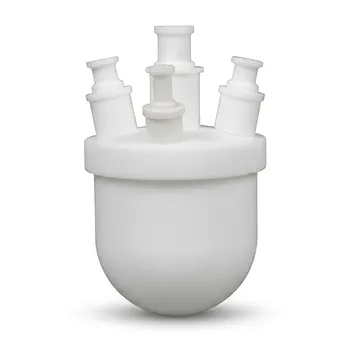
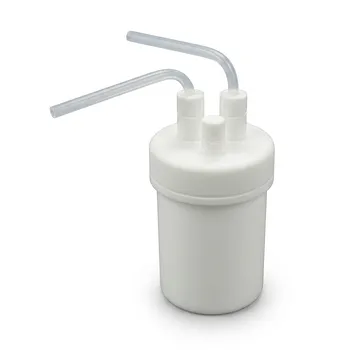
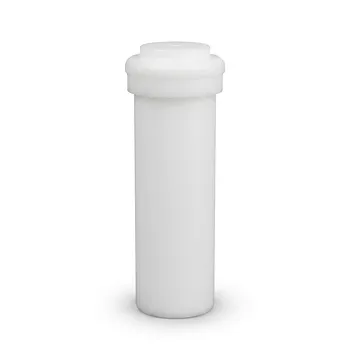
Ensure your high-pressure fluoromonomer polymerization system meets the highest safety standards. At KINTEK, we specialize in manufacturing premium PTFE and PFA labware and custom components, including high-purity digestion vessels, autoclave liners, and fluid handling systems designed to withstand extreme conditions. Our robust, corrosion-resistant products enhance safety and reliability in your most demanding processes. Contact us today for a consultation and discover how KINTEK can support your critical research with durable, precision-crafted solutions. Get in touch with our experts.
Related Products
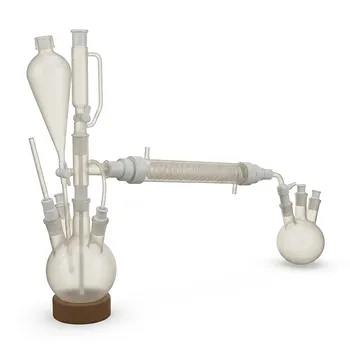
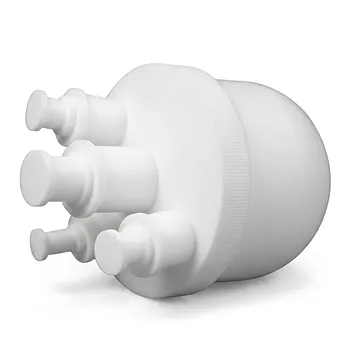
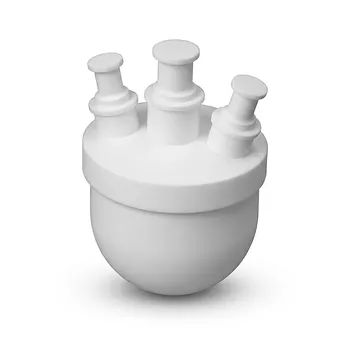
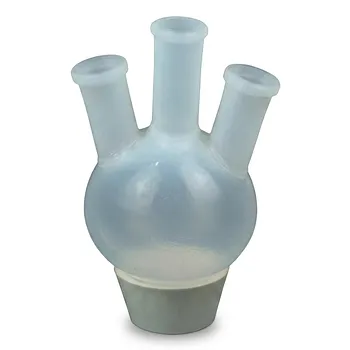
- PTFE Distillation Condensation Apparatus High Temperature Hydrofluoric Acid Resistant Fluorination Reaction Flask
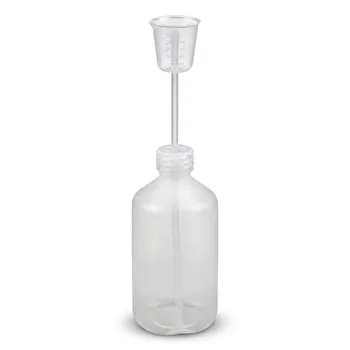
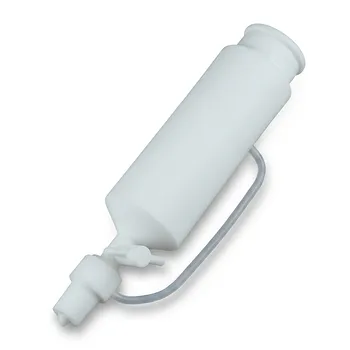
- Translucent PFA Bottle Top Dispenser for Corrosion Resistant Chemical Squeeze Extraction
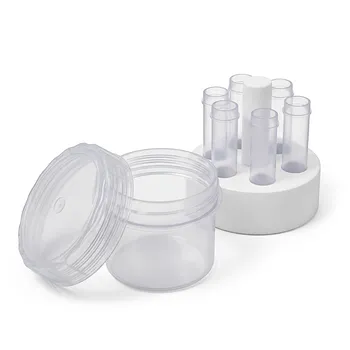
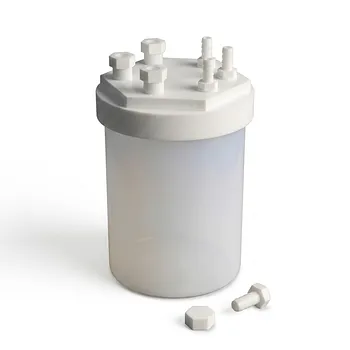
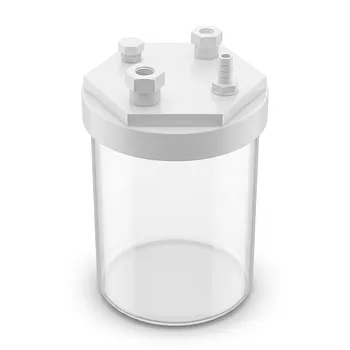
- High Purity Corrosion Resistant PFA Reaction Vessel with PTFE Holder and Integrated Sampling Tube for Trace Analysis
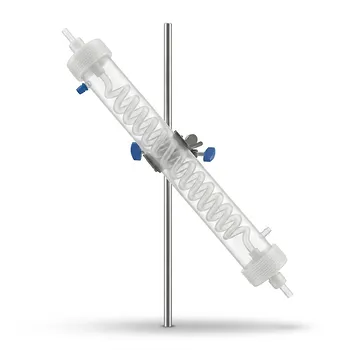
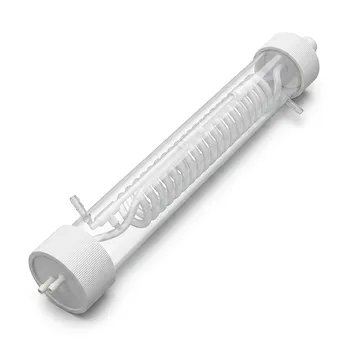
- Custom PFA Serpentine Straight Condenser HF Resistant Reaction Device Laboratory Cooling Column
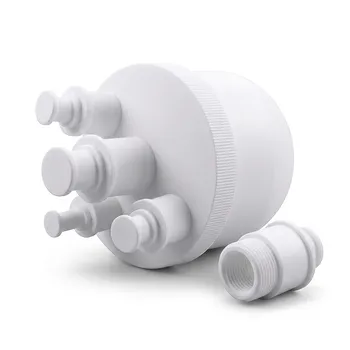
- Corrosion Resistant PTFE Support with PFA Transparent Reaction Tank and High Purity PFA Sampling Tube for Trace Analysis
People Also Ask
- How does the low surface energy of PTFE benefit the condensation process? Boost Heat Transfer and Prevent Fouling
- What structural characteristics provide PTFE fluoropolymer laboratory apparatus with high thermal stability? Strong C-F bonds, dense fluorine shielding, and rigid helical conformation ensure stability during high-temperature analysis.
- How can autopolymerization of TFE gas be prevented during storage and handling? Master TFE safety with oxygen control, inhibitors, and robust system design.
- When synthesizing fluorinated polymers using volatile and toxic monomers like octafluorocyclopentene (OFCP) or decafluorocyclohexene (DFCH), what material safety and thermal features are required for fluoropolymer laboratory reaction apparatus and fluid h
- How do pyrolysis temperature and steam diluent ratios influence tetrafluoroethylene (TFE) conversion and yield in fluoropolymer monomer reaction apparatus? Optimize TFE yield with temperature and steam control