PTFE capillary tubing serves as the critical, inert lifeline for fluid and gas transport in high-precision manufacturing. In semiconductor and electronics production, it is primarily used to deliver ultra-pure chemicals, deionized water, and specialty gases without introducing contaminants. Its unique chemical resistance and low-extractable profile ensure that sensitive components, such as silicon wafers, remain free from ionic or particulate interference.
PTFE capillary tubing is essential for maintaining sub-ppb purity levels in semiconductor and electronics manufacturing by providing a chemically inert, non-contaminating pathway for aggressive fluids and gases. Its ability to withstand harsh etchants while preventing particle buildup is a cornerstone of high-yield production environments.
Safeguarding Purity in Semiconductor Fabrication
Ultra-Pure Chemical and Gas Transport
In the high-stakes environment of wafer fabrication, PTFE capillary tubing is the standard for transporting ultra-pure process chemicals and specialty gases. Its surface is fundamentally non-contaminating, which is vital for maintaining sub-ppb (parts-per-billion) purity levels.
The tubing’s chemical inertness allows it to handle aggressive etchants like hydrofluoric acid and peroxides without degrading. This resistance ensures a long service life and prevents the leaching of materials that could compromise the delicate chemical balance of the production line.
Prevention of Ionic and Particulate Contamination
PTFE’s low-extractable profile means it does not release ions or particles into the fluid stream. This is critical because even microscopic ionic contamination can lead to catastrophic failures in semiconductor performance and yield.
The smooth internal surface of the capillary tubing also minimizes dead-leg formation and particle entrapment. This "non-stick" nature is particularly useful when dealing with Chemical Mechanical Planarization (CMP) slurries, as it prevents the deposition of residues that could clog the system.
Enhancing Performance in Electronics and Wiring
High-Frequency Signal Integrity
In the broader electronics industry, PTFE is valued for its exceptional insulating properties. Capillary-thin PTFE jackets are often used for wiring insulation in high-frequency electronics where signal clarity is paramount.
Because PTFE has a low dielectric constant, it ensures that signals are transmitted without interference or loss. This makes it an ideal material for precision components that must operate in complex electromagnetic environments.
Thermal and Chemical Resilience
Electronics often operate in high-heat or chemically aggressive environments where standard plastics would fail. PTFE maintains its structural integrity and electrical insulation properties across a wide temperature range.
Furthermore, PTFE remains stable even under plasma exposure, a common occurrence in various semiconductor manufacturing stages. This stability protects sensitive internal components from moisture and corrosive agents, ensuring long-term reliability.
Mechanical and System-Level Integration
Low-Friction and Mechanical Support
Beyond fluid transport, PTFE’s material properties are leveraged for mechanical components like guide rails and low-friction slide pads. These components reduce wear and tear in automated assembly lines, contributing to a cleaner manufacturing environment.
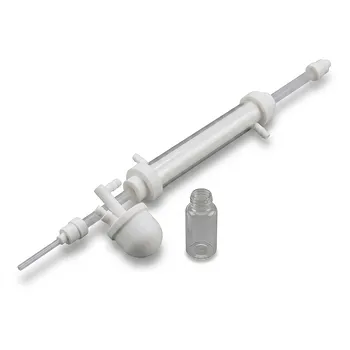
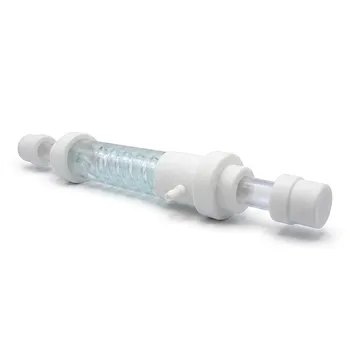
In vapor-recovery condensers, PTFE tubes manage ultrapure etchants and stripping solutions. Their ability to withstand aggressive cleaning-in-place (CIP) chemicals allows manufacturers to maintain sterile conditions without disassembling complex machinery.
Precision Valve and Condenser Utility
PTFE is a primary material for the internal components of precision valves used to distribute ultrapure water and photoresist strippers. Its non-stick surface prevents bacterial adhesion, which is as critical in semiconductor "wet benches" as it is in the food industry.
The material's total chemical inertness ensures that the fluids passing through these valves do not pick up trace metallic impurities. This level of control is essential for achieving the parts-per-trillion purity required for modern, high-density silicon wafers.
Understanding the Trade-offs
Mechanical Limitations
While PTFE is chemically superior, it is a relatively soft fluoropolymer. It is susceptible to mechanical creep or "cold flow" under sustained pressure, which may require specialized fittings or support structures in high-pressure systems.
Permeability Concerns
PTFE is not a total barrier to all substances; certain small-molecule gases can permeate through the tubing wall over extended periods. In applications involving highly sensitive gas mixtures, engineers must account for this permeability to avoid subtle changes in process chemistry.
How to Apply This to Your Process
Choosing the right grade and configuration of PTFE capillary tubing depends heavily on the specific requirements of your production environment.
- If your primary focus is wafer yield and purity: Prioritize high-purity, "ultra-smooth" bore PTFE tubing to eliminate particle entrapment and minimize extractables.
- If your primary focus is high-frequency signal integrity: Focus on the dielectric properties and wall thickness of the PTFE insulation to ensure minimal signal attenuation.
- If your primary focus is aggressive chemical handling: Ensure the tubing is rated for the specific temperatures and concentrations of etchants, such as hydrofluoric acid, used in your facility.
The strategic integration of PTFE capillary tubing is a fundamental requirement for the precision and cleanliness demanded by modern microelectronics.
Summary Table:
| Feature | Benefit | Semiconductor Application |
|---|---|---|
| Chemical Inertness | Maintains sub-ppb purity | Ultra-pure chemical & etchant transport |
| Low Extractables | Prevents ionic contamination | Wafer fabrication & silicon processing |
| Smooth Internal Bore | Minimizes particle entrapment | CMP slurry handling |
| Low Dielectric Constant | Ensures high signal integrity | High-frequency electronics wiring |
| Thermal Resilience | Stability in harsh conditions | Plasma exposure & high-heat processes |
Elevate Your Manufacturing Precision with KINTEK
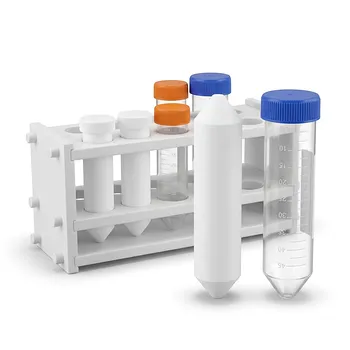
Maximize your production yield with high-performance fluoropolymer solutions. At KINTEK, we specialize in the absolute focus on high-performance materials like PTFE and PFA. From everyday basic labware (beakers, reagent bottles, centrifuge tubes) and fluid transfer components (tubing, fittings, valves) to advanced reaction apparatus (electrochemical cells, hydrothermal synthesis liners, and microwave digestion vessels), we provide the critical components your cleanroom demands.
Whether you require high-volume standard orders or complex non-standard machined parts via our end-to-end custom CNC fabrication, KINTEK delivers the reliability essential for sub-ppb environments.
Ready to optimize your fluid pathways? Contact us today to discuss your custom requirements!
Related Products
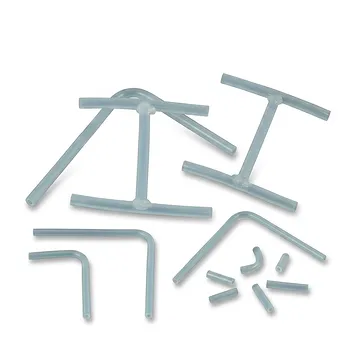
- High Performance PFA Coiled Spring Tubing and Custom PTFE Fabrication Services with Welded Fittings and Precision Bent Components
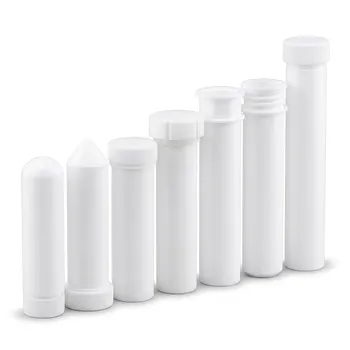
- Custom High Purity PTFE Digestion Tubes and Centrifuge Tubes for Trace Metal Analysis
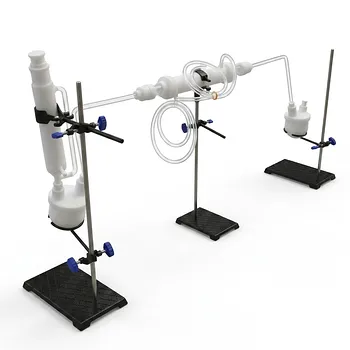
- Custom PTFE Condenser Tube Hydrofluoric Acid Resistant Reflux Device Constant Pressure Separatory Funnel
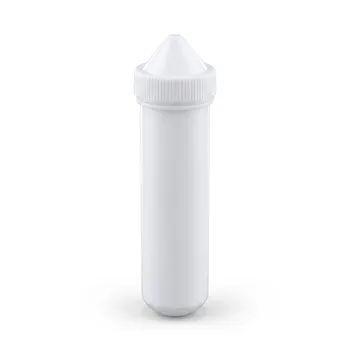
- High Purity PTFE Digestion Tubes and Custom Centrifuge Tubes 100ml for Trace Analysis and Chemical Digestion
- Custom PTFE Condenser Tube Reflux Reaction Condensation Purification Device Semiconductor Chemical Lab Equipment
People Also Ask
- What are the technical advantages of high-precision PFA tubing in MXene production? Maximize Purity and Yield.
- What technical advantages do PFA tubing and fittings offer? Master Precision Fluid Transfer and Flow Chemistry
- What are the technical advantages of high-quality PFA tubing? Achieve Ultimate Purity and Precision in Fluid Handling
- What are the key benefits of PTFE in custom fabrication? Unlock Performance in Extreme Conditions
- What fabrication services are available for PTFE? Shearing, Stamping, Laser Cutting, Molding & Machining