The anion exchange membrane (AEM) serves as the critical bridge and barrier between catalyst layers in a water electrolysis cell. It provides a physical partition that prevents the mixing of produced hydrogen and oxygen gases while simultaneously facilitating the transport of hydroxide ions (OH⁻) from the cathode to the anode. This dual functionality is essential for maintaining the electrical circuit and ensuring the safety of the electrochemical process.
The core role of an anion exchange membrane is to act as a selective ionic conductor and a physical gas separator. By allowing hydroxide ions to pass while blocking product gases, it enables continuous, high-purity hydrogen production.
The Physical Role: Gas Separation and Safety
Preventing Gas Cross-Over
The AEM acts as a dense physical barrier between the anode and cathode catalyst layers. This prevents hydrogen molecules produced at the cathode and oxygen molecules produced at the anode from mixing, which would otherwise create a highly flammable or explosive environment.
Ensuring Product Purity
By effectively isolating the two half-reactions, the membrane ensures that the collected gases meet high purity standards. This is vital for industrial applications where even trace amounts of oxygen in a hydrogen stream can poison downstream equipment or fuel cells.
The Chemical Role: Ionic Transport and Conductivity
Facilitating Hydroxide Migration
The chemical structure of the AEM contains specific anion-conducting functional groups, most commonly quaternary ammonium sites. These positively charged sites allow negatively charged hydroxide ions (OH⁻) to migrate through the polymer matrix with high efficiency.
Closing the Electrical Circuit
For electrolysis to continue, the flow of electrons through the external circuit must be balanced by the flow of ions internally. The migration of OH⁻ ions through the membrane completes this circuit, ensuring that the oxidation and reduction reactions at the catalyst layers remain sustainable.
Maintaining Local Charge Balance
As reactions occur at the catalyst surfaces, the local concentration of ions changes. The selective permeability of the AEM ensures that charge balance is maintained across the cell, preventing the buildup of static charge that would otherwise halt the electrolysis process.
Understanding the Trade-offs and Challenges
Chemical Stability in Alkaline Environments
A major challenge for AEMs is their long-term stability in the highly alkaline conditions required for efficient electrolysis. The hydroxide ions can gradually attack the quaternary ammonium sites, leading to a degradation of the membrane's ionic conductivity over time.
Balancing Thickness and Resistance
Engineers must balance the thickness of the membrane to optimize performance. While a thinner membrane reduces ohmic resistance and increases efficiency, it may also become more susceptible to mechanical failure or gas crossover (permeability).
Water Management
AEMs require careful water management to function correctly. The membrane must remain hydrated to facilitate ion transport, yet excessive water can lead to "flooding" at the catalyst layers, which blocks active sites and reduces the overall reaction rate.
How to Optimize Your AEM Setup
Selecting and implementing the right membrane depends heavily on your specific operational parameters and performance targets.
- If your primary focus is Maximum Efficiency: Prioritize a membrane with high ion-exchange capacity (IEC) and minimal thickness to reduce internal resistance.
- If your primary focus is Long-Term Durability: Select membranes with advanced polymer backbones specifically engineered to resist chemical degradation in high-pH environments.
- If your primary focus is Gas Purity: Opt for a reinforced or slightly thicker membrane to minimize the risk of hydrogen crossover into the oxygen stream.
By meticulously balancing ionic conductivity with mechanical robustness, you can ensure a safe and highly productive electrolysis system.
Summary Table:
| Function | Description | Primary Benefit |
|---|---|---|
| Gas Separation | Acts as a physical barrier between anode and cathode. | Prevents explosive gas mixing and ensures high purity. |
| Ionic Transport | Facilitates the migration of hydroxide ions ($OH^-$). | Completes the internal electrical circuit for continuous operation. |
| Charge Balance | Maintains local alkalinity and prevents static buildup. | Stabilizes the electrochemical reaction environment. |
| Physical Support | Provides a structural interface between catalyst layers. | Enables compact, high-efficiency full-cell architecture. |
Elevate Your Electrochemical Research with KINTEK
Precision in electrolysis starts with superior materials. Whether you are optimizing AEM setups or building complex full-cell systems, KINTEK provides the high-performance fluoropolymer components you need.
From basic PFA/PTFE labware like beakers and reagent bottles to advanced custom electrochemical cells, battery testing fixtures, and hydrothermal synthesis liners, our end-to-end CNC fabrication ensures every part meets your exact specifications. We specialize in everything from high-purity trace analysis tools and fluid transfer components (tubing, valves, fittings) to bespoke laboratory setups designed for the harshest chemical environments.
Ready to scale your innovation? Contact us today to discuss how our absolute focus on high-performance materials and custom engineering can streamline your laboratory workflow and enhance your research outcomes.
References
- Álvaro Seijas‐Da Silva, Gonzalo Abellán. Scalable synthesis of NiFe-layered double hydroxide for efficient anion exchange membrane electrolysis. DOI: 10.1038/s41467-025-61356-2
This article is also based on technical information from Kintek Knowledge Base .
Related Products
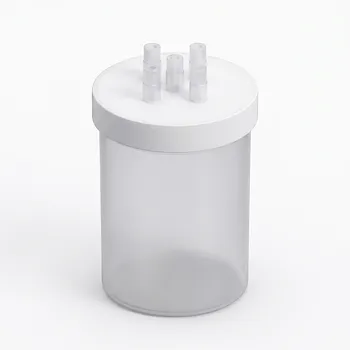
- High Purity 4L PFA Reaction Tank for Proton Exchange Membrane Electrolysis Water Oxygen Separation Systems
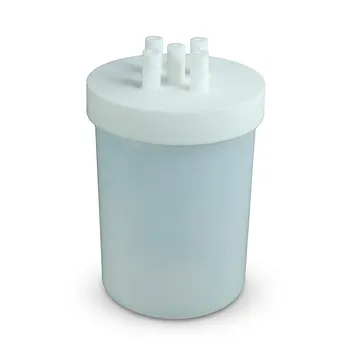
- High Purity PFA Reaction Vessel 4L Water Oxygen Separation Tank for Proton Exchange Membrane Electrolysis Experiments Customizable Laboratory Fluid Component
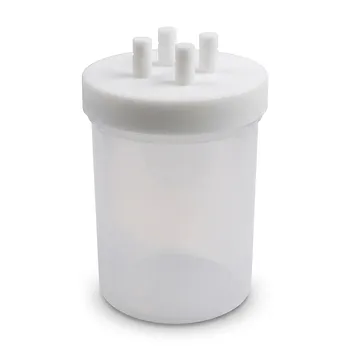
- High Purity PFA Reaction Tank for Proton Exchange Membrane Electrolysis and Water Oxygen Separation Custom Labware
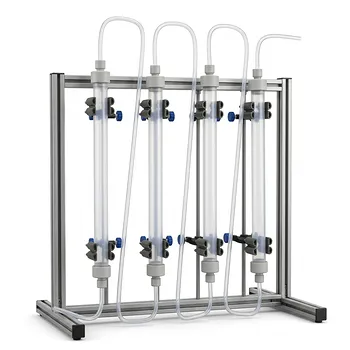
- High Purity PFA Chromatography Columns Series Filtration Resin Ion Exchange System with Sieve Plate Rack Customizable Corrosion Resistant Laboratory Fluid Handling
- High Purity PFA Ion Exchange Column Corrosion Resistant High Purity Chromatography Glass Alternative Customizable Vessel
People Also Ask
- Why Are High-Purity Fluoropolymer Vessels and Tubing Critical for Trace Analysis? Prevent Contamination Reliably
- What are the primary functional and temperature differences between PFA and FEP when selecting melt-processible fluoropolymers for custom laboratory apparatus?
- Why is the chemical stability of polymer endgroups critical when selecting melt-processible fluoropolymers like PFA for high-purity laboratory apparatus? Choose Stable Endgroups for Reliable Performance
- What are the characteristics of PFA material? A Guide to Its High-Performance Balance
- Why is Perfluoroalkoxy alkane (PFA) preferred over glass or stainless steel in pharmaceutical process development? Pure Yield