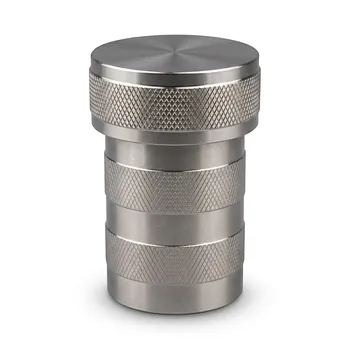
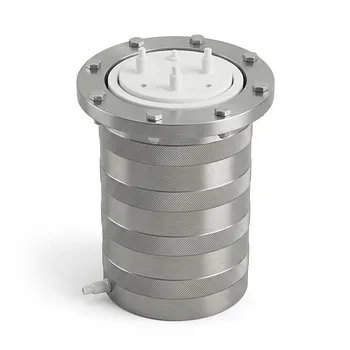
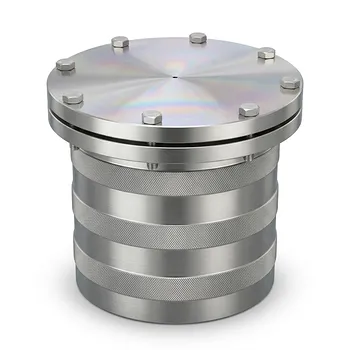
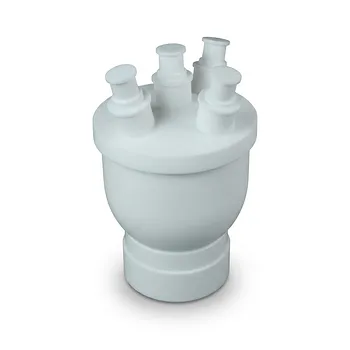
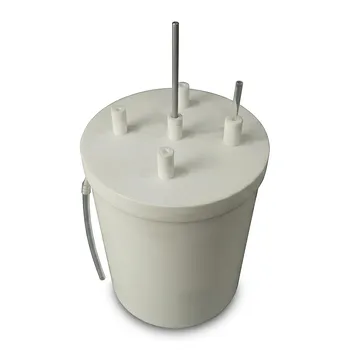
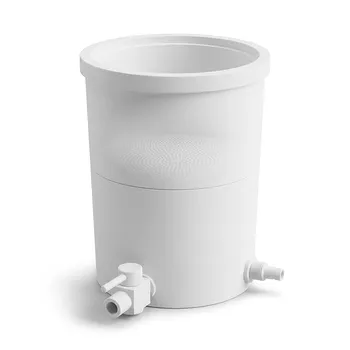
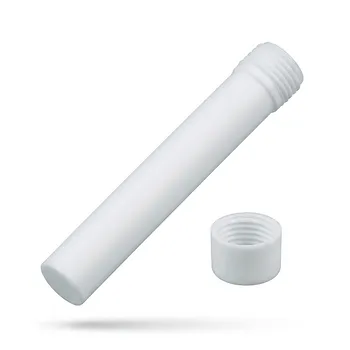
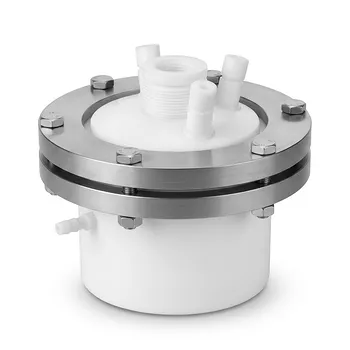
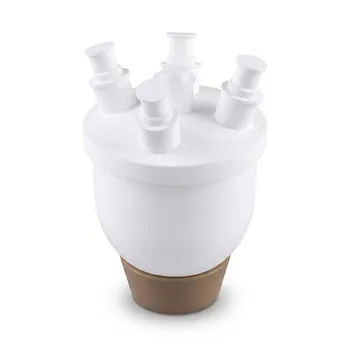
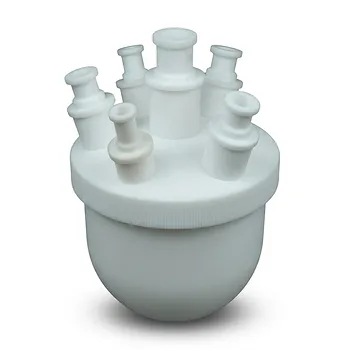
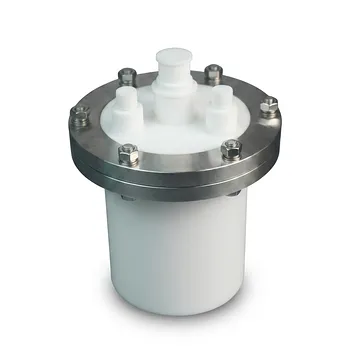
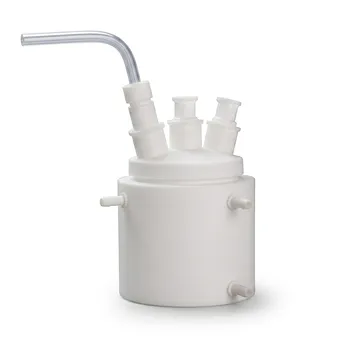
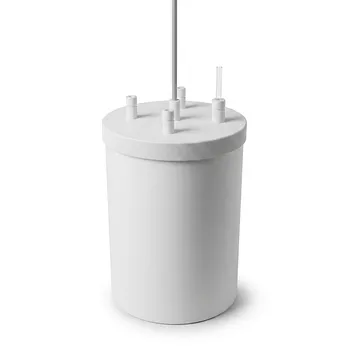
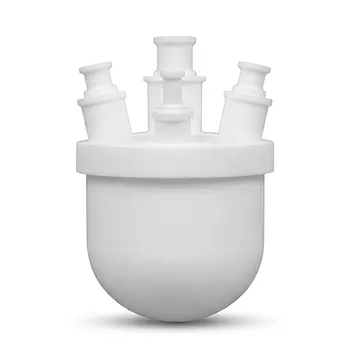
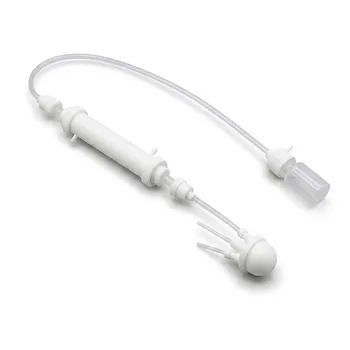
The hydrothermal synthesis reactor with a PTFE liner is the critical hardware required to force manganese ions into the ceria crystal lattice, creating a true solid solution. This environment provides the sustained high temperature (180°C) and pressure necessary to accelerate the hydrolysis and crystallization of precursors over a 72-hour period. By facilitating internal lattice incorporation rather than simple surface deposition, the reactor allows researchers to produce the precise "doped" control samples needed to benchmark the performance of topological single-atom catalysts.
Core Takeaway: The PTFE-lined reactor acts as a high-pressure chemical furnace that enables the synthesis of homogenous Mn-doped $\text{CeO}_2$ by providing a chemically inert, sealed environment for long-duration hydrothermal crystallization.
Facilitating Lattice Incorporation and Phase Formation
Accelerating Reaction Kinetics
The reactor creates a high-pressure environment that significantly lowers the energy barrier for chemical reactions. At 180°C, the internal pressure accelerates the hydrolysis of cerium and manganese precursors, leading to rapid nucleation.
Forming a True Solid Solution
Without the high-pressure environment of the autoclave, manganese ions might only adhere to the surface of the ceria particles. The hydrothermal process ensures that manganese ions are incorporated into the ceria lattice, creating a doped catalyst that serves as a definitive control sample for comparative studies.
Controlling Crystalline Morphology
The stable thermal environment within the reactor allows for the precise regulation of the product’s morphology, such as nanocubes or nanorods. This structural control is essential for defining the distribution of surface active sites, which directly impacts the material's catalytic performance.
The Critical Role of the PTFE Liner
Ensuring High Chemical Purity
The PTFE (polytetrafluoroethylene) liner acts as an inert barrier between the corrosive reaction media and the stainless steel reactor shell. This prevents the leaching of metal impurities (like iron or chromium) from the autoclave walls into the $\text{CeO}_2$ sample, which is vital for accurate catalytic testing.
Resistance to Corrosive Media
Many synthesis protocols involve strong acids, bases, or oxidative conditions that would degrade metal vessels. PTFE is highly resistant to chemical erosion, maintaining its structural integrity and protecting the outer reactor body during the long 72-hour synthesis cycles.
Facilitating Product Recovery
The non-stick properties of PTFE ensure that the synthesized Mn-doped $\text{CeO}_2$ nanoparticles do not adhere to the vessel walls. This high surface-release capability simplifies the cleaning process and ensures maximum recovery of the high-purity powder.
Understanding the Trade-offs and Limitations
Temperature and Pressure Constraints
While PTFE is exceptionally inert, it has a physical limit; it can typically only withstand temperatures up to 220°C. Exceeding these limits can lead to liner deformation (creeping) or the release of toxic vapors, potentially compromising the experiment's safety.
Thermal Expansion Gaps
PTFE has a higher coefficient of thermal expansion than the stainless steel shell surrounding it. If the cooling process is too rapid, the liner can contract or deform, leading to potential seal failure or difficulty in removing the liner from the autoclave body.
Applying This Technology to Your Synthesis
Selecting the right parameters for your hydrothermal reactor is essential for achieving the desired material properties.
- If your primary focus is lattice doping (solid solution): Ensure the reaction time is extended (e.g., 72 hours) and the temperature is maintained at 180°C to allow ions to penetrate the host structure.
- If your primary focus is high-purity catalytic benchmarks: Always use a high-quality PTFE liner to eliminate the risk of metallic contamination from the reactor's outer shell.
- If your primary focus is morphology control: Prioritize a reactor with high thermal stability to ensure consistent heat distribution, which is necessary for growing uniform nanocubes or nanorods.
The successful synthesis of Mn-doped $\text{CeO}_2$ relies on balancing these extreme thermodynamic conditions with the chemical protection provided by the PTFE liner.
Summary Table:
| Feature | Role in Mn-doped CeO2 Synthesis |
|---|---|
| High-Pressure Environment | Lowers energy barriers to facilitate Mn-ion incorporation into the ceria lattice. |
| 180°C Thermal Stability | Accelerates hydrolysis and crystallization of precursors over a 72-hour cycle. |
| PTFE Chemical Inertness | Prevents metallic leaching (Fe, Cr) from the reactor shell, ensuring sample purity. |
| Non-stick PTFE Surface | Enables maximum recovery of synthesized nanoparticles and simplifies cleaning. |
| Morphology Regulation | Maintains stable thermodynamic conditions for growing uniform nanocubes or nanorods. |
Elevate Your Synthesis Precision with KINTEK
Achieving the perfect Mn-doped $\text{CeO}_2$ solid solution requires hardware that refuses to compromise on purity. KINTEK specializes in high-performance fluoropolymer solutions tailored for advanced catalyst research. From hydrothermal synthesis liners and microwave digestion vessels to high-purity PFA labware (beakers, bottles, and digestion tubes), we provide the chemically inert environment your precursors demand.
Our expertise extends from everyday consumables like stirring bars and O-rings to complex, bespoke laboratory setups and non-standard machined parts via end-to-end custom CNC fabrication. Whether you are performing trace analysis or high-volume synthesis, KINTEK ensures your results are free from metallic contamination.
Ready to optimize your material performance? Contact our experts today to discuss your custom PTFE/PFA requirements and discover why leading labs trust KINTEK for absolute material integrity.
References
- Weibin Chen, Ruqiang Zou. Designer topological-single-atom catalysts with site-specific selectivity. DOI: 10.1038/s41467-025-55838-6
This article is also based on technical information from Kintek Knowledge Base .
Related Products
- High Temperature Corrosion Resistant Hydrothermal Synthesis Reactor with TFM Inner Liner and Straight Cylinder Design
- High Pressure Custom TFM Reactor Stainless Steel Outer Vessel PTFE Inner Cup for Corrosive Synthesis
- PTFE Lined High Pressure Digestion Vessel 50ml High Temperature Hydrothermal Synthesis Tank
- Custom TFM Reaction Vessel with Stainless Steel Jacket and PTFE Inner Cup for High Corrosion Resistance
- Custom PTFE Reaction System with Hose Barb Fittings Corrosion Resistant High Sealing 2L 4L Lab Reactor with Separatory Funnel
People Also Ask
- What is the role of a corrosion-resistant reactor in the synthesis of lignin-based carbon dots? Ensure Maximum Purity
- What are the technical advantages of using hydrothermal synthesis reactors for advanced electronic & optical nanomaterials?
- How does a hydrothermal synthesis reactor facilitate the production of crystalline materials with tailored morphologies? Precision Crystal Growth
- Why is the sealing reliability of a hydrothermal synthesis reactor critical for 24-hour cycles? Ensure Nano-Precision
- What role do hydrothermal synthesis reactors play in CQD preparation? Achieve High-Purity Nanomaterial Synthesis