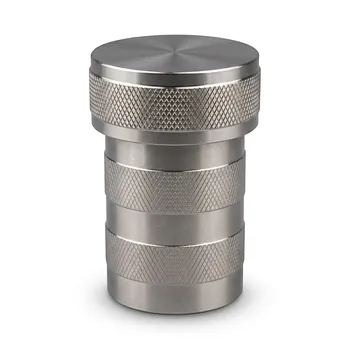
The hydrothermal autoclave serves as the essential high-pressure reactor that facilitates the chemical transformation of precursor materials into a reinforced composite. It creates a sealed environment where subcritical water conditions drive the dissolution and recrystallization of ions, allowing for the growth of high-crystallinity hydroxyapatite (nHA) while simultaneously integrating nano-perlite or bioactive phases like calcium silicates.
Core Takeaway: The autoclave provides the necessary autogenous pressure and temperature to synthesize high-purity, morphologically controlled nanostructures at relatively low temperatures, ensuring a stable and bioactive bond between the hydroxyapatite matrix and the nano-perlite reinforcement.
Driving Chemical Reactions Through Subcritical Conditions
Achieving High-Energy States at Low Temperatures
The autoclave allows the reaction to occur at temperatures (typically 180 °C) that would normally cause solvents to evaporate in an open system. By sealing the vessel, the system generates autogenous pressure—often between 4.2 and 5.4 bar—keeping the water in a liquid state above its atmospheric boiling point.
Enhancing Ion Dissolution and Recrystallization
Under these specific subcritical conditions, the ion product of water increases, which significantly boosts its ability to dissolve precursor materials. This environment provides the necessary driving force for the ions to recombine and crystallize into the desired hydroxyapatite structure.
Facilitating Bioactive Phase Formation
The high-pressure environment is critical for the formation of reinforcing phases, such as calcium silicates, which enhance the bioactivity of the final composite. This ensures that the nano-perlite reinforcement is not just a filler but an integrated part of a bioactive ceramic system.
Controlling Morphology and Material Purity
Precision Growth of Nanostructures
The hydrothermal method enables the growth of high-crystallinity nanorods or other specific morphologies without the need for high-temperature calcination. This controlled growth is vital for maintaining the "nano" scale of the perlite and hydroxyapatite, which directly impacts the mechanical properties of the composite.
Elimination of Metallic Contamination
Most modern autoclaves utilize a PTFE (Polytetrafluoroethylene) liner, which acts as a chemically inert barrier. This liner prevents corrosive reaction precursors from attacking the stainless steel walls of the vessel, ensuring the final bioceramic remains free of metallic impurities.
Maintaining Stoichiometric Integrity
Because the system is sealed, there is no loss of volatile components or changes in concentration due to evaporation. This stability allows researchers to achieve a precise stoichiometric ratio, which is a fundamental requirement for the biological performance of hydroxyapatite.
Understanding the Trade-offs
Process Time vs. Crystal Quality
While hydrothermal synthesis produces superior crystallinity compared to ambient methods, it is often a time-intensive process. Achieving the ideal crystal structure and reinforcement integration can require several hours or even days of sustained heat and pressure.
Complexity of Scalability
Scaling up production in an autoclave environment is significantly more complex than open-beaker synthesis. The requirement for pressure-rated vessels and precise temperature gradients means that equipment costs and safety protocols increase exponentially as batch sizes grow.
Sensitivity to Loading Factors
The ratio of the precursor solution to the total volume of the autoclave (the filling degree) drastically affects the internal pressure. Inaccurate filling can lead to inconsistent crystal sizes or, in extreme cases, vessel failure due to over-pressurization.
How to Apply This to Your Project
Making the Right Choice for Your Goal
The use of a hydrothermal autoclave should be tailored to the specific mechanical and biological requirements of your reinforced hydroxyapatite.
- If your primary focus is Maximum Mechanical Strength: Prioritize longer reaction times at stable pressures to ensure the growth of high-crystallinity nanorods that provide better reinforcement.
- If your primary focus is Biological Purity: Always utilize a high-quality PTFE liner and ensure all precursors are thoroughly mixed prior to sealing to prevent localized stoichiometric imbalances.
- If your primary focus is Morphological Control: Closely monitor the temperature (aiming for the 180°C - 200°C range) to balance the rate of dissolution against the rate of crystal growth.
By leveraging the unique subcritical environment of a hydrothermal autoclave, you can synthesize a nano-perlite reinforced hydroxyapatite composite that possesses the structural integrity and chemical purity required for advanced biomedical applications.
Summary Table:
| Key Feature | Function in Synthesis | Primary Benefit |
|---|---|---|
| Subcritical Water | Boosts ion dissolution & recrystallization | Enables high-crystallinity at lower temperatures |
| Autogenous Pressure | Maintains liquid state above boiling point | Facilitates bioactive phase formation (calcium silicates) |
| PTFE Liner | Provides chemically inert barrier | Prevents metallic contamination & ensures purity |
| Sealed System | Prevents evaporation of precursors | Maintains precise stoichiometric integrity |
Elevate Your Advanced Synthesis with KINTEK Precision
Achieving the perfect stoichiometric balance and high-purity nanostructures in reinforced hydroxyapatite requires more than just high pressure—it requires high-performance materials. At KINTEK, we specialize in manufacturing an exhaustive range of laboratory supplies crafted from high-performance PTFE and PFA to ensure your research remains free from contamination.
From everyday basic labware like beakers, crucibles, and reagent bottles to advanced hydrothermal synthesis liners, microwave digestion vessels, and custom electrochemical cells, our products are designed to withstand the most demanding subcritical environments. Whether you need standard digestion tubes and filters or complex non-standard machined parts via our end-to-end custom CNC fabrication, we deliver everything from bespoke laboratory setups to high-volume orders.
Ensure the integrity of your bioceramics and fluid transfer systems today. Contact us now to discuss your custom fluoropolymer requirements and see how our absolute focus on high-performance materials can drive your innovation forward.
References
- Erdoğan Karip, Mehtap Muratoğlu. Hydrothermal Synthesis and Characterization of Nano-Perlite Reinforced NanoHydroxyapatite. DOI: 10.18586/msufbd.1763991
This article is also based on technical information from Kintek Knowledge Base .
Related Products
- High Temperature Corrosion Resistant Hydrothermal Synthesis Reactor with TFM Inner Liner and Straight Cylinder Design
- PTFE Lined High Pressure Digestion Vessel 50ml High Temperature Hydrothermal Synthesis Tank
- Custom TFM Reaction Vessel with Stainless Steel Jacket and PTFE Inner Cup for High Corrosion Resistance
- PTFE Acid Steam Cleaning System HF Resistant Trace Analysis Beaker Digestion Tank Customizable
People Also Ask
- What is the role of a corrosion-resistant reactor in the synthesis of lignin-based carbon dots? Ensure Maximum Purity
- What are the technical advantages of using hydrothermal synthesis reactors for advanced electronic & optical nanomaterials?
- How does a hydrothermal synthesis reactor facilitate the production of crystalline materials with tailored morphologies? Precision Crystal Growth
- Why is the sealing reliability of a hydrothermal synthesis reactor critical for 24-hour cycles? Ensure Nano-Precision
- What role do hydrothermal synthesis reactors play in CQD preparation? Achieve High-Purity Nanomaterial Synthesis