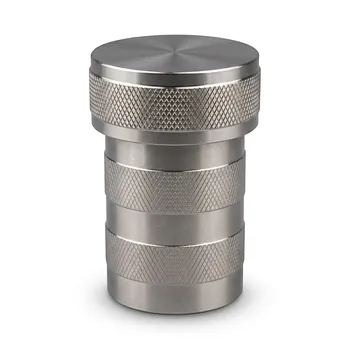
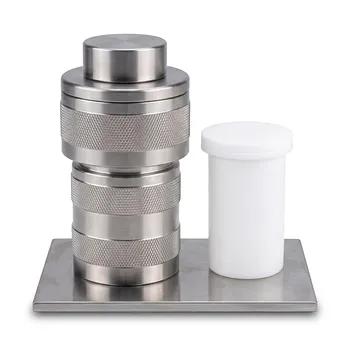
The high-pressure hydrothermal autoclave serves as the specialized reaction vessel that creates the extreme thermodynamic environment necessary to transform liquid precursors into solid vanadium sulfide (f-VS2) nanosheets. Specifically, it maintains a sealed system at 180 °C and high autogenous pressure, which ensures the complete reaction of ammonium metavanadate and thioacetamide while simultaneously dictating the final crystal phase and hierarchical structure.
Core Takeaway: The autoclave functions as a precision reactor that enables subcritical fluid conditions, forcing precursors to undergo rapid dissolution and controlled recrystallization into high-purity, hexagonal 2H-VS2 nanosheets that would be impossible to synthesize under ambient conditions.
Creating the Necessary Thermodynamic Environment
Facilitating Subcritical Conditions
In the synthesis of f-VS2, the autoclave maintains water and solvents in a liquid state at temperatures far exceeding their normal boiling points. This creates a subcritical environment where the solvent’s properties, such as viscosity and dielectric constant, change to favor the rapid transport of ions.
Ensuring Full Precursor Reaction
The high-temperature (180 °C) and high-pressure environment provides the thermal energy required to overcome activation barriers between ammonium metavanadate and thioacetamide. Without this sealed pressure, the precursors would not react fully, leading to low yields and contaminated products.
Controlling Morphology and Crystal Structure
Guiding Hierarchical Nanosheet Growth
The autoclave environment regulates the kinetics of nucleation, forcing the vanadium sulfide to grow along specific crystallographic directions. This "directional growth" is what transforms the bulk material into hierarchical nanosheets, which offer the high surface area and reactivity required for technical applications.
Stabilizing the 2H-VS2 Phase
Precise pressure and temperature control within the vessel are critical for phase purity. The autoclave ensures the final product aligns specifically with the hexagonal 2H-VS2 crystal structure, preventing the formation of unwanted vanadium oxide or alternative sulfide phases.
Accelerating Dissolution and Recrystallization
Similar to the synthesis of other nanomaterials like MoS2 or ZnO, the internal pressure accelerates the dissolution of precursors into the solvent. This is followed by a controlled recrystallization process, which improves the overall crystallinity and purity of the resulting nanosheets without needing secondary annealing.
Understanding the Trade-offs and Challenges
Limited Real-Time Monitoring
One of the primary drawbacks of using a high-pressure autoclave is that it functions as a "black box" reactor. Because the vessel is sealed and under extreme pressure, researchers cannot easily observe the reaction progress or adjust parameters in real-time.
Safety and Scalability Constraints
The reliance on autogenous pressure introduces significant safety risks if the vessel is overfilled or if the temperature exceeds the design limits. Furthermore, translating a successful small-scale autoclave synthesis to industrial-scale production is often difficult due to the complexities of maintaining uniform heat and pressure in larger volumes.
How to Apply This to Your Synthesis Goals
Strategic Recommendations for Implementation
The use of a high-pressure autoclave should be tailored to the specific performance metrics required for your f-VS2 nanosheets.
- If your primary focus is High Phase Purity: Maintain a steady temperature of exactly 180 °C for the duration of the reaction to ensure the hexagonal 2H-VS2 structure is fully established.
- If your primary focus is Maximizing Surface Area: Experiment with the "fill degree" of the autoclave to vary the internal pressure, which directly influences the thickness and hierarchy of the resulting nanosheets.
- If your primary focus is Synthesis Safety: Always ensure the reaction volume does not exceed 80% of the autoclave's total capacity to allow for safe pressure expansion during heating.
By mastering the hydrothermal environment within the autoclave, you can achieve the precise crystal engineering required for high-performance vanadium sulfide nanomaterials.
Summary Table:
| Feature | Role in f-VS2 Synthesis | Key Benefit |
|---|---|---|
| High Temperature (180 °C) | Overcomes activation barriers | Ensures full reaction of ammonium metavanadate |
| Autogenous Pressure | Creates subcritical fluid state | Accelerates precursor dissolution and recrystallization |
| Sealed System | Regulates nucleation kinetics | Stabilizes the hexagonal 2H-VS2 crystal phase |
| Thermodynamic Control | Directs crystallographic growth | Produces high-surface-area hierarchical nanosheets |
Elevate Your Synthesis Precision with KINTEK
Achieving the perfect hierarchical structure in f-VS2 requires high-performance equipment that can withstand extreme chemical and thermal environments. KINTEK specializes in manufacturing premium laboratory supplies crafted exclusively from PTFE and PFA, ensuring absolute purity and durability for your hydrothermal processes.
From hydrothermal synthesis liners and microwave digestion vessels to essential labware like beakers, crucibles, and reagent bottles, we provide the tools necessary for advanced material research. Our capabilities extend to custom CNC fabrication, allowing us to deliver bespoke laboratory setups, complex non-standard machined parts, and high-volume orders tailored to your specific research needs.
Our product range includes:
- Basic Labware: Beakers, measuring cylinders, and reagent bottles.
- Fluid Transfer: High-purity tubing, fittings, and valves.
- Advanced Apparatus: Electrochemical cells, battery testing fixtures, and condensation devices.
- Sample Prep: Filters, pipettes, and high-purity trace analysis instruments.
Maximize your lab's efficiency and ensure reproducible results with fluoropolymer solutions engineered for excellence. Contact us today to discuss your custom lab requirements!
References
- Yuanhe Sun, Daming Zhu. Reversible multivalent carrier redox exceeding intercalation capacity boundary. DOI: 10.1038/s41467-024-55386-5
This article is also based on technical information from Kintek Knowledge Base .
Related Products
- High Temperature Corrosion Resistant Hydrothermal Synthesis Reactor with TFM Inner Liner and Straight Cylinder Design
- PTFE Lined High Pressure Digestion Vessel 50ml High Temperature Hydrothermal Synthesis Tank
People Also Ask
- What is the role of a corrosion-resistant reactor in the synthesis of lignin-based carbon dots? Ensure Maximum Purity
- What are the technical advantages of using hydrothermal synthesis reactors for advanced electronic & optical nanomaterials?
- How does a hydrothermal synthesis reactor facilitate the production of crystalline materials with tailored morphologies? Precision Crystal Growth
- Why is the sealing reliability of a hydrothermal synthesis reactor critical for 24-hour cycles? Ensure Nano-Precision
- What role do hydrothermal synthesis reactors play in CQD preparation? Achieve High-Purity Nanomaterial Synthesis