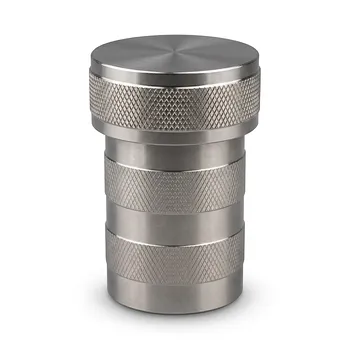
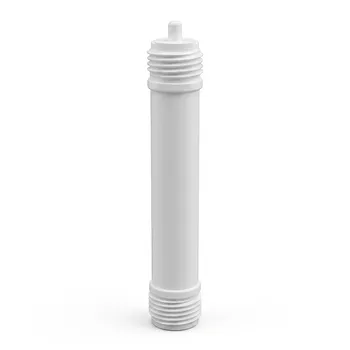
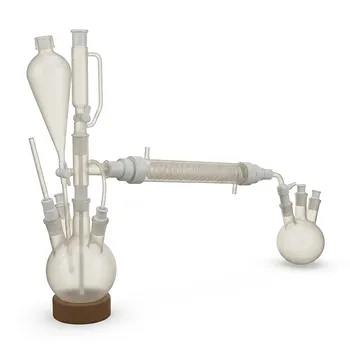
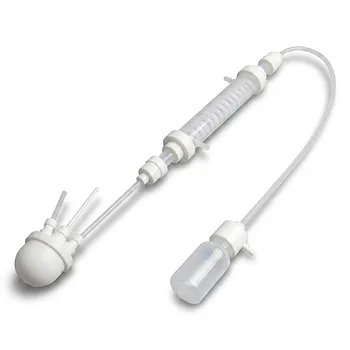
Hydrothermal autoclaves and fluoropolymer liners function as the critical reaction vessel and protective barrier, respectively, in the synthesis of Cr-NiFeLDH catalysts. These components work in tandem to create a high-pressure, high-temperature environment that enables the hydrolysis and nucleation of metal precursors while ensuring that the resulting layered double hydroxide (LDH) structure remains free from contamination and structurally uniform.
Core Takeaway: The autoclave provides the extreme thermodynamic conditions necessary for the directional growth of nanostructures, while the fluoropolymer liner ensures chemical purity and the precise distribution of chromium doping elements within the catalyst framework.
The Thermodynamic Role of the Hydrothermal Autoclave
Enabling High-Energy Reaction Kinetics
Hydrothermal autoclaves create a sealed system that allows aqueous solutions to be heated far beyond their standard boiling points. This elevated temperature and the resulting internal pressure facilitate reaction kinetics that are impossible to achieve under ambient laboratory conditions.
In the specific case of Cr-NiFeLDH, this energy-intensive environment is required for the hydrolysis and nucleation of chromium, nickel, and iron precursors. The pressure drives these ions to organize into the characteristic 2D layered structures of LDHs.
Facilitating In-Situ Growth on Substrates
The autoclave provides a stable, closed environment that supports the directional growth of the catalyst onto conductive supports, such as nickel foam. This "in-situ" growth is critical for ensuring strong mechanical adhesion and efficient electron transfer between the catalyst and the substrate.
By maintaining constant temperature and pressure over several hours, the autoclave ensures that the nanosheet morphology of the Cr-NiFeLDH develops uniformly across the entire surface of the support.
The Chemical Necessity of Fluoropolymer Liners
Preventing Metal Ion Contamination
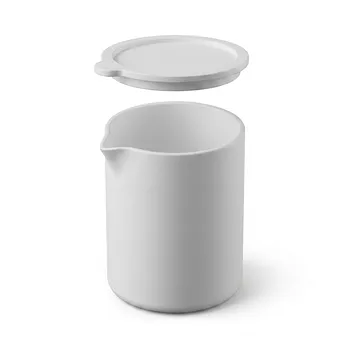
Fluoropolymer liners, typically made of PTFE (Polytetrafluoroethylene) or PFA (Perfluoroalkoxy), act as a barrier between the precursor solution and the autoclave’s stainless steel shell. This is vital because the corrosive nature of the precursors could otherwise leach metal ions from the steel wall into the catalyst.
By providing a chemically inert surface, the liner guarantees that the final Cr-NiFeLDH catalyst maintains its intended high purity. This prevents "poisoning" of the catalytic sites by unintended metallic impurities.
Ensuring Uniform Chromium Distribution
The primary reference highlights that the use of a fluoropolymer liner is essential for the uniform distribution of chromium doping elements. Because these liners do not react with the precursor solution, they do not disrupt the delicate balance of the metal ions during the crystallization process.
This uniformity is a prerequisite for creating a high-activity catalytic architecture. Without the liner, localized concentration gradients or side reactions could lead to an inconsistent LDH structure with reduced catalytic efficiency.
Understanding the Trade-offs and Limitations
Temperature and Pressure Thresholds
While fluoropolymer liners offer exceptional chemical resistance, they have distinct thermal limitations, typically becoming unstable or losing their shape above 220°C to 250°C. Exceeding these temperatures can lead to liner deformation or the release of fluorinated gases, potentially ruining the synthesis.
Maintenance and Cross-Contamination Risks
The porous nature of some fluoropolymers means they can retain trace amounts of precursors if not cleaned aggressively. Cross-contamination between different synthesis batches is a common pitfall that can lead to inconsistent experimental results if the liners are not properly maintained.
Scaling and Throughput Challenges
Hydrothermal synthesis is inherently a batch process, which can limit the scalability of Cr-NiFeLDH production. While autoclaves provide high-quality catalysts, the time-intensive heating and cooling cycles required for each batch can be a bottleneck for industrial-scale applications.
How to Apply This to Your Project
Recommendations for Catalyst Synthesis
- If your primary focus is high purity: Always use high-purity PTFE or PFA liners and perform a "dummy" hydrothermal run with dilute acid before the actual synthesis to strip any residual ions.
- If your primary focus is structural uniformity: Ensure your autoclave is placed in a high-precision oven with minimal temperature fluctuations to maintain the constant pressure required for even LDH growth.
- If your primary focus is chromium doping efficiency: Use a fluoropolymer liner to ensure that the dopant ions are not consumed by side reactions with the vessel walls.
By meticulously controlling the hydrothermal environment through these specialized tools, you can consistently produce Cr-NiFeLDH catalysts with the precise electronic structures required for advanced electrocatalysis.
Summary Table:
| Component | Role in Cr-NiFeLDH Synthesis | Key Performance Factor |
|---|---|---|
| Hydrothermal Autoclave | Thermodynamic Reactor | Enables high-pressure nucleation & directional nanosheet growth |
| Fluoropolymer Liner | Chemical Barrier | Prevents metal ion leaching & ensures uniform chromium distribution |
| Reaction Environment | Controlled System | Facilitates in-situ growth on substrates like nickel foam |
Elevate Your Catalyst Research with KINTEK Precision
Achieve uncompromising purity and structural uniformity in your Cr-NiFeLDH synthesis with KINTEK’s high-performance fluoropolymer solutions. We specialize in everything from high-purity PTFE and PFA liners to advanced hydrothermal synthesis vessels, ensuring your reactions are free from contamination and optimized for high-activity catalytic architectures.
From everyday basic labware (beakers, crucibles, reagent bottles) and sample prep tools (pipettes, filters, tweezers) to complex reaction apparatus like custom electrochemical cells and microchannel reactors, KINTEK manufactures virtually all imaginable laboratory supplies. Backed by end-to-end custom CNC fabrication, we deliver everything from bespoke non-standard machined parts to high-volume orders with an absolute focus on fluoropolymer excellence.
Don't let impurities or structural inconsistencies hinder your research breakthroughs. Contact KINTEK today to discuss your custom project!
References
- Chenxi Liu, Lei Wang. Stabilizing NiFe active sites using a high-valent Lewis acid for selective seawater oxidation. DOI: 10.1039/d5sc02818c
This article is also based on technical information from Kintek Knowledge Base .
Related Products
- High Temperature Corrosion Resistant Hydrothermal Synthesis Reactor with TFM Inner Liner and Straight Cylinder Design
- High Purity PTFE Microwave Digestion Vessel for Soil and Food Analysis Acid Resistant Fluoropolymer Sample Preparation Liners
- Custom TFM Reaction Vessel with Stainless Steel Jacket and PTFE Inner Cup for High Corrosion Resistance
- PTFE Lined High Pressure Digestion Vessel 50ml High Temperature Hydrothermal Synthesis Tank
- PTFE Distillation Condensation Apparatus High Temperature Hydrofluoric Acid Resistant Fluorination Reaction Flask
People Also Ask
- What is the role of a corrosion-resistant reactor in the synthesis of lignin-based carbon dots? Ensure Maximum Purity
- What are the technical advantages of using hydrothermal synthesis reactors for advanced electronic & optical nanomaterials?
- How does a hydrothermal synthesis reactor facilitate the production of crystalline materials with tailored morphologies? Precision Crystal Growth
- Why is the sealing reliability of a hydrothermal synthesis reactor critical for 24-hour cycles? Ensure Nano-Precision
- What role do hydrothermal synthesis reactors play in CQD preparation? Achieve High-Purity Nanomaterial Synthesis