Inert laboratory materials must be activated before fluorinated modifiers can bond durably. The necessary sequence is typically: clean and prepare the surface, introduce hydroxyl or other reactive anchor groups through oxidation, plasma treatment, or an oxide intermediate layer, apply the fluorinated silane or polymer, and cure it under conditions that promote crosslinking or covalent attachment. Without this activation step, fluorinated coatings generally adhere weakly because chemically inert substrates do not provide enough reactive functionality.
Durable fluorinated surfaces are created through a surface-activation and curing process, not by applying a fluorinated modifier directly to an untreated substrate. The treatment must generate compatible reactive groups, establish the fluorinated layer, and complete the chemical bonding or crosslinking needed to withstand solvents, washing, and laboratory use.
Why Direct Bonding Usually Fails
Inert surfaces lack chemical anchor sites
Fluoropolymers and many chemically inert laboratory materials have low surface energy and few reactive groups. This makes them resistant to wetting, but it also prevents fluorinated silanes, oligomers, and polymer coatings from forming strong direct bonds.
The practical consequence is that an untreated surface may appear coated initially but lose the modifier during rinsing, solvent exposure, abrasion, or repeated use.
Surface energy controls coating quality
A low-energy surface can prevent the coating solution from spreading uniformly. Poor wetting produces pinholes, uneven coverage, and localized defects that become failure points under chemical or mechanical stress.
Pre-treatment must therefore improve both chemical reactivity and coating uniformity.
Preparing the Laboratory Material
Clean away organic and particulate contamination
Before activation, remove dust, oils, processing residues, and release agents. Any contamination between the substrate and modifier can block reactive sites and reduce adhesion.
Cleaning conditions must be selected for the material. Aggressive solvents, strong acids, or elevated temperatures can damage laboratory components before the bonding step begins.
Control the surface condition
Record the substrate type, surface finish, treatment time, and processing temperature. Roughness, crystallinity, fillers, and prior manufacturing treatments can all affect how consistently the surface responds.
For production labware, pretreatment should be standardized rather than adjusted informally from batch to batch.
Creating Reactive Anchor Sites
Use acid oxidation where the material permits it
Acid oxidation can introduce oxygen-containing groups, including hydroxyl, carboxyl, and related polar functionalities. These groups provide potential bonding sites for subsequent silanization or reactive fluorinated oligomers.
The oxidation chemistry must be validated against the substrate because excessive treatment can etch, embrittle, discolor, or otherwise alter the component.
Use reactive-ion or plasma treatment
Reactive-ion plasma treatment is a controllable way to increase surface energy and create reactive sites. It can improve wettability and prepare otherwise inert surfaces for coupling or coating.
Treatment intensity and exposure time matter. Insufficient activation may produce poor adhesion, while excessive plasma exposure can damage the surface or create an unstable, short-lived activated state.
Deposit an oxide intermediate layer
When the native substrate cannot be activated reliably, deposit an oxide micro- or nanoparticle layer first. The oxide provides a more reactive surface, commonly containing hydroxyl groups, to which fluorinated silanes can attach.
This approach adds a processing step and introduces an intermediate layer, but it can provide a more consistent chemical platform across difficult substrates.
Applying the Fluorinated Modifier
Choose the bonding chemistry to match the activated surface
For hydroxylated oxide or oxidized surfaces, perfluoroalkyl silanes are a common option. The silane reacts with surface hydroxyl groups and can form a fluorinated, low-energy layer after condensation and curing.
For polymeric coatings, spin coating or spray coating with a perfluoroalkyl copolymer can produce a continuous fluorinated film. The formulation must be compatible with the substrate and must wet the activated surface before solvent removal.
Apply a controlled, uniform layer
Control modifier concentration, solvent quality, deposition rate, coating thickness, and drying conditions. Excess material can create weak, poorly crosslinked regions, while insufficient coverage can leave areas vulnerable to wetting and fouling.
The coating process should also account for internal surfaces, sharp corners, threads, and other geometries common in laboratory components.
Consider reactive fluorinated oligomers
Fluorinated oligomers containing thermolabile blocked groups, such as oximes or imidazoles, can be designed to activate during curing. At elevated temperatures, typically around 150-170 °C, the blocked groups decompose and regenerate reactive isocyanate functionality.
Those in situ isocyanates can form covalent bonds with hydroxyl, amino, or carboxyl groups introduced during surface activation.
Use polycarbodiimide-based alternatives when appropriate
Reactive polycarbodiimide structures can react directly with suitable surface functional groups without a thermally removable blocking group. They can be useful where strong resistance to chemical washing and aggressive solvents is required.
Their performance still depends on the presence and accessibility of compatible functional groups on the substrate.
Completing the Bonding Process
Cure to promote crosslinking and attachment
Thermal curing promotes condensation, crosslinking, and covalent attachment within the fluorinated layer. The correct temperature and dwell time depend on the modifier, substrate, and component geometry.
Microwave-assisted curing may also be used when the material and formulation respond appropriately. The objective remains the same: remove volatile species, complete the chemical reaction, and produce a mechanically and chemically stable layer.
Respect substrate temperature limits
A curing schedule must remain below the substrate's dimensional, mechanical, and chemical limits. Laboratory materials may contain seals, adhesives, fillers, or inserts that tolerate less heat than the primary material.
For temperature-sensitive assemblies, use a lower-temperature chemistry or an alternative activation and curing route rather than assuming that the coating's ideal cure temperature is acceptable for the complete component.
Prevent contamination after activation
Activated surfaces should be coated promptly and protected from airborne contamination. Handling with clean tools and minimizing delays between activation and deposition helps preserve reactive sites.
The process should define whether the surface requires drying, controlled humidity, or an inert environment before silanization.
Verifying the Finished Surface
Confirm that the surface is chemically activated
Measure wettability or surface energy before and after activation to confirm that the pre-treatment changed the surface as intended. These measurements are screening tools, not complete proof of durable bonding.
Where available, surface-analysis methods can verify the presence of oxygen-containing groups, oxide coverage, or fluorinated chemistry.
Test resistance to realistic chemicals
Expose finished components to the aqueous solutions, oils, solvents, cleaning agents, and temperatures expected in service. Testing only with water is insufficient for a laboratory product intended for aggressive chemical environments.
Include repeated washing and drying cycles because a coating that survives a single exposure may still fail during routine use.
Check wetting and anti-fouling performance
The completed treatment should provide the intended low-energy behavior, including resistance to wetting by aqueous solutions, oils, or solvents where specified. Inspect for pinholes, delamination, nonuniform coverage, and defects at edges or joints.
Performance should be evaluated on representative finished geometries, not only on flat test coupons.
Understanding the Trade-offs
Stronger activation can damage the substrate
Oxidation and plasma treatment improve adhesion by making the surface more reactive, but aggressive conditions can roughen or weaken the material. The optimum treatment is the mildest one that produces sufficient reactive-site density and coating adhesion.
Intermediate layers add process complexity
Oxide particle layers can improve consistency on highly inert materials, but they add thickness, another interface, and another possible failure mode. They are most justified when direct activation is unreliable or insufficient.
High-temperature curing limits material selection
Blocked fluorinated oligomers may provide strong covalent bonding, but their curing requirements can exclude components with low heat resistance. Thermal expansion differences can also create stress in thick or rigid coatings.
Low surface energy does not guarantee durability
Superhydrophobic or superoleophobic behavior describes wetting performance, not necessarily adhesion strength. A surface can repel liquids effectively while still failing under abrasion, flexing, repeated solvent washing, or imperfect curing.
Process consistency matters as much as chemistry
Variations in cleaning, activation age, coating thickness, humidity, and cure history can produce inconsistent results. Production control should therefore include defined process windows and post-treatment acceptance tests.
How to Apply This to Your Project
The correct process depends on the substrate, modifier chemistry, service chemicals, and allowable processing temperature.
- If your primary focus is maximum adhesion: Clean thoroughly, activate the surface with oxidation or plasma, use an oxide intermediate layer when needed, and select a modifier capable of forming covalent bonds with the introduced functional groups.
- If your primary focus is solvent and wash resistance: Use a fully cured silane or reactive fluorinated oligomer system, and validate it through repeated exposure to the actual cleaning agents and aggressive solvents.
- If your primary focus is temperature-sensitive labware: Avoid assuming that a 150-170 °C cure is acceptable; select a compatible lower-temperature chemistry and verify adhesion after thermal cycling.
- If your primary focus is uniform coating of complex components: Use a controlled spray or immersion-compatible process, with special attention to internal surfaces, edges, threads, and recesses.
- If your primary focus is long-term anti-fouling performance: Evaluate both wetting behavior and coating retention after realistic chemical, mechanical, and cleaning cycles.
Reliable fluorinated modification comes from matching surface activation, coupling chemistry, deposition, and curing into one validated process.
Summary Table:
| Step | Purpose | Key Methods |
|---|---|---|
| Cleaning | Remove contaminants | Solvents, detergents, ultrasonic cleaning |
| Activation | Create reactive sites | Acid oxidation, plasma, oxide layer |
| Modifier Application | Apply fluorinated layer | Silanes, oligomers, polycarbodiimides |
| Curing | Promote crosslinking | Thermal, microwave |
| Verification | Test durability | Wettability, chemical resistance, wetting |
Enhance your labware's durability with KINTEK's custom PTFE/PFA solutions. Our expert team ensures optimal surface preparation and bonding for reliable performance in your harshest applications. From sample prep to custom reaction vessels, we provide the high-performance fluoropolymer products you need. Contact us today to discuss your requirements! #ContactForm
Related Products
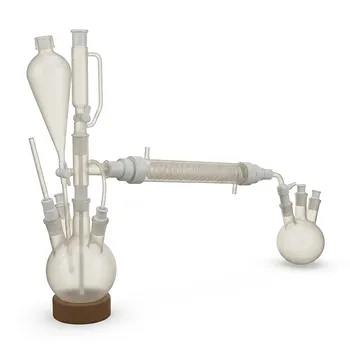
- PTFE Distillation Condensation Apparatus High Temperature Hydrofluoric Acid Resistant Fluorination Reaction Flask
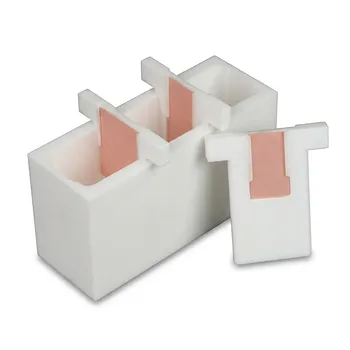
- White PTFE Electrolytic Cell with Movable Slider and Insulated Lid for Fluorine Corrosion Resistance
- High Purity PFA Coiled Tubing Custom PTFE Machining PFA Welding and Precision Bending Solutions
- High Purity PFA Chromatography Column with Collection Bottle Corrosion Resistant Fluoropolymer Filtration System for Trace Analysis
- Transparent Corrosion Resistant PFA Thermometer Sleeve and Customizable Hydrogen Fluoride Condensation Device
People Also Ask
- How does the low surface energy of PTFE benefit the condensation process? Boost Heat Transfer and Prevent Fouling
- What structural characteristics provide PTFE fluoropolymer laboratory apparatus with high thermal stability? Strong C-F bonds, dense fluorine shielding, and rigid helical conformation ensure stability during high-temperature analysis.
- How can autopolymerization of TFE gas be prevented during storage and handling? Master TFE safety with oxygen control, inhibitors, and robust system design.
- When synthesizing fluorinated polymers using volatile and toxic monomers like octafluorocyclopentene (OFCP) or decafluorocyclohexene (DFCH), what material safety and thermal features are required for fluoropolymer laboratory reaction apparatus and fluid h
- How do pyrolysis temperature and steam diluent ratios influence tetrafluoroethylene (TFE) conversion and yield in fluoropolymer monomer reaction apparatus? Optimize TFE yield with temperature and steam control