PAVEs provide the main performance advantage of higher thermal stability compared with HFP. Both modifiers reduce PTFE crystallinity, improve flexibility, and can support melt-processability, but PAVE-modified TFE copolymers retain thermal stability much closer to that of PTFE homopolymer. HFP-modified resins generally sacrifice more high-temperature capability, making PAVEs better suited to demanding chemical-processing and laboratory applications.
PAVEs offer a more favorable balance between processability and high-temperature performance: they reduce crystallinity and improve toughness or melt-processability while preserving structural integrity and chemical resistance closer to unmodified PTFE.
How the Modifiers Change Fluoropolymer Performance
Both modifiers reduce crystallinity
PTFE’s high crystallinity contributes to excellent chemical and thermal resistance, but it also makes the material difficult or impossible to process using conventional melt techniques.
Small amounts of comonomers such as PAVEs or HFP disrupt the regular PTFE molecular structure. This reduces the rate and extent of recrystallization, improving flexibility and enabling modified fluoropolymers to be formed into more complex components.
PAVEs preserve thermal stability more effectively
The critical distinction is that PAVE-modified TFE copolymers retain thermal stability close to PTFE homopolymers.
By comparison, HFP incorporation generally produces a greater reduction in maximum operating temperature. Under sustained thermal stress, this can reduce the resin’s ability to maintain dimensional stability and mechanical integrity.
PAVEs maintain performance under combined heat and chemical exposure
PAVE modification allows the resin to become more processable without materially undermining the core properties associated with PTFE, including chemical resistance and resistance to thermal degradation.
That combination is important when a component must withstand aggressive chemicals and elevated temperatures simultaneously. High temperature alone is not the only concern; chemical exposure can further increase the consequences of any loss in structural stability.
The Practical Advantages of PAVE Modification
Better structural integrity at elevated temperatures
PAVE-modified materials are better positioned to retain their shape, toughness, and functional reliability during high-temperature operation.
This makes them suitable for demanding parts such as microwave digestion vessels, reaction equipment, valves, tubing fittings, and other fluid-transfer components.
Improved processability without the same thermal penalty
PAVEs disrupt the PTFE structure enough to improve manufacturing flexibility, including the production of melt-processable fluoropolymer resins and intricate molded or machined parts.
The advantage is not simply easier manufacturing. It is the ability to achieve that processing benefit while preserving a high temperature capability closer to unmodified PTFE.
Greater toughness and flexibility
PAVE incorporation can improve toughness, flexibility, and clarity in the resulting fluoropolymer.
These properties are useful where parts must tolerate handling, pressure changes, thermal cycling, or complex geometries without becoming excessively brittle or losing chemical inertness.
More reliable performance in high-temperature laboratory equipment
Laboratory equipment often combines heat, pressure, corrosive reagents, and repeated use.
Because PAVEs better preserve thermal stability than HFP, they provide a stronger performance margin for equipment exposed to severe thermal conditions, particularly where failure could compromise containment or measurement reliability.
Why the Difference Matters in Resin Selection
HFP prioritizes modification but can reduce temperature capability
HFP remains useful because it modifies PTFE crystallinity and supports the production of processable fluoropolymer grades.
However, its use can come with a more noticeable reduction in thermal stability. That trade-off may be acceptable in applications where operating temperatures are moderate and processability or other resin characteristics are more important.
PAVEs provide a stronger balance of properties
PAVEs are advantageous when the application requires both manufacturing flexibility and near-PTFE thermal performance.
This balance is particularly valuable for custom components that must be formed into complex shapes yet continue operating under high thermal and chemical loads.
The benefit is relative, not unlimited
PAVE modification does not make every fluoropolymer component equivalent to a PTFE homopolymer in every property.
The final performance depends on the specific resin formulation, modifier level, processing method, geometry, load, pressure, exposure time, and operating environment. PAVEs primarily improve the balance between processability and retained performance.
Understanding the Trade-offs
Unmodified PTFE still offers the highest baseline resistance
Pure PTFE remains the benchmark for chemical inertness and thermal resistance.
Its limitation is manufacturing: high crystallinity and non-melt-processability can make complex part production more difficult and restrict available fabrication methods.
HFP may be appropriate for less thermally demanding designs
HFP-modified resins should not be viewed as unusable. They can provide useful flexibility and processability where the operating temperature remains within the material’s reduced thermal capability.
The key is to avoid selecting HFP-modified material solely for ease of processing when the application also involves sustained high-temperature exposure.
Processability does not eliminate design constraints
Even with a PAVE-modified resin, engineers must verify dimensional stability, pressure capability, thermal cycling behavior, and chemical compatibility for the actual service conditions.
A resin that performs well in a general chemical-resistance comparison may still require careful design validation in a thin-walled, pressurized, or repeatedly heated component.
Modifier concentration and grade selection matter
The performance difference cannot be evaluated from the modifier name alone.
The specific PAVE or HFP type, concentration, molecular structure, resin grade, and processing history all influence the final balance of thermal stability, toughness, clarity, and processability.
Making the Right Choice for Your Goal
The appropriate modifier depends on whether retained high-temperature performance or broader processing flexibility is the primary requirement.
- If your primary focus is maximum thermal stability: Prefer a PAVE-modified TFE fluoropolymer because it more closely preserves the thermal performance of PTFE homopolymer than HFP-modified resin.
- If your primary focus is complex-part manufacturing: Choose a PAVE-based processable grade when the component must combine intricate geometry with elevated-temperature chemical service.
- If your primary focus is moderate-temperature flexibility and processing: HFP may be suitable, provided its lower thermal capability remains acceptable for the complete operating envelope.
- If your primary focus is aggressive chemical service under heat and pressure: Favor PAVE modification and validate the selected grade against actual temperature, pressure, exposure duration, and thermal-cycling conditions.
PAVEs are generally the stronger choice when processability must be improved without giving up PTFE-like thermal stability and chemical resistance.
Summary Table:
| Modifier | Crystallinity Reduction | Thermal Stability | Processability | Best For |
|---|---|---|---|---|
| PAVE | Yes | High (close to PTFE) | Good | High-temp chemical processing, lab equipment like digestion vessels |
| HFP | Yes | Lower (reduced max temp) | Good | Moderate-temperature applications where processability is critical |
Looking for fluoropolymer components that can withstand high temperatures and aggressive chemicals? At KINTEK, we specialize in PTFE and PFA lab supplies, including PAVE-modified resins for superior performance. Contact us today to discuss your custom requirements — our experts are ready to help you choose the right material for your application. Get in touch now!
Related Products
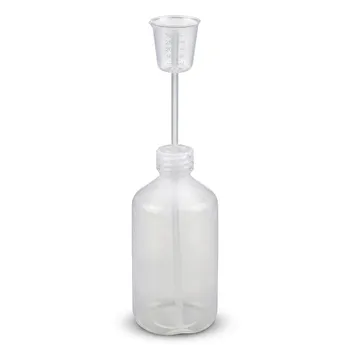
- High Purity PFA Chromatography Column with Collection Bottle Corrosion Resistant Fluoropolymer Filtration System for Trace Analysis
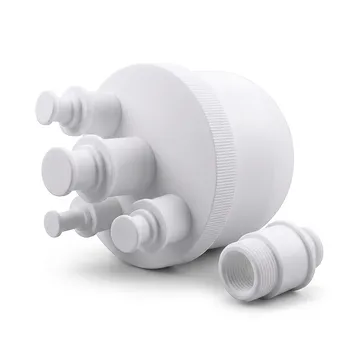
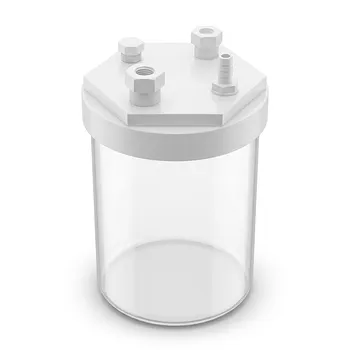
- High Purity Corrosion Resistant PFA Reaction Vessel with PTFE Holder and Integrated Sampling Tube for Trace Analysis
- Corrosion Resistant PTFE Support with PFA Transparent Reaction Tank and High Purity PFA Sampling Tube for Trace Analysis
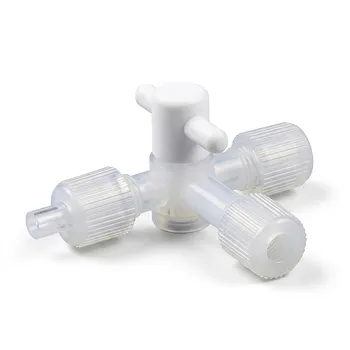
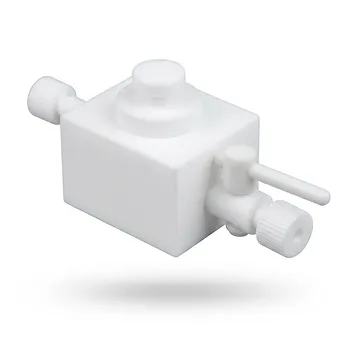
- High Purity PFA PTFE Flare Stop Valves Customizable 2-Way 3-Way Reducing Fluoropolymer Fluid Control Solutions
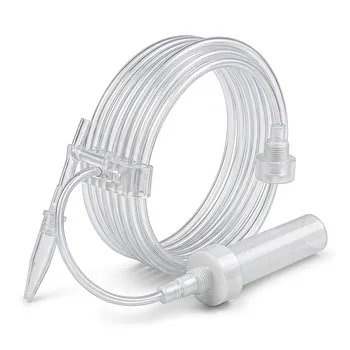
- High Purity PFA Coiled Tubing Custom PTFE Machining PFA Welding and Precision Bending Solutions
People Also Ask
- What are the primary functional and temperature differences between PFA and FEP when selecting melt-processible fluoropolymers for custom laboratory apparatus?
- How does PPVE modify PTFE to make melt-processable PFA? Discover key benefits and applications.
- Why is the chemical stability of polymer endgroups critical when selecting melt-processible fluoropolymers like PFA for high-purity laboratory apparatus? Choose Stable Endgroups for Reliable Performance
- What are the characteristics of PFA material? A Guide to Its High-Performance Balance
- Why is Perfluoroalkoxy alkane (PFA) preferred over glass or stainless steel in pharmaceutical process development? Pure Yield