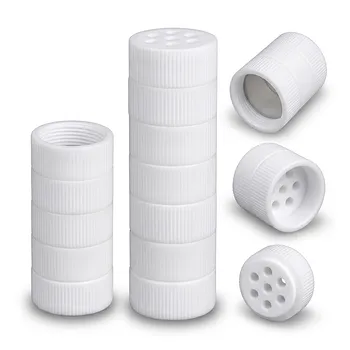
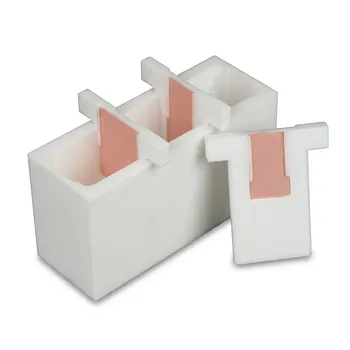
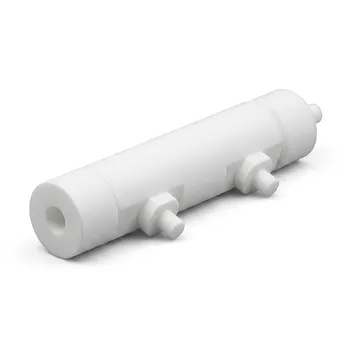
Handling PTFE-threaded battery clamps requires a strict focus on torque management to prevent material deformation. Because PTFE is a relatively soft polymer with a Shore D hardness of approximately 50–65, you must avoid over-tightening. The primary objective is to achieve stable electrical contact and secure fixation without inducing material "creep" or stripping the integrated threads.
Core Takeaway: To maintain the integrity of PTFE battery clamps, users must prioritize moderate, precise pressure over high torque. This ensures the device provides the necessary electrical insulation and low contact resistance without permanently deforming the soft plastic housing.
Understanding the Material Properties of PTFE
The Significance of Shore D Hardness
PTFE is valued for its chemical resistance and electrical insulation, but its mechanical strength is limited. With a Shore D hardness of 50–65, it is significantly softer than the metals typically found in laboratory environments.
The Risk of Material Creep
PTFE is susceptible to creep, a phenomenon where the material slowly deforms under a constant mechanical load. Excessive torque on threads doesn't just risk immediate stripping; it can cause the clamp to lose its grip over time as the plastic "flows" away from the pressure point.
Dimensional Stability and Accuracy
Because the material is easily compressed, excessive clamping force can lead to dimensional inaccuracies. In battery testing, a deformed clamp may fail to align the internal contacts properly, potentially skewing your experimental data.
Best Practices for Mechanical Fixation
Calibrating Manual Torque
The clamp should be tightened only until you achieve secure mechanical fixation and stable electrical contact. There is a "sweet spot" where the gold-plated contacts meet the battery terminal with enough force to keep resistance below 0.5 Ω without crushing the PTFE body.
Distributing Clamping Pressure
When handling or fixturing these components, it is best to use techniques that distribute force evenly. If the clamp itself needs to be held in a larger vice or fixture, using soft jaws or custom-contoured inserts prevents the PTFE from being crushed or distorted.
Monitoring Electrical Contact Stability
Instead of relying on physical tightness as a measure of success, monitor the electrical signal. Once the contact resistance stabilizes and polarization losses are minimized, additional tightening offers no benefit and only risks damaging the threads.
Understanding the Trade-offs
Insulation vs. Durability
The primary trade-off in using PTFE is its exceptional electrical insulation (dielectric strength of ~60 MV/m) versus its low mechanical durability. While the material perfectly isolates stray currents and prevents short circuits, it cannot be treated with the same physical "roughness" as a standard steel or nylon clamp.
Precision vs. Speed
Handling PTFE clamps requires a more deliberate, slower approach to assembly. Moving too quickly or using power tools to tighten threads will almost certainly lead to stripped threads or a cracked housing, rendering the high-purity gold contacts useless.
How to Apply This to Your Project
Recommendations for Success
To ensure your battery characterization remains accurate and your hardware remains functional, follow these guidelines based on your specific focus:
- If your primary focus is Data Accuracy: Tighten the clamp only until the contact resistance drops below 0.5 Ω to ensure the data reflects the electrode properties rather than fixture interference.
- If your primary focus is Hardware Longevity: Inspect the PTFE threads regularly for signs of wear or "rounding" and never use tools to tighten the clamps beyond finger-tight.
- If your primary focus is High-Voltage Isolation: Ensure the PTFE body remains free of deep scratches or deformations, as these can create pathways for surface leakage despite the material's high volume resistivity.
By treating PTFE-threaded clamps as precision instruments rather than standard hardware, you ensure both the longevity of your equipment and the integrity of your electrochemical measurements.
Summary Table:
| Factor | Key Consideration | Target/Requirement |
|---|---|---|
| Material Hardness | Shore D 50–65 | Avoid high torque to prevent stripping |
| Mechanical Load | Material "Creep" | Prevent plastic flow under constant pressure |
| Electrical Goal | Contact Resistance | Maintain < 0.5 Ω for accurate data |
| Tightening Method | Manual Calibration | Tighten only until contact stabilizes |
| Dimensional Integrity | Force Distribution | Use soft jaws to avoid crushing PTFE housing |
Elevate Your Research Precision with KINTEK
Don't let mechanical deformation compromise your experimental integrity. At KINTEK, we maintain an exclusive focus on high-performance fluoropolymer materials, ensuring your equipment delivers both chemical resistance and mechanical reliability.
From everyday basic labware (beakers, measuring cylinders, crucibles, reagent bottles, and digestion tubes) to advanced, custom-engineered components like battery testing fixtures, electrochemical cells, and hydrothermal synthesis liners, we provide the tools you need for high-accuracy results. Our expertise extends to high-purity trace analysis instruments, comprehensive fluid transfer components (tubing, valves, fittings), and bespoke laboratory setups crafted via end-to-end custom CNC fabrication.
Whether you require high-volume standard consumables or complex, non-standard machined parts, KINTEK is equipped to deliver absolutely everything your lab needs. Contact us today to discuss your custom project and discover the KINTEK advantage in fluoropolymer engineering!
Related Products
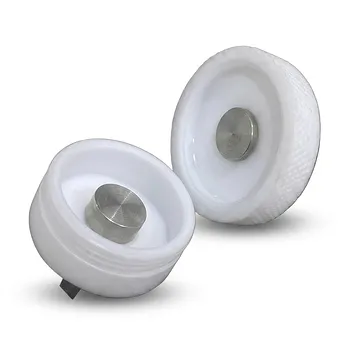
- Corrosion Resistant PTFE Coin Cell Battery Testing Clamps and Acid Proof Custom Fluoropolymer Battery Fixtures
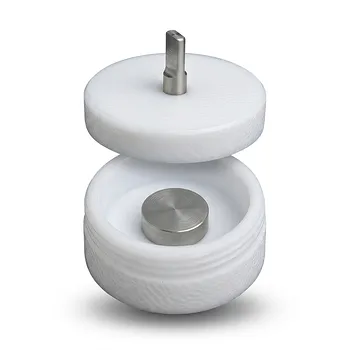
- Acid Resistant PTFE Button Cell Battery Test Fixture Customizable Machining High Purity Electrochemical Testing Clamp
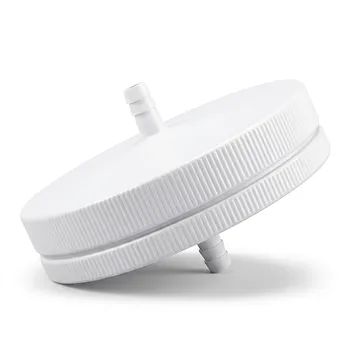
- PTFE Filter Membrane Holder for Hydrogen Chloride and Water Filtration 90mm Environmental Sampling Clamp Customizable
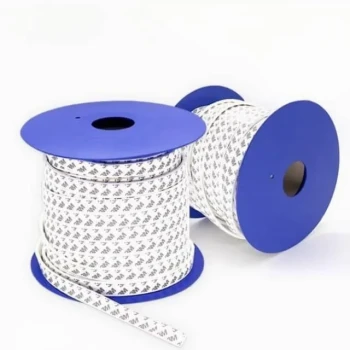
- Custom PTFE Sealing Tapes for Industrial and High Tech Applications
- Corrosion Resistant PTFE Multi Layer Sieve with Threaded Connections for Bio Chemical Laboratory Extraction and Customizable Mesh Size
People Also Ask
- What is the thermal operating range for PTFE battery clamps in electrochemical research? Stability from -200°C to +260°C
- What are the primary functions and material compositions of PTFE battery clamps? Ensure Precision & Chemical Resistance
- How do coin cell testing fixtures evaluate ZIF-derived LCO cycling stability? Ensure Battery Research Precision
- What are the electrical insulation and signal integrity advantages of using PTFE battery clamps? Ensure Data Accuracy
- How does the chemical inertness of PTFE benefit laboratory-scale battery testing? Ensure high-purity research results.