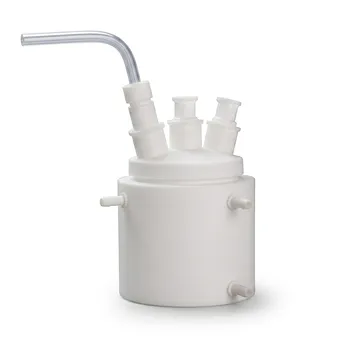
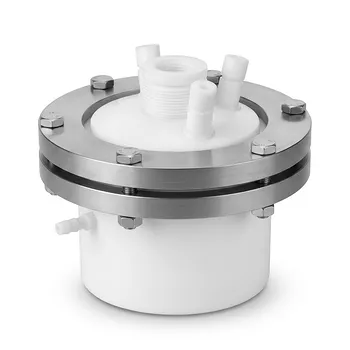
Maintaining PTFE and PPL reactor linings requires a rigorous regimen of non-abrasive cleaning, pre-run visual inspections, and strict adherence to thermal and pressure ramps. To prevent catastrophic failure, liners must be replaced immediately if they exhibit visible deformation, significant discoloration, or a measurable mass loss exceeding 1%.
Core Takeaway: Longevity is achieved by treating polymer linings as precision components rather than consumables; proactive monitoring of structural integrity and chemical fatigue is the only way to ensure the safety of the stainless-steel outer shell.
Essential Cleaning and Handling Protocols
Prompt Residue Removal
Liners should be cleaned immediately after use to prevent chemical residues from leaching into the polymer matrix. Use non-abrasive methods, such as dilute acid rinses, solvent washes, or ultrapure water, to maintain surface integrity.
Avoiding Mechanical Damage
Never use abrasive tools or harsh scrubbing pads, as micro-scratches can become breeding grounds for cross-contamination and stress concentrations. For valves and gaskets associated with the reactor, ensure that flange surfaces are kept pristine to maintain a vacuum-tight seal.
Proper Storage Conditions
When not in use, PTFE and PPL components should be stored in environments protected from extreme temperatures and direct sunlight. UV exposure and thermal cycling in storage can accelerate the degradation of the polymer chains.
Inspection and Replacement Criteria
Pre-Experiment Fatigue Checks
Perform a visual inspection before every experiment to identify signs of material fatigue. Look specifically for cracks, discoloration, or permanent deformation (bowing or "cold flow") that could compromise the seal.
The 1% Mass Loss Rule
A critical metric for replacement is measurable mass loss. If a liner loses more than 1% of its original weight, the material has likely degraded or leached significantly and must be decommissioned to avoid failure.
Estimating Service Life
Under standard laboratory conditions, the typical service life of a high-quality liner is 3 to 5 years. However, frequent use at the upper limits of temperature and pressure will necessitate more frequent replacement cycles.
Operational Safeguards for Material Integrity
Managing Pressure and Volume
It is critical to match the tube volume to the sample mass to prevent accidental over-pressurization. Excessive internal pressure can force the lining to deform against the steel shell, leading to "creep" and thinning of the protective layer.
Thermal Ramping Requirements
Always follow manufacturer-specified temperature and pressure ramps. Rapid heating or cooling can cause differential expansion between the polymer lining and the metal housing, leading to structural tears or delamination.
Component-Specific Maintenance
For reactors involving PTFE-lined valves, apply compatible lubricants to stems and moving parts to reduce friction. Periodic leakage tests should be conducted on the entire assembly to ensure that gaskets and seals have not "set" or hardened over time.
Understanding the Trade-offs
Longevity vs. Chemical Resistance
While PTFE and PPL are highly inert, they are not invincible. Frequent exposure to harsh reagents at high temperatures will inevitably lead to chemical "soaking," where small molecules penetrate the lining. While the liner may look intact, its structural strength is diminished, creating a trade-off between maximizing part life and ensuring absolute safety.
Maintenance Cost vs. Equipment Protection
Rigorous maintenance and early replacement represent an upfront cost in time and materials. However, the alternative—a lining breach—results in the corrosive destruction of the expensive stainless-steel outer shell and potential laboratory hazards.
How to Apply This to Your Facility
To maximize the return on your reactor investment, tailor your maintenance schedule to your specific operational goals:
- If your primary focus is preventing cross-contamination: Prioritize aggressive rinsing with ultrapure water and replace liners at the first sign of surface discoloration.
- If your primary focus is high-pressure safety: Implement a strict mass-loss tracking log and mandate pre-run inspections for any signs of "cold flow" or deformation.
- If your primary focus is maximizing equipment lifespan: Strictly adhere to slow thermal ramps and ensure all operators are trained in non-abrasive cleaning techniques.
Consistent, data-driven maintenance is the only reliable way to bridge the gap between a liner’s theoretical durability and its real-world performance.
Summary Table:
| Maintenance Category | Recommended Practice | Key Benefit |
|---|---|---|
| Cleaning | Non-abrasive rinsing immediately after use | Prevents chemical leaching and surface contamination |
| Inspection | Visual check for fatigue and the 1% mass loss rule | Identifies structural failure before shell damage occurs |
| Thermal Control | Strict adherence to specified temperature ramps | Prevents delamination and differential expansion tears |
| Pressure/Volume | Match tube volume to sample mass | Avoids over-pressurization and lining deformation (creep) |
| Storage | Protect from UV light and extreme temperatures | Slows polymer degradation and maintains material strength |
Protect Your Laboratory Investment with KINTEK’s Precision Fluoropolymers
Ensure the safety and longevity of your experiments with high-performance materials from KINTEK. We specialize in an extensive range of laboratory supplies crafted from premium PTFE and PFA, specifically designed to withstand the most demanding chemical environments.
Whether you need everyday basic labware (beakers, crucibles, reagent bottles, and digestion tubes), high-purity trace analysis instruments, or comprehensive fluid transfer components (tubing, fittings, and valves), KINTEK has you covered. Our capabilities extend to advanced reaction apparatus—including hydrothermal synthesis liners, microwave digestion vessels, and custom electrochemical cells—all supported by our end-to-end custom CNC fabrication for bespoke laboratory setups.
Don't let lining failure compromise your research. From high-volume consumables like O-rings and gaskets to complex, non-standard machined parts, we deliver absolute focus on high-performance fluoropolymers tailored to your needs.
Maximize your equipment lifespan today—contact KINTEK to request a quote or consultation!
Related Products
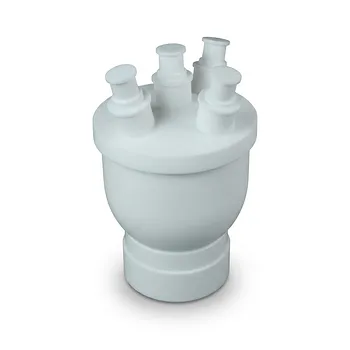
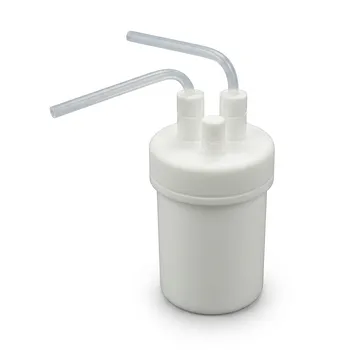
- Customizable Polytetrafluoroethylene PTFE Reactor and Corrosion Resistant Teflon Flask
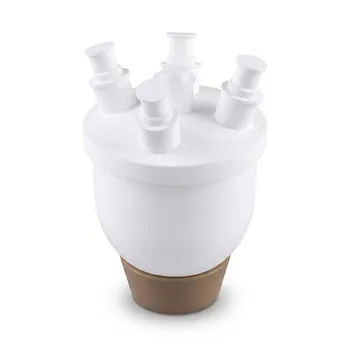
- High Performance Customizable PTFE Reaction Vessel and Corrosion Resistant Polytetrafluoroethylene Flask for Chemical Laboratory Use
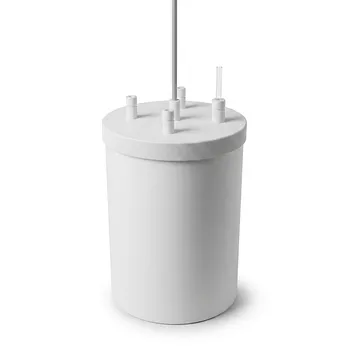
- High Purity PTFE Reaction Vessel Polyfluortetraethylene Cylindrical Tank Petrochemical Reaction Container
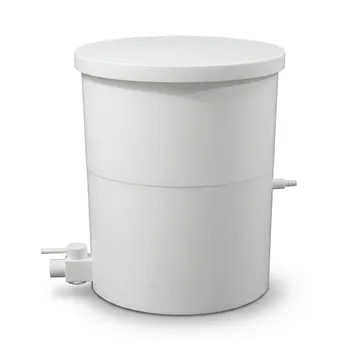
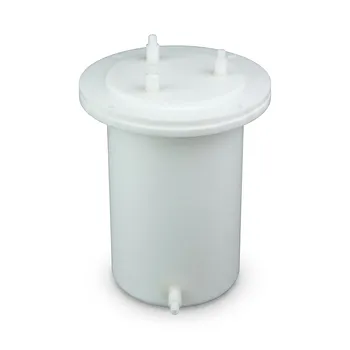
- Large Scale PTFE Double Layer Reaction Tank with Integrated Filter Plate High Purity Polytetrafluoroethylene Chemical Vessel 25L
- Corrosion Resistant PTFE Support with PFA Transparent Reaction Tank and High Purity PFA Sampling Tube for Trace Analysis
People Also Ask
- Why are PP or PTFE reactors preferred over glass in tribocatalysis? Maximize Charge Separation & Catalytic Efficiency
- What functional advantages do PTFE reactors provide over glass? Achieve Superior Purity and Safety in Synthesis
- What are the primary fabrication methods for capillary-based and monolithic PTFE reactors? Expert Production Insights
- Why are PTFE or PFA reaction vessels required for the selective etching process of MXene using hydrofluoric acid (HF)?
- Why is a Teflon-lined (PTFE) reactor vessel required for the hydrothermal synthesis of V2O5 and SnO2 nanomaterials?