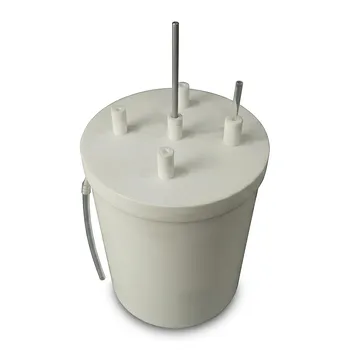
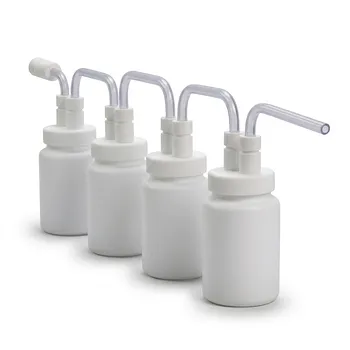
Maintaining hydrothermal synthesis reactor liners requires a rigorous regimen of pre-experiment inspection, non-abrasive cleaning, and strict adherence to thermal limits. Regular monitoring for structural fatigue, such as cracks or discoloration, and verifying chemical compatibility are essential to prevent liner failure. Effective maintenance ensures the protection of the stainless steel autoclave and maintains the purity of synthesized nanomaterials.
The central takeaway for long-term liner use is that preventative replacement and chemical compatibility are more cost-effective than managing a failed seal. By monitoring for a 1% mass loss and staying within specific temperature thresholds, you protect both your samples and the expensive outer pressure vessel.
Routine Inspection Protocols
Identifying Physical Fatigue
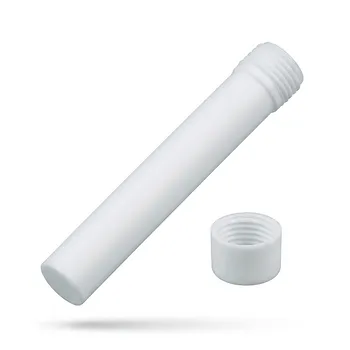
Before every experiment, you must inspect the liner for visible signs of fatigue such as cracks, discoloration, or deformation. Repeated thermal cycling causes materials like PTFE to lose structural integrity, potentially leading to microscopic fractures that compromise the seal.
Monitoring Mass Loss
A measurable loss in mass is a definitive indicator of chemical degradation or leaching. If a liner exhibits a mass loss of more than 1%, it must be decommissioned immediately to prevent a catastrophic failure of the inner chamber.
Detecting Increased Porosity
Over time, PTFE liners can become porous due to repeated exposure to high pressure and heat. This porosity can trap residues from previous experiments, leading to cross-contamination and unpredictable results in subsequent synthesis cycles.
Cleaning and Handling Techniques
Effective Residue Removal
Liners should be cleaned promptly after every use using non-abrasive methods to preserve their internal surface. Utilizing dilute acid or solvent rinses effectively removes reaction residues without scratching the material.
Preserving Non-Stick Properties
The high-quality non-stick surface of a liner is critical for product recovery and morphological control of crystals. Avoid using metallic tools or harsh scrubbing pads, as scratches can serve as nucleation sites that make future cleaning more difficult.
Protecting the Outer Shell
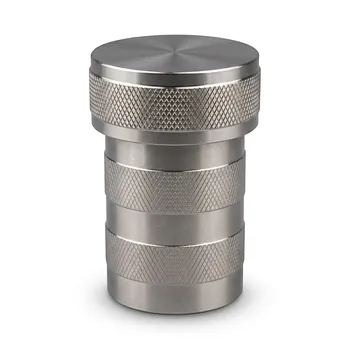
The liner acts as a primary barrier to prevent corrosion of the stainless steel kettle. Any failure to clean the exterior of the liner or the interior of the autoclave can lead to trapped moisture, causing hidden corrosion on the metal pressure vessel.
Operational Limits and Material Integrity
Adhering to Temperature Thresholds
Operating temperature is the primary factor in liner longevity. Standard PTFE liners are suitable for temperatures up to 200–220 °C, while PPL (Polyphenylene Polymer) liners can extend this range to approximately 240–280 °C.
Verifying Chemical Compatibility
Aggressive solutions, particularly alkaline or fluoride-bearing reagents, can rapidly degrade standard polymer liners. In these specialized cases, moving to more robust materials like noble metals (gold, platinum, silver) or quartz glass is necessary to prevent container corrosion.
Managing Thermal Cycling
Rapid heating and cooling cycles accelerate the aging process of the polymer. Gradual temperature changes help maintain the compressive strength and thermal stability required for the liner to withstand internal steam pressure over hundreds of hours of use.
Understanding the Trade-offs
Material Limitations vs. Cost
While PTFE is the most common and cost-effective material, it has a lower thermal ceiling than PPL and is more prone to thermal degradation over time. Investing in specialized liners like gold or titanium significantly increases upfront costs but is often the only way to ensure purity in highly aggressive chemical environments.
Maintenance Time vs. Equipment Lifespan
Rigorous cleaning and inspection protocols require significant time between experiments. However, neglecting these steps significantly increases the risk of seal failure, which can result in the permanent destruction of the stainless steel autoclave through acid or alkali attack.
How to Apply This to Your Project
Recommendations for Long-Term Success
- If your primary focus is routine nanomaterial synthesis: Utilize standard PTFE liners but strictly enforce a replacement schedule based on visible discoloration or the 18-hour/180°C wear profile.
- If your primary focus is high-temperature reactions (above 220°C): Transition to PPL liners to ensure the material maintains its compressive strength and does not deform under pressure.
- If your primary focus is aggressive chemical synthesis (fluorides/alkalis): Evaluate the use of noble metal liners or quartz glass to prevent the leaching of impurities and the degradation of the vessel.
- If your primary focus is maximum repeatability and purity: Implement a mass-tracking log for each liner and discard any unit that exceeds a 1% weight variance to ensure a consistent reaction environment.
By treating the liner as a high-precision consumable rather than a permanent fixture, you ensure the safety of your laboratory and the integrity of your research data.
Summary Table:
| Maintenance Aspect | Key Requirement | Primary Goal |
|---|---|---|
| Physical Inspection | Check for cracks, discoloration, and deformation | Prevent structural failure and leaks |
| Mass Monitoring | Replace liner if mass loss exceeds 1% | Avoid chemical leaching and degradation |
| Temperature Limits | PTFE: <220°C; PPL: <280°C | Maintain compressive strength and seal |
| Cleaning Method | Use non-abrasive dilute acids or solvents | Preserve non-stick surface and purity |
| Thermal Cycling | Use gradual heating and cooling rates | Minimize material fatigue and porosity |
Maximize Your Lab’s Precision with KINTEK’s Fluoropolymer Expertise
Protect your research and extend the lifespan of your pressure vessels with high-performance laboratory supplies from KINTEK. We specialize in an extensive range of PTFE and PFA products, from everyday basics like beakers, crucibles, and digestion tubes to advanced components like hydrothermal synthesis liners, microwave digestion vessels, and custom electrochemical cells.
Our commitment to quality is backed by end-to-end custom CNC fabrication, allowing us to deliver everything from high-volume consumables—such as O-rings, gaskets, and tubing—to bespoke, non-standard machined parts tailored to your specific reaction environment. Whether you are performing routine nanomaterial synthesis or high-pressure chemical reactions, KINTEK provides the high-performance fluoropolymer materials necessary to maintain absolute purity and safety.
Ready to upgrade your lab setup? Contact KINTEK today to discuss your custom or high-volume needs!
Related Products
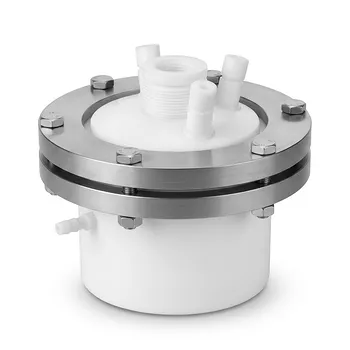
- High Temperature Corrosion Resistant Hydrothermal Synthesis Reactor with TFM Inner Liner and Straight Cylinder Design
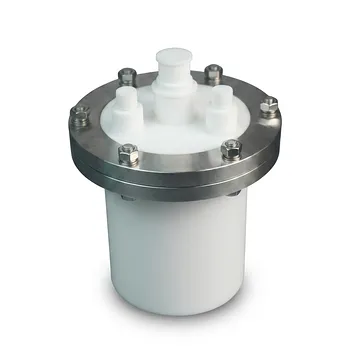
- PTFE Lined High Pressure Digestion Vessel 50ml High Temperature Hydrothermal Synthesis Tank
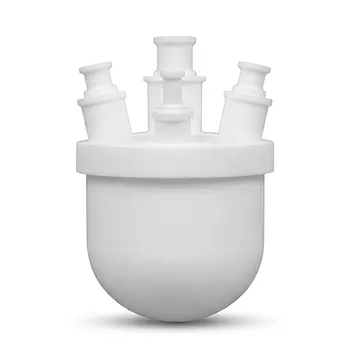
- Custom TFM Reaction Vessel with Stainless Steel Jacket and PTFE Inner Cup for High Corrosion Resistance
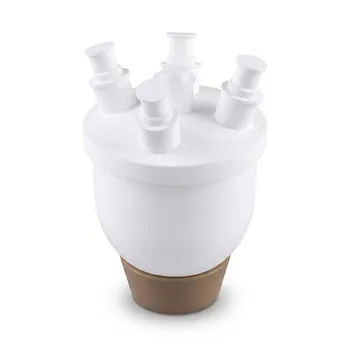
- High Pressure Custom TFM Reactor Stainless Steel Outer Vessel PTFE Inner Cup for Corrosive Synthesis
- Custom PTFE Reaction System with Hose Barb Fittings Corrosion Resistant High Sealing 2L 4L Lab Reactor with Separatory Funnel
People Also Ask
- What is the role of a corrosion-resistant reactor in the synthesis of lignin-based carbon dots? Ensure Maximum Purity
- What are the technical advantages of using hydrothermal synthesis reactors for advanced electronic & optical nanomaterials?
- How does a hydrothermal synthesis reactor facilitate the production of crystalline materials with tailored morphologies? Precision Crystal Growth
- Why is the sealing reliability of a hydrothermal synthesis reactor critical for 24-hour cycles? Ensure Nano-Precision
- What role do hydrothermal synthesis reactors play in CQD preparation? Achieve High-Purity Nanomaterial Synthesis