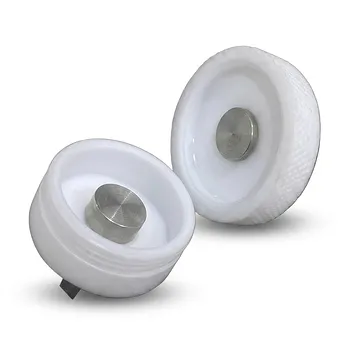
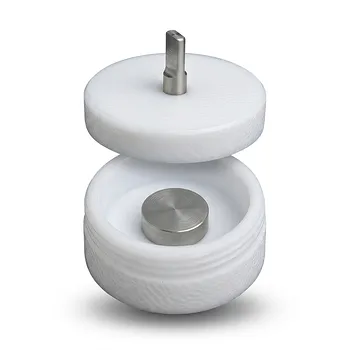
Achieving precision in battery characterization begins with minimizing parasitic resistance at the interface. When using a high-quality PTFE battery clamp equipped with high-purity gold-plated contacts, you can expect a contact resistance of less than 0.5 Ω. This low threshold is critical for ensuring that electrochemical measurements reflect the true behavior of the electrode material rather than the limitations of the testing hardware.
To ensure the highest data integrity during battery testing, a PTFE clamp with gold contacts should maintain a resistance below 0.5 Ω. This minimizes polarization losses, allowing for an accurate assessment of the electrode's intrinsic electrochemical properties.
The Significance of Low Contact Resistance
Minimizing Polarization Losses
A resistance of less than 0.5 Ω is a benchmark for high-performance testing fixtures. By keeping resistance at this level, you significantly reduce polarization losses, which are voltage drops caused by the resistance of the testing circuit itself.
Enhancing Data Fidelity
The primary goal of battery testing is to isolate the performance of the electrode material. When contact resistance is negligible, the resulting data accurately represents the chemistry of the cell rather than the electrical inefficiencies of the clamp.
Material Characteristics and Mechanical Stability
The Role of Gold-Plated Contacts
High-purity gold-plated contacts are chosen for their exceptional conductivity and resistance to oxidation. This ensures that the electrical path remains stable over multiple test cycles and in various environmental conditions.
PTFE as a Housing Material
PTFE (Polytetrafluoroethylene) is used for its excellent chemical inertness and thermal stability. However, it is a relatively soft polymer with a Shore D hardness typically ranging from 50 to 65, which influences how the clamp should be handled.
Understanding the Trade-offs
Material Softness and Thread Integrity
Because PTFE is soft, the threads on these clamps are susceptible to damage if handled aggressively. Over-tightening can lead to permanent deformation of the threads, eventually rendering the clamp unusable.
The Risk of Material Creep
PTFE is prone to material creep, which is the tendency of a solid material to move slowly or deform permanently under mechanical stress. Applying excessive torque does not necessarily improve electrical contact but can cause the material to "flow" away from the pressure point over time.
Optimizing Your Testing Setup
Achieving Stable Electrical Contact
The clamp should be tightened only until secure mechanical fixation is achieved. At this point, the gold contacts will have sufficient surface area engagement to meet the < 0.5 Ω specification without compromising the PTFE housing.
Recommendations for Proper Usage
- If your primary focus is data accuracy: Ensure the gold contacts are clean and free of debris to maintain the < 0.5 Ω resistance threshold.
- If your primary focus is equipment longevity: Avoid using tools to tighten the PTFE threads; finger-tight pressure is usually sufficient to establish stable contact.
- If your primary focus is experimental consistency: Periodically verify the contact resistance using a multimeter to ensure the fixture has not degraded due to material creep.
By balancing mechanical care with high-conductivity materials, you ensure that your battery characterization remains both precise and repeatable.
Summary Table:
| Feature | Specification | Benefit |
|---|---|---|
| Contact Resistance | < 0.5 Ω | Minimizes polarization & voltage drops |
| Contact Material | Gold-plated | Superior conductivity & oxidation resistance |
| Housing Material | PTFE | Chemical inertness & high thermal stability |
| Hardness | 50 - 65 Shore D | Balance of stability & chemical resistance |
| Handling | Finger-tightening | Prevents material creep & thread damage |
Elevate Your Research with Precision Fluoropolymer Engineering
Maximize your data integrity with high-performance laboratory solutions from KINTEK. We specialize in manufacturing virtually all laboratory supplies crafted from PTFE and PFA, including the high-precision battery testing fixtures and gold-plated clamps discussed above.
From everyday basic labware (beakers, tubes, and crucibles) to advanced reaction apparatus like custom electrochemical cells, hydrothermal liners, and microchannel reactors, KINTEK provides the tools necessary for high-purity trace analysis and complex fluid transfer. Our end-to-end custom CNC fabrication allows us to deliver everything from bespoke machined parts to high-volume orders with an absolute focus on material performance.
Ready to eliminate parasitic resistance and optimize your experimental setup? Contact KINTEK today to discuss your custom laboratory requirements!
Related Products
- Corrosion Resistant PTFE Coin Cell Battery Testing Clamps and Acid Proof Custom Fluoropolymer Battery Fixtures
- Acid Resistant PTFE Button Cell Battery Test Fixture Customizable Machining High Purity Electrochemical Testing Clamp
- PTFE Filter Membrane Holder for Hydrogen Chloride and Water Filtration 90mm Environmental Sampling Clamp Customizable
- Custom PTFE Multi Port Reaction Bottle Caps Corrosion Resistant High Purity GL32 GL45 Laboratory Closures
- Custom PTFE Reaction Lid with Integrated Valve and Fitting Corrosion Resistant No Leaching PFA FEP Bottle Cap System
People Also Ask
- What is the thermal operating range for PTFE battery clamps in electrochemical research? Stability from -200°C to +260°C
- What are the primary functions and material compositions of PTFE battery clamps? Ensure Precision & Chemical Resistance
- How do coin cell testing fixtures evaluate ZIF-derived LCO cycling stability? Ensure Battery Research Precision
- What are the electrical insulation and signal integrity advantages of using PTFE battery clamps? Ensure Data Accuracy
- How does the chemical inertness of PTFE benefit laboratory-scale battery testing? Ensure high-purity research results.