Crosslinked PFCB fluoropolymers are suitable for demanding laboratory and electronic applications because they combine exceptional thermal stability, mechanical rigidity, and low-loss electrical insulation. Their glass transition temperature exceeds 350 °C, while the temperature for 5% mass loss reaches 472 °C in nitrogen, supporting dimensional stability under severe thermal conditions. They also provide a Young’s modulus of 10.06 GPa, a dielectric constant below 2.45, and a low dissipation factor of 2.1 × 10⁻³ from 1 to 30 MHz.
Crosslinked PFCB combines high-temperature resistance, mechanical strength, and stable low-k electrical performance with a hydrophobic, smooth, chemically resistant surface. This combination helps components remain reliable, clean, and dimensionally stable when exposed to heat, aggressive chemicals, moisture, or high-frequency signals.
Why Thermal Stability Matters
High Glass Transition Temperature
A Tg above 350 °C indicates that crosslinked PFCB can retain its rigidity far beyond the operating temperatures of many conventional polymers. This is important for laboratory vessels, microfluidic components, electronic substrates, and other parts that must maintain their shape during thermal cycling.
A high Tg also reduces the risk of softening, creep, or deformation when the material is exposed to sustained heat.
Resistance to Thermal Decomposition
The reported 5% weight-loss temperature of 472 °C in nitrogen demonstrates strong resistance to thermal degradation in an inert environment. This provides a substantial thermal margin for processes involving heating, thermal treatment, or localized heat exposure.
The value should not be interpreted as a universal continuous-use temperature. Actual service limits depend on atmosphere, exposure time, mechanical load, geometry, and the specific crosslinked formulation.
Stability During Thermal Cycling
High thermal resistance supports dimensional consistency when components repeatedly move between hot and cool conditions. That stability is valuable in laboratory workflows involving digestion, heating, sterilization, or aggressive chemical processing.
For electronics, it helps preserve alignment, insulation thickness, and interfacial contact during fabrication and operation.
Why Mechanical Performance Matters
High Young’s Modulus
A Young’s modulus of 10.06 GPa gives crosslinked PFCB substantial stiffness compared with many low-k polymer materials. The material is therefore better positioned to resist bending, deformation, and dimensional drift in precision components.
Mechanical rigidity is particularly useful in thin films, microfluidic structures, seals, electronic insulating layers, and custom-machined laboratory parts.
Dimensional Reliability
The combination of crosslinking and high modulus helps the polymer maintain its geometry under thermal and mechanical stress. This matters where small dimensional changes could affect fluid volume, alignment, sealing, or electrical spacing.
In laboratory equipment, dimensional stability supports repeatable handling and reduces the risk of leaks or mechanical failure. In electronics, it helps preserve feature placement and substrate integrity.
Hydrophobic and Smooth Surfaces
Crosslinked PFCB has a reported water contact angle of approximately 105°, indicating a strongly hydrophobic surface. Water and aqueous contaminants are less likely to spread across the material, which supports moisture resistance and easier cleaning.
Its reported surface roughness below 5.79 nm further limits sites where residues or contaminants can accumulate. Together, hydrophobicity and smoothness help reduce cross-contamination in high-purity laboratory environments.
Why Dielectric Performance Matters
Low Dielectric Constant
A dielectric constant below 2.45 indicates that crosslinked PFCB stores relatively little electrical energy compared with higher-k insulating materials. In electronic systems, this can reduce parasitic capacitance and signal propagation delay.
The property is valuable for high-frequency interconnects, insulating layers, microelectronic packaging, and other applications where electrical performance depends on minimizing dielectric loading.
Low Dissipation Factor
The reported dissipation factor of 2.1 × 10⁻³ between 1 and 30 MHz indicates low dielectric loss in that frequency range. Less electrical energy is converted into heat within the dielectric, which can improve signal integrity and reduce losses.
Supplementary data for related PFCB-based networks reports dielectric constants as low as 2.33 and dissipation factors below 1.2 × 10⁻³ at 30 MHz. These results support the broader conclusion that PFCB networks can provide low-loss performance, although values should be confirmed for the exact formulation, frequency, temperature, and processing history.
Moisture-Resistant Insulation
Hydrophobicity helps limit water uptake at the material surface and can support stable dielectric behavior in humid or wet environments. This is especially relevant to microfluidic devices, sensors, laboratory electronics, and components exposed to aqueous reagents.
Moisture resistance does not eliminate the need to evaluate bulk water absorption, interface behavior, and long-term dielectric stability under the intended environmental conditions.
Why the Property Combination Matters
High-Purity Laboratory Components
Fluoropolymer chemistry generally provides strong resistance to acids, bases, organic solvents, and corrosive media. In combination with a smooth, hydrophobic surface, this helps reduce chemical attack, sample retention, and contamination.
These characteristics are relevant to digestion vessels, fluid-transfer components, reagent handling systems, and custom laboratory apparatus.
Precision Electronic and Microfluidic Components
Electronic and microfluidic designs often require several properties simultaneously: low dielectric loss, moisture resistance, mechanical stiffness, thermal stability, and a low-adhesion surface. Crosslinked PFCB addresses these requirements through one material system rather than relying on unrelated coatings or layered materials.
Related PFCB networks also show strong adhesion to silicon substrates, with reported adhesion values up to 13.46 GPa. That result is formulation- and test-method-dependent, but it indicates the potential for robust integration with semiconductor and microfabricated structures.
Cleanability and Low Surface Adhesion
The low surface energy characteristic of fluoropolymers produces hydrophobic, anti-adhesive behavior. This reduces the tendency of liquids, residues, and biological or chemical contaminants to remain attached after use.
For laboratory applications, that can simplify cleaning and help preserve analytical purity. It does not replace validated cleaning procedures when trace contamination is critical.
Understanding the Trade-offs
Thermal Limits Are Application-Specific
A decomposition temperature is a measure of thermal endurance, not a recommended operating temperature. Oxidizing atmospheres, mechanical stress, repeated cycling, and prolonged exposure can reduce practical service limits.
Design decisions should therefore use application-specific aging, creep, thermal cycling, and chemical compatibility data.
Low-k Values Depend on Measurement Conditions
Dielectric constant and dissipation factor vary with frequency, temperature, moisture, film thickness, crosslink density, and measurement method. Values reported for related PFCB networks should not be treated as guaranteed specifications for every PFCB product.
High-frequency designs require characterization at the actual operating frequency and environmental conditions.
Stiffness Can Reduce Flexibility
A high Young’s modulus improves dimensional stability but can make the material less suitable for applications requiring repeated flexing, impact tolerance, or compliant sealing. The design may need to account for stress concentration, fracture behavior, and thermal-expansion mismatch with adjoining materials.
Chemical Resistance Still Requires Validation
Fluoropolymers are broadly resistant to aggressive chemicals, but no material is universally inert under every combination of reagent, temperature, pressure, and exposure time. Compatibility testing remains necessary for concentrated reagents, elevated-temperature service, and long-duration contact.
Making the Right Choice for Your Goal
The most useful approach is to evaluate the full property combination against the actual operating environment.
- If your primary focus is high-temperature laboratory processing: Use the high Tg and 472 °C nitrogen decomposition benchmark as evidence of strong thermal margin, then verify continuous-use temperature and chemical compatibility for the specific process.
- If your primary focus is dimensional stability: Use the 10.06 GPa Young’s modulus and crosslinked structure to support rigid, precision components, while checking creep, thermal expansion, and stress concentration.
- If your primary focus is high-frequency electronics: Use the dielectric constant below 2.45 and dissipation factor of 2.1 × 10⁻³ as baseline low-loss characteristics, then obtain frequency- and humidity-specific data for the selected formulation.
- If your primary focus is contamination control: Use the approximately 105° water contact angle and sub-5.79 nm surface roughness to support hydrophobicity, low adhesion, and cleanability, while validating the complete cleaning protocol.
- If your primary focus is chemical handling: Use the fluoropolymer’s chemical inertness and low surface adhesion as starting advantages, then test the material against the exact reagents, concentrations, temperatures, and exposure durations.
Crosslinked PFCB is most valuable when an application requires thermal endurance, mechanical precision, low-loss insulation, and a cleanable chemically resistant surface at the same time.
Summary Table:
| Property | Value | Benefit |
|---|---|---|
| Glass Transition Temperature (Tg) | > 350 °C | Retains rigidity high temperature, ideal for thermal cycling |
| 5% Weight Loss Temperature (N₂) | 472 °C | Exceptional resistance to thermal degradation |
| Young's Modulus | 10.06 GPa | High stiffness for dimensional stability in precision parts |
| Dielectric Constant | < 2.45 | Reduces parasitic capacitance, improves signal speed |
| Dissipation Factor (1-30 MHz) | 2.1 × 10⁻³ | Low dielectric loss, good signal integrity |
| Water Contact Angle | ~105° | Hydrophobic surface, moisture resistance, easy cleaning |
| Surface Roughness | < 5.79 nm | Smooth surface reduces contamination |
Looking for high-performance fluoropolymers for your demanding applications? At KINTEK, we specialize in PTFE and PFA labware and custom components, engineered with precision. Our products leverage the exceptional properties of fluoropolymers—like thermal stability, chemical resistance, and low dielectric loss—to meet your exact specifications. Whether you need standard labware, high-purity analysis tools, or custom-machined parts, our end-to-end CNC capabilities deliver reliability and performance. Contact us today to discuss your requirements and discover how KINTEK can enhance your lab's efficiency and accuracy. Get in touch with our experts!
Related Products
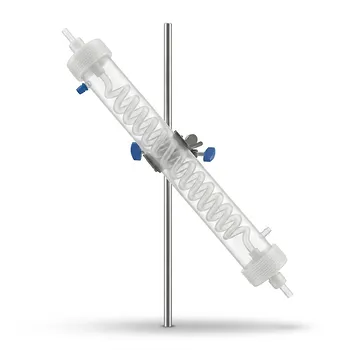
- High Purity PFA Chromatography Column with Collection Bottle Corrosion Resistant Fluoropolymer Filtration System for Trace Analysis
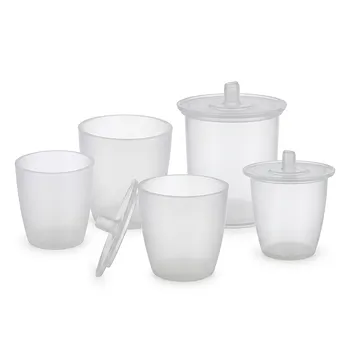
- High Purity PTFE PFA Plastic Crucible for Corrosion Resistant Acid Digestion and Trace Analysis
- High Purity PFA Chromatography Columns and Collection Bottles Corrosion Resistant Fluoropolymer Filtration Systems for Trace Analysis
- High Purity PFA Chromatography Column Double Layer Constant Pressure Filter Column with Sieve Plate Acid Resistant Fluoropolymer Filtration System
- High Purity PFA Crucible and Corrosion Resistant PTFE Beaker for Trace Analysis and Custom Laboratory Applications
People Also Ask
- What are the primary functional and temperature differences between PFA and FEP when selecting melt-processible fluoropolymers for custom laboratory apparatus?
- How does PPVE modify PTFE to make melt-processable PFA? Discover key benefits and applications.
- Why is the chemical stability of polymer endgroups critical when selecting melt-processible fluoropolymers like PFA for high-purity laboratory apparatus? Choose Stable Endgroups for Reliable Performance
- What are the characteristics of PFA material? A Guide to Its High-Performance Balance
- Why is Perfluoroalkoxy alkane (PFA) preferred over glass or stainless steel in pharmaceutical process development? Pure Yield