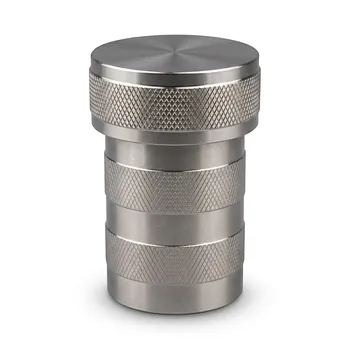
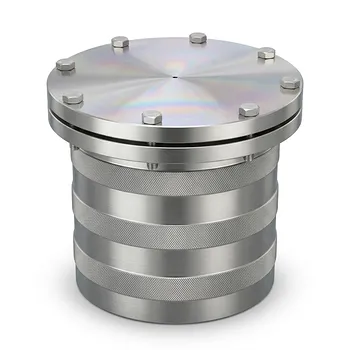
Maintaining a 33 percent filling ratio is a critical safety and kinetic constraint in the hydrothermal synthesis of Zinc Tin Oxide (ZTO). This specific volume ensures that the autoclave possesses sufficient headspace to accommodate the thermal expansion of liquids and the vaporization of solvents as temperatures reach 200°C. By balancing the liquid-to-vapor ratio, researchers can maintain a stable, subcritical internal pressure that dictates the nucleation and growth behavior of the nanostructures.
A 33 percent filling ratio provides the necessary buffer to keep internal pressure within safe mechanical limits while creating a high-pressure environment that increases solubility and accelerates crystal growth. This stability is the primary driver for achieving uniform morphology and high crystallinity in ZTO nanostructures at relatively low temperatures.
The Role of Pressure Buffering and Headspace
Managing Thermal Expansion
When a solvent is heated within a sealed PTFE liner, it undergoes significant thermal expansion. The 33 percent filling ratio ensures that there is enough compressible headspace to prevent the liquid from expanding to the point of filling the entire vessel.
Without this buffer, the internal pressure could exceed the mechanical strength of the stainless steel outer shell. This headspace acts as a safety cushion, keeping the autogenous pressure at a manageable level, typically around 11 bar.
Establishing a Subcritical Atmosphere
The filling ratio is the primary factor in establishing a stable subcritical hydrothermal atmosphere. This environment is characterized by the coexistence of liquid and vapor phases under pressure.
This stability is essential for maintaining consistent physical and chemical conditions throughout the reaction. For ZTO synthesis, these steady conditions allow for the uniform nucleation of crystals across the entire substrate or solution.
Impact on ZTO Crystallization and Morphology
Enhancing Precursor Solubility
High-pressure environments created by the 33 percent ratio significantly increase the solubility product of the reaction medium. This allows the precursors to dissolve more effectively than they would at standard atmospheric pressure.
Increased solubility ensures that the zinc and tin ions are readily available in the solution. This is a prerequisite for the oriented growth of Zinc Tin Oxide crystals, which require a specific concentration gradient to form properly.
Accelerating Reaction Kinetics
The synergy of temperature and pressure accelerates the reaction rate of the chemical precursors. This allows ZTO to achieve high levels of crystallization at temperatures much lower than those required by traditional solid-phase methods.
By tuning the pressure through the filling ratio, researchers can influence the crystal growth orientation. This control is often facilitated by additives like Ethylenediamine (EDA), which remain stable in the pressurized, alkaline environment.
Understanding the Trade-offs and Safety Limits
The Danger of Overfilling
Increasing the filling ratio beyond 33-50 percent drastically reduces the available headspace. As the temperature rises, the liquid expansion can lead to a non-linear pressure spike that may compromise the autoclave seals or cause a catastrophic failure.
Excessive pressure also changes the reaction kinetics unpredictably. This often results in non-uniform nanostructures or unwanted secondary phases in the ZTO material.
The Limitations of Underfilling
Conversely, a filling ratio that is too low may not generate enough autogenous pressure to facilitate the necessary solubility. If the pressure is insufficient, the crystallization process will be sluggish or incomplete.
Low filling ratios can also lead to solvent depletion in the liquid phase due to excessive vaporization. This alters the concentration of the reactants, preventing the formation of the desired ZTO nanomorphology.
Making the Right Choice for Your Goal
How to Apply This to Your Project
When preparing your hydrothermal synthesis, consider the following parameters to ensure both safety and material quality:
- If your primary focus is uniform nanostructure morphology: Maintain the 33 percent filling ratio strictly to ensure a stable subcritical atmosphere and consistent nucleation.
- If your primary focus is maximizing crystallization at low temperatures: Ensure your autoclave is rated for at least 15-20 bar to safely handle the pressures generated by the 33 percent filling at 200°C.
- If your primary focus is preventing metallic contamination: Always use a PTFE liner to protect the reaction from the stainless steel shell, especially when using corrosive alkaline solutions like Sodium Hydroxide.
By mastering the balance between liquid volume and headspace, you can precisely control the high-pressure environment required for advanced ZTO crystal engineering.
Summary Table:
| Key Factor | Technical Role | Impact on ZTO Nanostructures |
|---|---|---|
| 33% Filling Ratio | Safety Buffer | Prevents over-pressurization by managing thermal expansion. |
| Headspace | Pressure Stability | Establishes a subcritical atmosphere (~11 bar) for uniform nucleation. |
| Internal Pressure | Solubility Boost | Enhances precursor dissolution, facilitating oriented crystal growth. |
| Reaction Kinetics | Speed & Crystallinity | Accelerates crystallization at lower temperatures than solid-phase methods. |
| PTFE Liner | Chemical Integrity | Prevents metallic contamination and protects the autoclave shell. |
Optimize Your Hydrothermal Synthesis with KINTEK
Achieve precise control and uncompromising safety in your high-pressure research with KINTEK. We specialize in high-performance fluoropolymer solutions tailored for advanced material science.
From PTFE hydrothermal synthesis liners and microwave digestion vessels to high-purity PFA labware and custom CNC-machined reaction apparatus, we provide everything you need for successful nanostructure engineering. Whether you require standard consumables like beakers and tubing or complex, bespoke laboratory setups, our end-to-end fabrication ensures your equipment meets the rigorous demands of ZTO synthesis and beyond.
Ready to elevate your lab's performance? Contact our experts today to discuss your custom requirements or high-volume orders!
References
- Ana Rovisco, Pedro Barquinha. Effect of the seed layer crystalline structure in the growth of zinc-tin oxide (ZTO) nanostructures. DOI: 10.1186/s11671-025-04410-8
This article is also based on technical information from Kintek Knowledge Base .
Related Products
- High Temperature Corrosion Resistant Hydrothermal Synthesis Reactor with TFM Inner Liner and Straight Cylinder Design
- PTFE Lined High Pressure Digestion Vessel 50ml High Temperature Hydrothermal Synthesis Tank
- Custom TFM Reaction Vessel with Stainless Steel Jacket and PTFE Inner Cup for High Corrosion Resistance
People Also Ask
- What is the role of a corrosion-resistant reactor in the synthesis of lignin-based carbon dots? Ensure Maximum Purity
- What are the technical advantages of using hydrothermal synthesis reactors for advanced electronic & optical nanomaterials?
- How does a hydrothermal synthesis reactor facilitate the production of crystalline materials with tailored morphologies? Precision Crystal Growth
- Why is the sealing reliability of a hydrothermal synthesis reactor critical for 24-hour cycles? Ensure Nano-Precision
- What role do hydrothermal synthesis reactors play in CQD preparation? Achieve High-Purity Nanomaterial Synthesis