High-precision battery testing fixtures are the bridge between theoretical material potential and verifiable data. They provide the stable, uniform physical contact and environmental isolation required to accurately capture the intrinsic electrochemical properties of Lithium Iron Phosphate (LiFePO4). By minimizing contact resistance and isolating external interference, these fixtures ensure that measurements of specific capacity, rate performance, and cycle life reflect the material's actual performance rather than experimental artifacts.
The significance of high-precision fixtures lies in their ability to standardize the electrochemical environment, ensuring that data—such as ion transport and electron conduction—is repeatable and representative of the active material. Without this precision, internal resistance and environmental fluctuations can obscure the true energy storage characteristics of LiFePO4.
Eliminating Internal Resistance and Signal Distortion
Maintaining Uniform Contact Pressure
LiFePO4 performance is highly sensitive to the physical interface between the electrode material and the current collector. High-precision fixtures apply constant mechanical pressure, which ensures a uniform distribution of contact across the entire surface area. This uniformity prevents localized current hotspots and ensures that the resulting specific capacity measurements are both accurate and reproducible across different batches.
Minimizing Parasitic Ohmic Loss
Unstable physical connections in standard setups often lead to fluctuating contact resistance, which manifests as a voltage drop during charge and discharge. Specialized fixtures utilize optimized electrical connection structures to minimize these drops and associated thermal effects. This allows researchers to distinguish between the intrinsic resistance of the LiFePO4 material and the resistance of the testing apparatus itself.
Ensuring Accurate Signal Recording
For advanced diagnostics like Electrochemical Impedance Spectroscopy (EIS) and Cyclic Voltammetry (CV), signal integrity is paramount. High-precision fixtures isolate interference signals, providing the clean data necessary to calculate lithium-ion diffusion rates and evaluate capacity decay mechanisms. This level of detail is critical for understanding the long-term cycling stability of LiFePO4-based cells.
Environmental and Chemical Integrity
Resistance to Corrosive Electrolytes
LiFePO4 testing often involves aggressive electrolytes that can degrade standard testing components, leading to chemical interference and data drift. High-quality fixtures are typically constructed from engineering materials like PTFE (Polytetrafluoroethylene) or PFA, which offer superior chemical resistance and electrical insulation. These materials prevent the fixture itself from participating in the electrochemical reaction, preserving the purity of the test results.
Atmospheric Isolation and Sealing
To evaluate long-term cycle life, the testing environment must remain free from external contaminants and moisture. High-performance polymer sealing components effectively prevent electrolyte leakage and isolate the reaction from atmospheric interference. This standardization allows for the stable recording of electrochemical characteristics over hundreds or thousands of cycles.
Compensation for Thermal Contraction
In sub-zero temperature testing, material contraction can significantly increase contact resistance, skewing the results of rate performance tests. Advanced fixtures are designed to effectively compensate for thermal shrinkage, ensuring that electrical contact remains stable even in extreme conditions. This ensures that the measured data reflects the characteristics of the low-temperature electrolyte rather than a failure of the mechanical setup.
Understanding the Trade-offs
While high-precision fixtures are essential for definitive data, they come with specific considerations. These fixtures represent a higher initial investment compared to standard coin cells or basic pouches and require more meticulous cleaning and assembly protocols to maintain their precision. Furthermore, while materials like PTFE provide excellent insulation, they have mechanical temperature limits that must be managed during extreme thermal stress tests. Relying on high-precision fixtures also means that the "ideal" results achieved in the lab may be difficult to replicate in mass-manufactured cells where such tight tolerances are harder to maintain.
How to Apply This to Your Research
Effective evaluation of LiFePO4 requires matching your testing hardware to your specific experimental goals.
- If your primary focus is determining intrinsic material kinetics: Use fixtures with high-performance polymer seals and optimized electrical paths to ensure clean EIS and CV data.
- If your primary focus is extreme temperature performance: Select fixtures specifically designed for thermal compensation to avoid contact resistance artifacts during sub-zero testing.
- If your primary focus is long-term cycle life stability: Invest in corrosion-resistant PTFE or PFA fixtures that offer superior atmospheric isolation to prevent data drift over time.
- If your primary focus is high-rate performance evaluation: Ensure your fixture provides constant, high-uniformity pressure to minimize voltage drops and thermal effects during high-current discharge.
By prioritizing the stability and precision of your testing interface, you ensure that your research reflects the true capabilities of your electrochemical materials.
Summary Table:
| Key Feature | Benefit for LiFePO4 Evaluation | Material/Solution |
|---|---|---|
| Uniform Pressure | Prevents localized hotspots; ensures reproducible capacity. | Precision mechanical loading |
| Low Contact Resistance | Minimizes voltage drops and parasitic thermal effects. | Optimized electrical pathways |
| Chemical Inertness | Prevents electrolyte contamination and data drift. | PTFE / PFA Construction |
| Thermal Compensation | Maintains electrical contact during sub-zero/high-temp tests. | Advanced expansion design |
| Signal Isolation | Ensures clean data for EIS and CV diagnostics. | Shielded high-purity fixtures |
Elevate Your Electrochemical Research with KINTEK
Precision is the backbone of reliable battery material discovery. KINTEK specializes in providing the high-performance fluoropolymer tools necessary for accurate LiFePO4 evaluation and beyond. From everyday basic labware like beakers, measuring cylinders, and reagent bottles to high-purity trace analysis instruments and cleaning tanks, we cover every stage of your workflow.
Our extensive range includes:
- Fluid Transfer & Prep: Tubing, fittings, valves, separatory funnels, and filtration tools.
- General Consumables: Stirring bars, O-rings, gaskets, and seal tapes.
- Advanced Apparatus: Custom electrochemical cells, battery testing fixtures, hydrothermal synthesis liners, and microwave digestion vessels.
Whether you need complex non-standard machined parts or high-volume orders, our end-to-end custom CNC fabrication ensures your setup is perfectly tailored to your research needs. Trust the experts in PTFE and PFA performance.
Contact KINTEK today to discuss your custom laboratory requirements!
References
- N.U. Kalugade, G. M. Lohar. Machine Learning Analysis of Hydrothermally Synthesized LiFePO<sub>4</sub> for Lithium‐Ion Battery. DOI: 10.1002/bte2.20250021
This article is also based on technical information from Kintek Knowledge Base .
Related Products
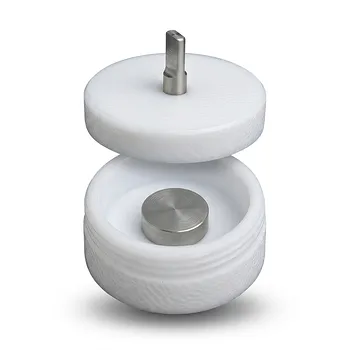
- Acid Resistant PTFE Button Cell Battery Test Fixture Customizable Machining High Purity Electrochemical Testing Clamp
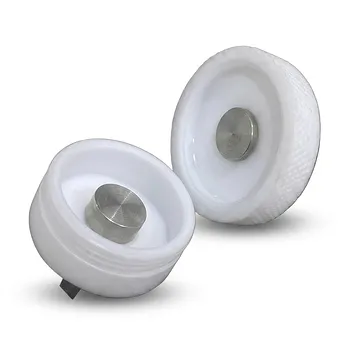
- Corrosion Resistant PTFE Coin Cell Battery Testing Clamps and Acid Proof Custom Fluoropolymer Battery Fixtures
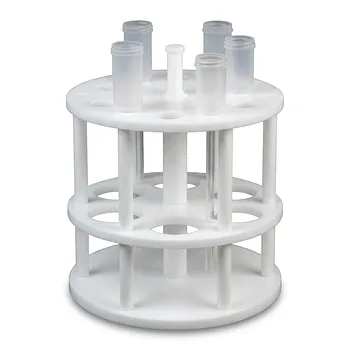
- Custom PFA Microcolumn Racks and PTFE Machined Low Background Corrosion Resistant Laboratory Fixtures
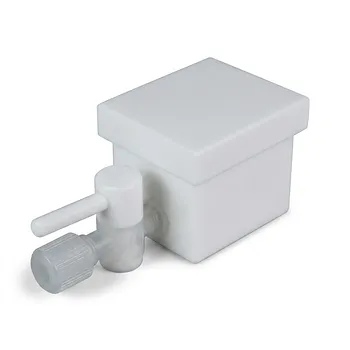
- Custom PTFE Laboratory Apparatus Corrosion Resistant Low Background Reaction Cells Precision CNC Fabrication
People Also Ask
- In what ways do PTFE battery testing fixtures enhance laboratory throughput and reliability? Maximize Research Efficiency
- How does the chemical inertness of PTFE benefit laboratory-scale battery testing? Ensure high-purity research results.
- In what industrial manufacturing contexts are PTFE battery clamps or fixtures utilized? Optimize Battery Production.
- What is the thermal operating range for PTFE battery clamps in electrochemical research? Stability from -200°C to +260°C
- What are the primary functions and material compositions of PTFE battery clamps? Ensure Precision & Chemical Resistance