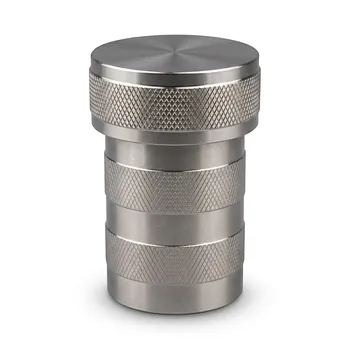
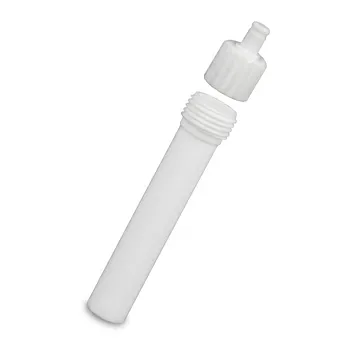
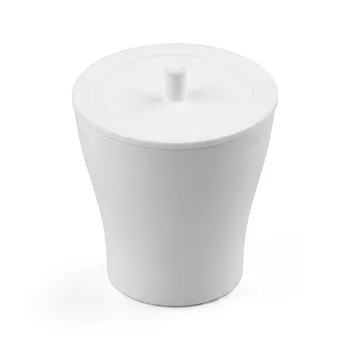
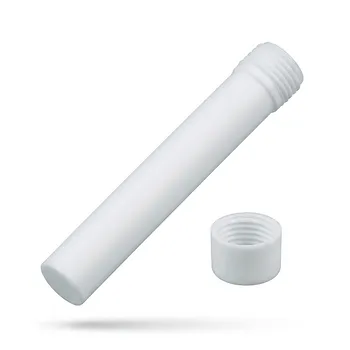
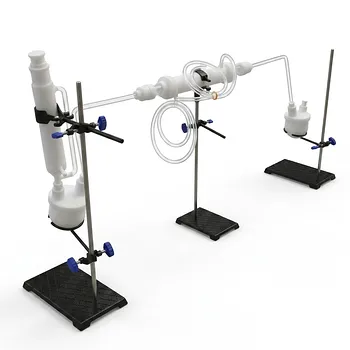
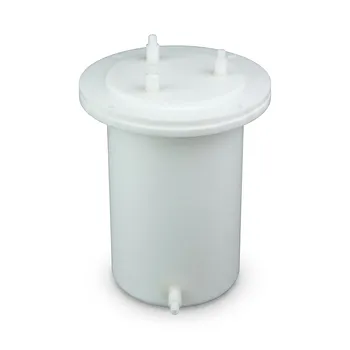
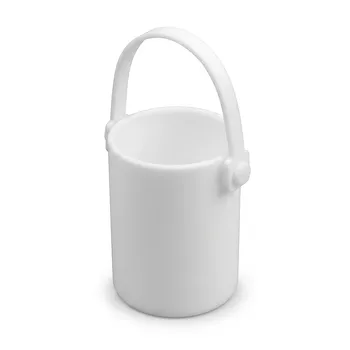
The primary function of a Teflon liner in a hydrothermal autoclave is to provide a chemically inert, sealed environment that facilitates high-temperature and high-pressure reactions. During the synthesis of indium-oxygen-molybdenum disulfide (In-O-MoS2), the liner ensures that the molybdenum, sulfur, and indium precursors undergo deep chemical reactions without being contaminated by the metal walls of the autoclave or corroding the vessel itself.
The Teflon liner acts as a critical barrier that maintains the chemical purity and structural integrity of the catalyst. It allows the reaction solution to reach the necessary energy states for crystallization while protecting the hardware from aggressive precursor chemicals.
Facilitating the Hydrothermal Environment
The synthesis of advanced materials like In-O-MoS2 requires conditions that far exceed standard atmospheric boiling points. The Teflon liner plays a structural and thermal role in making these conditions possible.
Achieving High-Pressure Synthesis
The liner, when sealed inside a stainless steel autoclave, creates an environment where pressure increases as the temperature rises. This autogenous pressure allows the precursor solution to reach states that promote the rapid dissolution and recrystallization of molecules.
Enabling Deep Chemical Reactions
By containing the precursors in a sealed, high-energy environment, the liner ensures that the indium, oxygen, and molybdenum sources react thoroughly. This is essential for achieving the specific atomic doping and structural stability required for the final catalyst product.
Protection Through Chemical Inertness
Hydrothermal synthesis often involves corrosive precursors, such as thiourea or sodium molybdate, which can be highly reactive at elevated temperatures.
Preventing Vessel Corrosion
The Teflon (polytetrafluoroethylene or PTFE) material is exceptionally resistant to strong acids, bases, and salts. It prevents the reaction liquid from directly contacting and eroding the stainless steel body of the autoclave, which would otherwise lead to vessel failure.
Avoiding Metal Impurity Contamination
In the synthesis of doped catalysts, even trace amounts of iron, nickel, or chromium from the autoclave walls can alter the material's properties. The liner acts as a "clean room" inside the vessel, ensuring that the synthesized In-O-MoS2 nano-precursors remain high in purity and have regular morphology.
Understanding the Trade-offs and Limitations
While Teflon is indispensable for hydrothermal synthesis, it is not a perfect material for every scenario and has specific operational boundaries.
Temperature Constraints
Teflon has a physical limit, typically around 200°C to 240°C, depending on the grade and thickness. Exceeding these temperatures can cause the liner to soften, deform, or release toxic vapors, potentially leading to a seal failure.
Mechanical Vulnerability
The liner itself provides almost no structural strength against internal pressure; it relies entirely on the external stainless steel shell for support. If the shell is compromised or the liner is not fitted correctly, the internal pressure can lead to catastrophic leakage.
Porosity and Memory Effects
Over time, Teflon can become slightly porous, meaning trace amounts of a previous reaction could potentially remain trapped in the material. This requires rigorous cleaning or the dedication of specific liners to specific material synthesis workflows to ensure consistency.
How to Optimize Your Synthesis Process
The effectiveness of your hydrothermal synthesis depends on how well you manage the relationship between the liner and the reaction conditions.
- If your primary focus is material purity: Always use a high-purity PTFE liner and implement a dedicated cleaning cycle with dilute acid between synthesis runs to prevent cross-contamination.
- If your primary focus is structural morphology: Ensure the autoclave filling degree (typically 60-80%) is strictly controlled to maintain the consistent autogenous pressure necessary for uniform crystal growth.
- If your primary focus is vessel longevity: Never exceed the manufacturer's maximum temperature rating for the liner, as thermal deformation is the leading cause of autoclave leaks and stainless steel corrosion.
By serving as both a chemical shield and a reaction chamber, the Teflon liner transforms a simple pressure vessel into a precision tool for creating advanced nanostructured catalysts.
Summary Table:
| Feature | Role in Synthesis | Key Benefit for In-O-MoS2 |
|---|---|---|
| Chemical Inertness | Protects vessel from corrosive precursors | Eliminates metal contamination & vessel erosion |
| Sealing Ability | Creates a high-pressure environment | Promotes rapid dissolution and crystallization |
| Thermal Stability | Operates up to 200°C-240°C | Enables high-energy states for precursor reaction |
| Surface Quality | Non-stick & high-purity material | Ensures regular morphology & easy product recovery |
Precision Fluoropolymer Solutions for Your Research
Maximize your synthesis success with KINTEK, your premier source for high-performance PTFE and PFA laboratory supplies. We specialize in providing the chemically inert environments essential for advanced material synthesis, protecting your results from trace contamination and vessel corrosion.
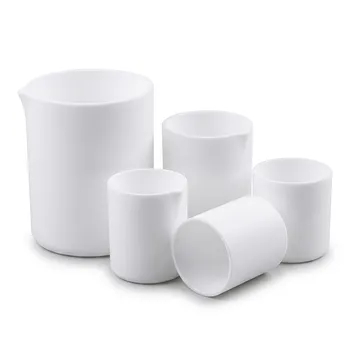
From everyday basic labware like beakers, measuring cylinders, crucibles, and reagent bottles to comprehensive fluid transfer components (tubing, fittings, valves) and sample prep tools (filters, pipettes, tweezers), KINTEK manufactures a complete range of fluoropolymer products. Our expertise extends to advanced reaction apparatus, including hydrothermal synthesis liners, microwave digestion vessels, microchannel reactors, and custom-machined electrochemical cells.
Why choose KINTEK?
- End-to-End Customization: High-precision CNC fabrication for bespoke laboratory setups and complex non-standard parts.
- Unmatched Purity: An absolute focus on high-performance fluoropolymers to ensure the integrity of your trace analysis and material synthesis.
- Scalable Production: Equipped to deliver everything from one-off prototypes to high-volume orders.
Ready to enhance your lab’s efficiency and material purity? Contact us today to discuss your specific requirements!
References
- Peng Wang, Longwei Yin. P-block element modulated 1 T phase MoS2 with Ru lattice grafting for high-performance Li | |O2 batteries. DOI: 10.1038/s41467-024-55073-5
This article is also based on technical information from Kintek Knowledge Base .
Related Products
- High Temperature Corrosion Resistant Hydrothermal Synthesis Reactor with TFM Inner Liner and Straight Cylinder Design
- Custom TFM Reaction Vessel with Stainless Steel Jacket and PTFE Inner Cup for High Corrosion Resistance
- High Purity PTFE Microwave Digestion Vessel Replacement Liner for Acid Sample Preparation and Trace Analysis
- PTFE Lined High Pressure Digestion Vessel 50ml High Temperature Hydrothermal Synthesis Tank
- High Temperature Teflon Continuous Reaction System and HF Resistant Three Neck Flask for Petrochemical Processing
People Also Ask
- What is the role of a corrosion-resistant reactor in the synthesis of lignin-based carbon dots? Ensure Maximum Purity
- What are the technical advantages of using hydrothermal synthesis reactors for advanced electronic & optical nanomaterials?
- How does a hydrothermal synthesis reactor facilitate the production of crystalline materials with tailored morphologies? Precision Crystal Growth
- Why is the sealing reliability of a hydrothermal synthesis reactor critical for 24-hour cycles? Ensure Nano-Precision
- What role do hydrothermal synthesis reactors play in CQD preparation? Achieve High-Purity Nanomaterial Synthesis