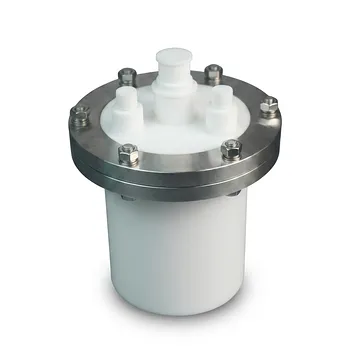
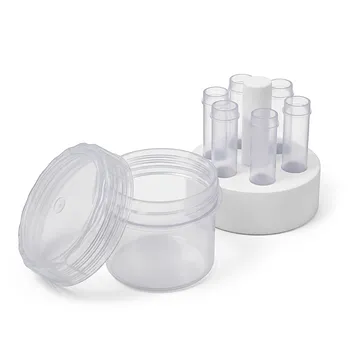
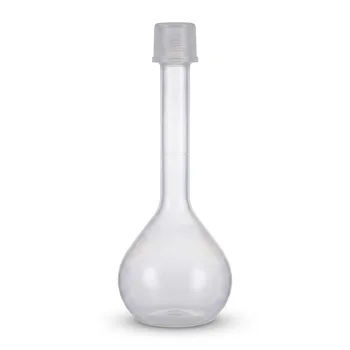
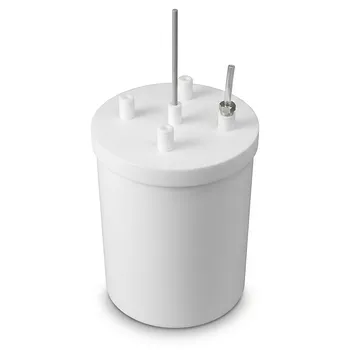
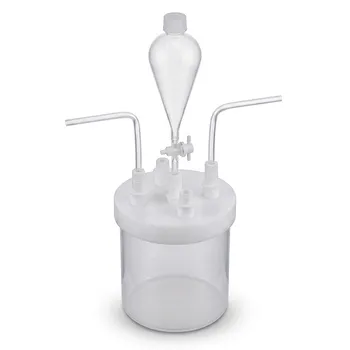
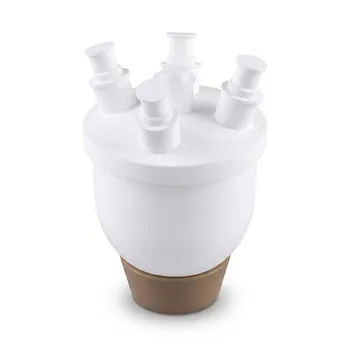
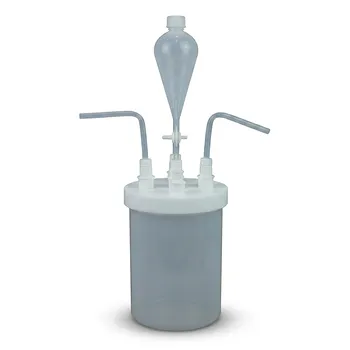
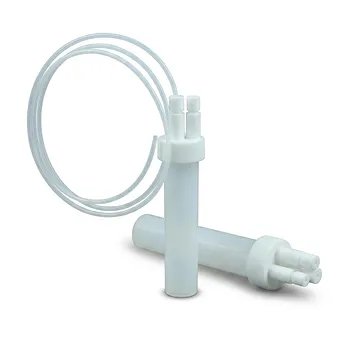
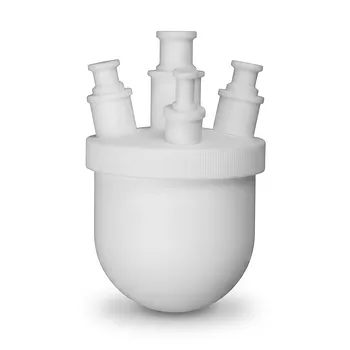
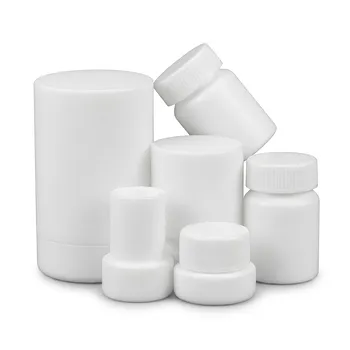
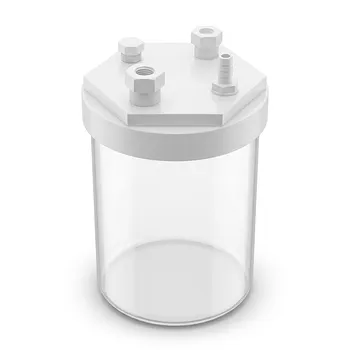
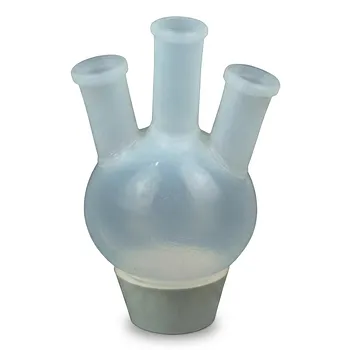
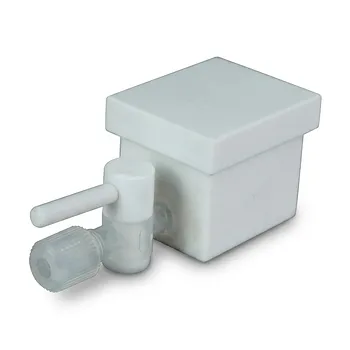
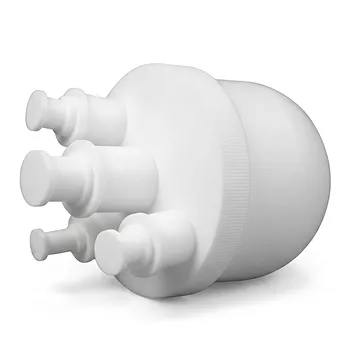
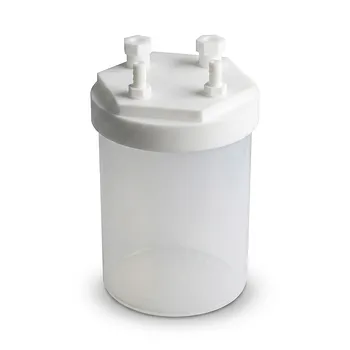
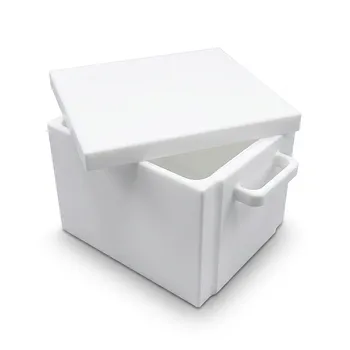
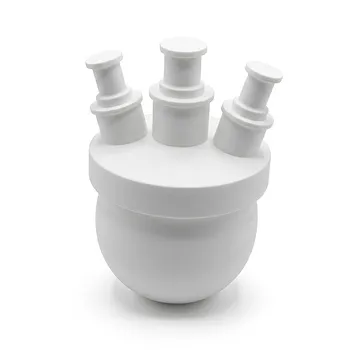
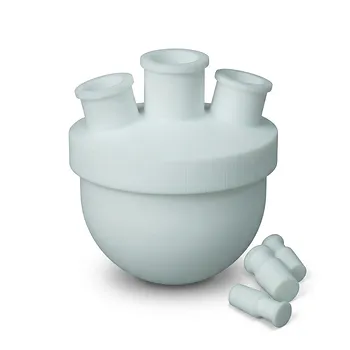
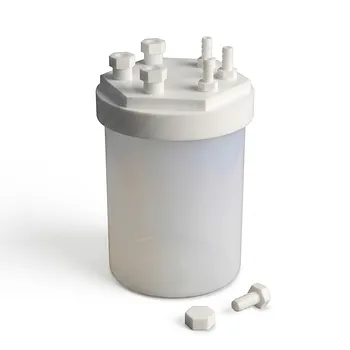
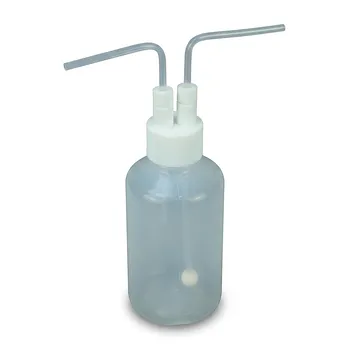
The chemical etching of $\text{Ti}_3\text{C}_2\text{T}_x$ MXene demands the use of PTFE or PFA reaction vessels due to the extreme corrosivity of the etchants involved. These specialized containers are necessary because the synthesis requires a mixture of hydrochloric acid (HCl) and lithium fluoride (LiF)—or direct hydrofluoric acid (HF)—to selectively remove aluminum layers from the $\text{Ti}_3\text{AlC}_2$ MAX phase. Standard materials like glass or metal would be rapidly degraded by these chemicals, compromising experimental safety and introducing metallic impurities that destroy the MXene's purity and electrical performance.
Core Takeaway: Utilizing acid-resistant fluoropolymers like PTFE or PFA is the only way to ensure a stable, contamination-free environment for MXene synthesis. These materials prevent container degradation and the leaching of foreign ions, which is critical for maintaining the high electrical conductivity of the resulting nanosheets.
The Corrosive Nature of the Etching Environment
The In-Situ Generation of Hydrofluoric Acid
The most common route for synthesizing $\text{Ti}_3\text{C}_2\text{T}_x$ involves mixing LiF and concentrated HCl. This reaction generates hydrofluoric acid (HF) in situ, creating a chemical environment that is aggressively corrosive to almost all standard laboratory materials.
The Vulnerability of Standard Labware
Glass and ceramic vessels are primarily composed of silicates, which react almost instantly with fluoride ions to form volatile silicon tetrafluoride. Using glass would not only destroy the vessel but also introduce silicon and boron impurities into the MXene product.
Requirements for Long-Duration Reactions
Etching often requires intense stirring at temperatures between 45°C and 60°C for up to 48 hours. The reaction vessel must maintain absolute structural integrity under these prolonged thermal and chemical stresses to prevent leaks or catastrophic failure.
Protecting Material Integrity and Purity
Preventing the Leaching of Impurity Ions
High-purity PTFE and PFA offer exceptional chemical inertness, ensuring that no metallic or organic ions leach from the container walls. Even trace amounts of impurities can settle between MXene layers, disrupting the deliberate surface chemistry and reducing the material's final quality.
Impact on Electrical Conductivity
The primary value of $\text{Ti}_3\text{C}_2\text{T}_x$ lies in its high metallic conductivity. If the etching vessel reacts with the solution, the resulting contaminant ions can act as scattering centers for electrons or interfere with the delamination process, significantly lowering the performance of the final nanosheets.
Safety and Experimental Reliability
Because these acids are highly hazardous to human tissue, the vessel must be mechanically robust and leak-proof. Fluoropolymer vessels provide the necessary reliability to contain these dangerous reagents safely throughout the multi-day synthesis process.
Understanding the Trade-offs and Limitations
Thermal Conductivity Challenges
While PTFE and PFA are chemically superior, they have much lower thermal conductivity than glass or metal. This means heating the reaction mixture to the required 45–60°C takes longer and requires more precise external temperature monitoring to ensure the internal solution reaches the target setpoint.
Mechanical Softness and Wear
Fluoropolymers are softer than glass and can be scratched by the abrasive MAX phase particles during high-speed stirring. Over time, these micro-scratches can trap material or lead to "pitting," necessitating regular inspection of the vessel liners to ensure no cross-contamination between batches.
Cost and Cleaning Protocols
PTFE and PFA vessels are significantly more expensive than standard labware and require specialized cleaning procedures. Since MXene particles adhere strongly to plastic surfaces, the vessels must be thoroughly treated with specific solvents to ensure that subsequent experiments remain uncontaminated.
Making the Right Choice for Your Goal
If your primary focus is Maximizing Electrical Conductivity: Use high-purity PFA vessels, as they generally have smoother surface finishes than PTFE, further reducing the risk of ion trapping or contamination.
If your primary focus is High-Volume Production: Invest in heavy-walled PTFE liners that can withstand the mechanical abrasion of large-scale stirring over multiple days of continuous etching.
If your primary focus is Cost-Effective Research: Utilize PTFE-lined stainless steel autoclaves, which provide the chemical resistance of the fluoropolymer with the structural and thermal benefits of a metal exterior.
Selecting the appropriate fluoropolymer vessel is not merely a preference but a technical requirement for the successful and safe synthesis of high-performance MXenes.
Summary Table:
| Feature | PTFE/PFA Reaction Vessels | Standard Glass/Metal Labware |
|---|---|---|
| Chemical Resistance | Immune to HF, HCl, and strong alkalis | Rapidly degraded/dissolved by fluorides |
| Purity Control | Zero leaching of metallic or silicate ions | Introduces Si, B, and metal impurities |
| Material Integrity | High durability under 48h+ stirring | Structural failure and leakage risks |
| Surface Finish | Non-stick; PFA offers ultra-smooth finish | Prone to ion trapping and etching pits |
| Electrical Impact | Preserves high conductivity of MXene | Contaminants reduce electron mobility |
Elevate Your MXene Research with KINTEK High-Performance Fluoropolymers
Maintaining the integrity of $\text{Ti}_3\text{C}_2\text{T}_x$ nanosheets requires a contamination-free environment that only high-purity fluoropolymers can provide. KINTEK specializes in manufacturing virtually all imaginable laboratory supplies crafted from PTFE and PFA, ensuring your chemical etching and synthesis processes remain uncompromisingly pure.
From everyday essentials like beakers, crucibles, and reagent bottles to advanced custom CNC-fabricated reaction apparatus, electrochemical cells, and hydrothermal synthesis liners, we support your lab from initial sample prep to high-volume production. Whether you need precise fluid transfer components (tubing, valves, fittings) or bespoke laboratory setups for complex non-standard machining, KINTEK’s exclusive focus on high-performance materials guarantees peak electrical conductivity for your materials.
Ready to optimize your synthesis? Contact KINTEK today for high-performance labware and custom-machined solutions tailored to your research needs.
References
- Rajeshvari Samatbhai Karmur, Narendra Nath Ghosh. Combined Electrochemical and DFT Investigations of ZnCo<sub>2</sub>O<sub>4</sub>–WO<sub>3</sub>@Ti<sub>3</sub>C<sub>2</sub>T<i><sub>x</sub></i> MXene Nanofiber Nanocomposite as a Cathode for a High-Performance Flexible Asymmetric Supercapacitor. DOI: 10.1021/acs.energyfuels.5c03152
This article is also based on technical information from Kintek Knowledge Base .
Related Products
- Custom PTFE Reaction Kettle 2L Flanged Fluoropolymer Reactor Tank Acid and Alkali Resistant Polytetrafluoroethylene Vessel
- High Purity Corrosion Resistant PFA Reaction Vessel with PTFE Holder and Integrated Sampling Tube for Trace Analysis
- High Purity PFA Volumetric Flask 1000ml 2000ml Constant Volume Bottle Acid Resistant Trace Analysis Custom Laboratory Labware
- Large Corrosion Resistant PTFE Reaction Tank Integrated Digestion Barrel Leak Proof Vessel
- High Purity PFA Reaction Vessel for Biopharmaceutical Synthesis and Corrosive Chemical Fluid Handling with Customizable Tube Fittings
People Also Ask
- What reaction vessel and fluid handling considerations are necessary for living cationic polymerization of fluorinated monomers involving Lewis acid catalysts? Key design and safety tips
- Why are high-purity PTFE or PFA reaction vessels recommended for the synthesis of PANI-TiC hybrid materials? - Guide
- Ion Activation Reaction Vessel Requirements: Why PTFE is Critical for Membrane Performance
- Why are fluoroplastic (PTFE) reaction vessels recommended for Methylene Blue (MB) adsorption kinetic experiments?
- Why is a PTFE reaction vessel required for Ti3C2Tx MXene synthesis? Ensure Safe HF Etching & High Purity