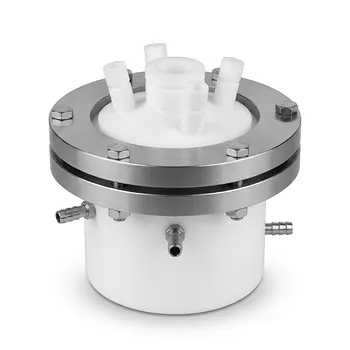
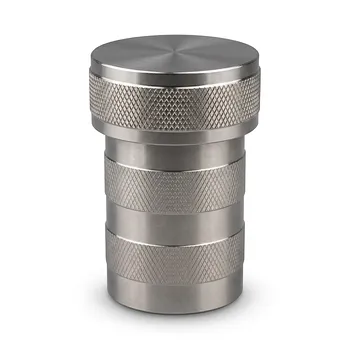
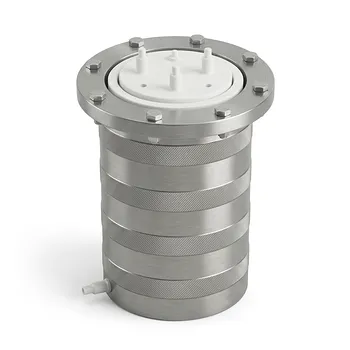
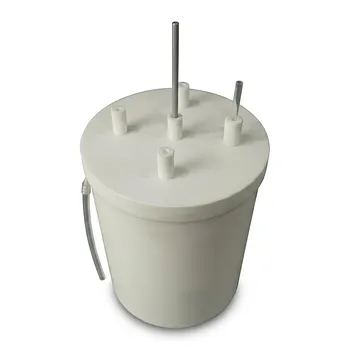
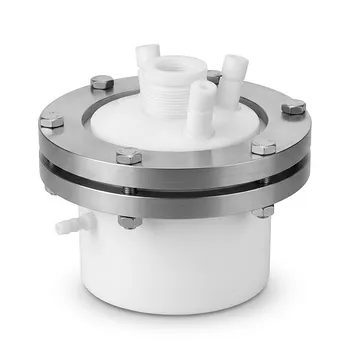
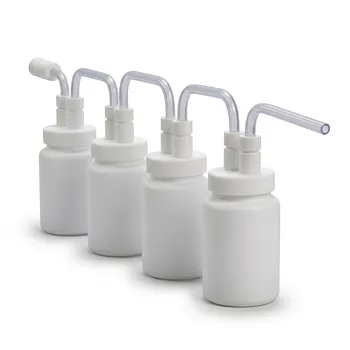
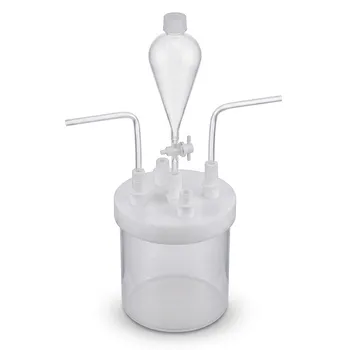
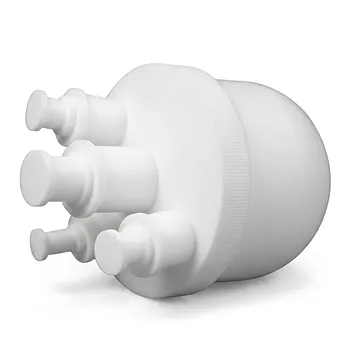
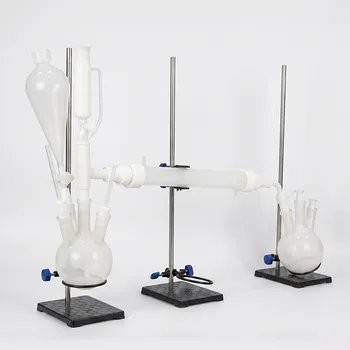
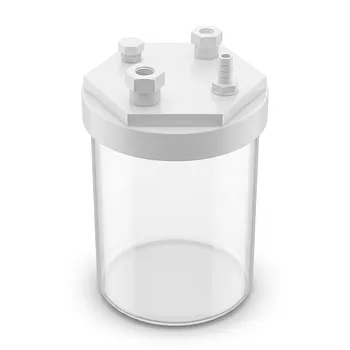
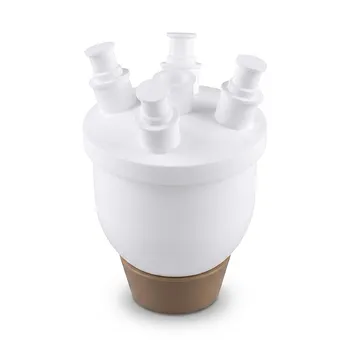
High-sealing solvothermal reactors are the primary mechanism for maintaining the constant internal pressure and solvent concentration required for synthesis. By preventing the escape of volatile organic solvents, these reactors create the stable supercritical or subcritical environments necessary for cerium oxide to integrate uniformly with carbon materials or other metal oxides.
Core Takeaway: The integrity of the reactor seal directly determines the structural quality of the catalyst; a high-pressure, leak-proof environment is essential for achieving the uniform composition and high surface area required for superior catalytic performance.
The Role of Thermodynamic Stability in Catalyst Synthesis
Maintaining Supercritical and Subcritical States
Solvothermal treatments often utilize volatile organic solvents like ethanol or ethylene glycol. These solvents must reach specific temperature and pressure thresholds to enter supercritical or subcritical states, which facilitate unique chemical reactions.
A high-sealing reactor prevents these volatile components from escaping as vapors. This containment ensures the internal pressure remains consistent, allowing the solvent to act effectively as a reaction medium throughout the entire treatment duration.
Ensuring Chemical Uniformity
Uniformity is critical when combining cerium oxide with carbon materials or other metal oxides. If a reactor leaks, the concentration of the solvent changes, leading to an inconsistent chemical environment.
High-sealing vessels maintain a stable solvent concentration, which promotes an even distribution of materials. This results in a composite structure where the cerium oxide is perfectly integrated rather than clustered or segregated.
Impact on Catalyst Morphology and Performance
Developing High Specific Surface Area
The physical environment inside a sealed reactor dictates the final morphology of the catalyst. Maintaining high pressure allows for the controlled growth of nanostructures that exhibit a high specific surface area.
This increased surface area is vital for catalytic applications. It provides more active sites for chemical reactions, significantly improving the overall efficiency of the cerium oxide-based material.
Enhancing Electrical Conductivity
For cerium oxide-based catalysts, particularly those used in electrochemical applications, electrical conductivity is a key performance metric. The high-sealing environment supports the formation of robust composite structures with carbon materials.
These specialized structures facilitate better electron transport. By ensuring the reactor is perfectly sealed, researchers can reliably produce catalysts that possess the necessary conductive pathways for high-performance applications.
Understanding the Trade-offs and Risks
Safety and Pressure Management
While high-sealing capabilities are necessary, they introduce significant safety considerations. The extreme internal pressures generated by volatile solvents can lead to mechanical failure if the reactor is not properly rated or maintained.
The Risk of Seal Degradation
Repeated exposure to high temperatures and corrosive organic solvents can degrade gaskets and sealing surfaces over time. Even a minor microscopic leak can compromise the subcritical state, leading to a batch of catalysts with inferior surface areas and poor conductivity.
Optimizing the Solvothermal Process
How to Apply This to Your Project
To ensure the successful synthesis of cerium oxide-based catalysts, focus on the following technical priorities:
- If your primary focus is material uniformity: Prioritize reactors with precision-machined seals to ensure solvent concentration remains identical from the start to the end of the process.
- If your primary focus is electrochemical performance: Ensure your reactor can safely maintain the high pressures required to facilitate the dense integration of cerium oxide with conductive carbon supports.
- If your primary focus is process reproducibility: Implement a strict maintenance schedule for reactor seals to prevent gradual pressure loss across different synthesis batches.
Reliable catalyst synthesis begins with the fundamental ability to control the physical environment through high-integrity reactor sealing.
Summary Table:
| Feature | Role in Synthesis | Impact on Catalyst Quality |
|---|---|---|
| Pressure Control | Maintains supercritical/subcritical states | Enables controlled nanostructure growth |
| Solvent Stability | Prevents escape of volatile organic solvents | Ensures chemical uniformity and integration |
| High-Integrity Seal | Blocks microscopic leaks and degradation | Maximizes specific surface area and conductivity |
| Safety Management | Contains extreme internal pressures | Protects research environment and repeatability |
Elevate Your Synthesis with KINTEK’s Precision Fluoropolymer Solutions
Achieving the perfect supercritical environment for cerium oxide catalysts requires equipment that never compromises on sealing integrity. KINTEK specializes in high-performance fluoropolymer labware designed to withstand the most demanding solvothermal conditions.
From everyday basic labware like PFA beakers, crucibles, and reagent bottles to advanced reaction apparatus such as hydrothermal synthesis liners, microwave digestion vessels, and custom electrochemical cells, we provide the tools necessary for high-precision research. Whether you need standard consumables (O-rings, gaskets, and seal tapes) or complex, custom CNC-fabricated components, KINTEK maintains an absolute focus on high-performance PTFE and PFA materials to ensure your results are reproducible and your environment is safe.
Ready to optimize your laboratory setup? Contact our engineering experts today to discuss your bespoke requirements and high-volume orders.
References
- Schindra Kumar Ray, Bishnu Prasad Bastakoti. Recent Progress on Cerium Oxide‐Based Nanostructures for Energy and Environmental Applications. DOI: 10.1002/aesr.202500022
This article is also based on technical information from Kintek Knowledge Base .
Related Products
- Custom PTFE Reaction System with Hose Barb Fittings Corrosion Resistant High Sealing 2L 4L Lab Reactor with Separatory Funnel
- High Temperature Corrosion Resistant Hydrothermal Synthesis Reactor with TFM Inner Liner and Straight Cylinder Design
- High Pressure Custom TFM Reactor Stainless Steel Outer Vessel PTFE Inner Cup for Corrosive Synthesis
- PTFE 10L Reaction Vessel with Stirring Paddle Customizable Corrosion Resistant High Temperature Reactor for Biopharmaceutical and Chemical Processing
- Custom PTFE Reaction Apparatus Flange Sealed Corrosion Resistant Jacketed Vessel with Stirring Bar and Thermometer Ports
People Also Ask
- Why are PP or PTFE reactors preferred over glass in tribocatalysis? Maximize Charge Separation & Catalytic Efficiency
- What are the primary fabrication methods for capillary-based and monolithic PTFE reactors? Expert Production Insights
- What functional advantages do PTFE reactors provide over glass? Achieve Superior Purity and Safety in Synthesis
- How does PTFE's melting behavior affect custom lab apparatus? Key insights for manufacturing.
- What structural characteristics provide PTFE fluoropolymer laboratory apparatus with high thermal stability? Strong C-F bonds, dense fluorine shielding, and rigid helical conformation ensure stability during high-temperature analysis.