The role of metal electrodes in the electrochemical synthesis of MOF thin films is twofold: they act as the sacrificial source of metal ions and as the structural foundation for film growth. By applying a controlled voltage, the metal atoms on the electrode surface undergo oxidation, releasing ions into the electrolyte to react with organic ligands. This process, known as anodic dissolution, allows for the in-situ formation of thin films with superior adhesion and density compared to traditional deposition methods.
Core Takeaway: Metal electrodes serve as the "raw material" for the framework, where controlled oxidation transforms the solid metal surface into a steady stream of ions that build the Metal-Organic Framework directly onto the electrode.
The Mechanism of Anodic Dissolution
Direct Ion Sourcing
The primary function of the metal electrode (typically the anode) is to provide the metal cations necessary to build the MOF structure. Instead of adding metal salts to the solution, the metal is supplied directly from the solid electrode surface as it oxidizes.
Precision Voltage Control
The rate of metal ion release is governed by the applied voltage or current density. This allows researchers to precisely tune the concentration of metal ions at the interface, ensuring that the growth rate of the MOF film remains steady and predictable.
In-Situ Film Nucleation
Because the metal ions are generated at the electrode surface, the reaction with organic ligands occurs in the immediate vicinity of the substrate. This results in the MOF thin film growing "from the bottom up," ensuring it is chemically and physically anchored to the electrode.
Structural Benefits for Thin Film Quality
Superior Adhesion and Density
One of the most critical advantages of using the electrode as the ion source is the mechanical integrity of the resulting film. Because the film forms directly on the parent metal, the adhesion is significantly stronger than films created through external deposition or coating techniques.
Homogeneity and Uniformity
The electrochemical method promotes uniform ion distribution across the surface of the electrode. This leads to the formation of highly homogeneous films, which is essential for applications in sensing, electronics, and gas separation where consistency is paramount.
Rapid Synthesis Cycles
Compared to solvothermal methods, which can take days, the electrochemical use of metal electrodes allows for the growth of MOF thin films in minutes or hours. The direct availability of ions at the surface bypasses the slow diffusion processes typical of traditional synthesis.
Understanding the Trade-offs
Electrode Consumption and Degradation
Since the electrode acts as the source of metal, it is consumed during the reaction. This means the physical dimensions of the substrate may change slightly, and the process must be stopped before the electrode's structural integrity is compromised.
Limited Metal Compatibility
This method is restricted to MOFs whose metal components can be easily oxidized from a solid state. While effective for metals like copper, zinc, and lanthanides, it may be more challenging to implement for complex mixed-metal frameworks or non-conductive substrates.
Electrolyte Sensitivity
The success of the synthesis depends heavily on the chemical composition of the electrolyte. If the electrolyte is too aggressive, it may lead to uncontrolled pitting of the metal electrode rather than the uniform release of ions required for film growth.
How to Apply This to Your Project
Choosing the Right Strategy
- If your primary focus is mechanical durability: Utilize anodic dissolution to ensure the MOF film is chemically bonded to the metal substrate for maximum adhesion.
- If your primary focus is rapid prototyping: Use electrochemical synthesis to significantly reduce the time required to grow dense, uniform films compared to hydrothermal methods.
- If your primary focus is film thickness control: Closely monitor the total charge passed (Coulometry) during the process, as the mass of metal ions released is directly proportional to the current used.
The metal electrode transforms from a simple conductor into an active chemical participant, enabling the precise and rapid construction of advanced MOF thin films.
Summary Table:
| Feature | Function in MOF Synthesis | Key Benefit |
|---|---|---|
| Ion Sourcing | Acts as a sacrificial anode via anodic dissolution | Direct, controlled supply of metal cations |
| Structural Base | Serves as the substrate for in-situ nucleation | Exceptional film-to-substrate mechanical adhesion |
| Voltage Control | Regulates the rate of metal ion release | Precise tuning of film thickness and homogeneity |
| Time Efficiency | Facilitates rapid crystallization at the surface | Synthesis completed in minutes vs. days |
| Interfacial Reactivity | Concentrates reaction at the electrode boundary | Formation of dense, high-purity thin films |
Elevate your electrochemical synthesis with precision-engineered equipment from KINTEK. Whether you are developing advanced MOF thin films or conducting high-purity trace analysis, we provide the high-performance fluoropolymer tools essential for success. Our range includes everything from standard and custom electrochemical cells and electrode accessories to PTFE/PFA labware (beakers, tubes, bottles) and fluid transfer components (valves, fittings). With our end-to-end custom CNC fabrication, we deliver bespoke reaction apparatus and high-volume consumables tailored to your specific research requirements. Partner with KINTEK for absolute material performance—contact us today!
References
- Uzba Dehloon, Ateeq-ur Rehman. Metal-organic-frameworks (MOFs) advanced synthetic strategies and applications, including light emitting diodes, solar cells and photodetectors. DOI: 10.1515/revic-2024-0105
This article is also based on technical information from Kintek Knowledge Base .
Related Products
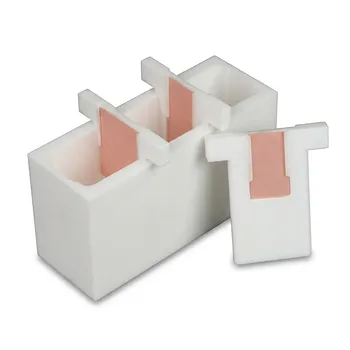
- White PTFE Electrolytic Cell with Movable Slider and Insulated Lid for Fluorine Corrosion Resistance
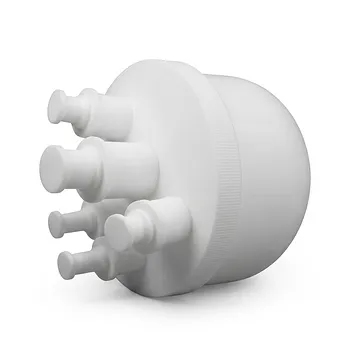
- Custom Multi Neck PTFE Flask for Chemical Engineering and High Purity Laboratory Synthesis Applications
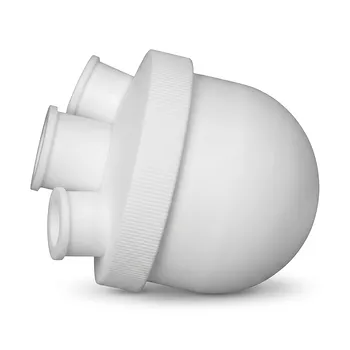
- Custom Multi Neck PTFE Round Bottom Flask for Chemical Synthesis and High Purity Laboratory Research
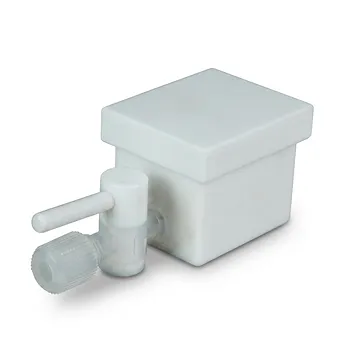
- Custom PTFE Corrosion Resistant Insulating Electrophoresis Reaction Cell with Septum and Valves for Low Background Trace Analysis
- Square PTFE Electrochemical Cell for Silicon Wafer Processing and Hydrofluoric Acid Resistance in Semiconductor and New Energy Research
People Also Ask
- What makes PTFE an ideal construction material for custom electrochemical cells and electronic analytical instrumentation housings? Discover superior chemical resistance and electrical insulation
- How do custom PTFE electrochemical cells improve the accuracy of stability testing for alkaline catalysts compared to glass cells?
- What parameters govern the electrochemical decomposition of perfluorooctanoic acid (PFOA) in aqueous solutions, and why are custom PTFE electrochemical cells preferred? Key factors include anode material, current density, electrolyte, and cell design.
- How does the hydrophobicity of PTFE benefit electrochemical measurements? Enhance Stability and Precision in Your Lab
- How are electrolytic cells utilized in the Hall-Héroult process? Optimizing Purity and Energy Efficiency