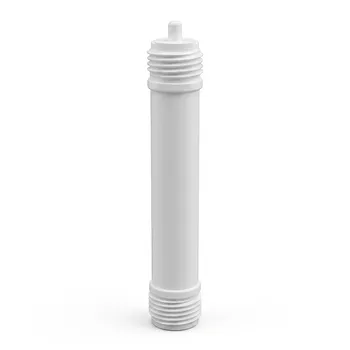
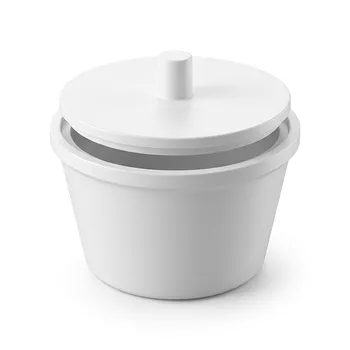
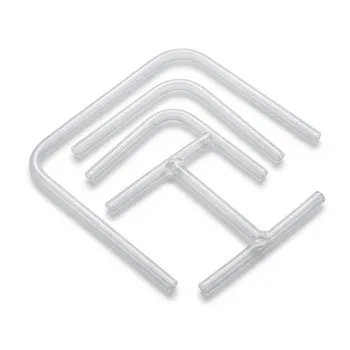
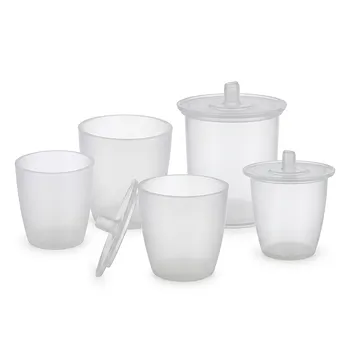
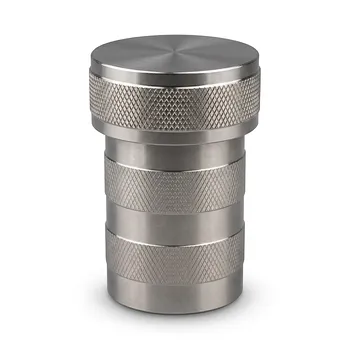
High-purity PTFE or PFA liners act as the critical chemical and pressure barrier during the hydrothermal synthesis of NiMo alloy precursors. Their primary function is to provide an inert reaction environment at 160°C that prevents highly alkaline or oxidizing solutions from corroding the autoclave's metal walls while maintaining the internal pressure necessary for the Ni and Mo species to self-assemble into complex, high-surface-area microstructures.
These liners ensure the chemical integrity of the synthesis by isolating corrosive reagents from the metal reactor and enabling the high-pressure environment required for the precise growth of NiMo nanosheets and spherical microstructures.
Ensuring Chemical Integrity and Equipment Longevity
Isolation from Corrosive Media
Hydrothermal synthesis of NiMo precursors often involves alkaline or oxidizing solutions that are highly aggressive at elevated temperatures. The chemical inertness of PTFE (polytetrafluoroethylene) and PFA (perfluoroalkoxy) prevents these reagents from attacking the stainless steel walls of the autoclave.
Prevention of Metallic Contamination
By acting as a physical barrier, these liners prevent metal ions from the autoclave shell from leaching into the reaction. This is vital for maintaining the precise electronic structure and purity of the NiMo alloy, ensuring that no unwanted metallic impurities interfere with the catalyst's performance.
Low Impurity Leaching
High-purity fluoropolymers have extremely low trace element leaching characteristics. This "ultra-clean" environment is necessary to prevent external ions from entering the crystal lattice during the formation of the precursor.
Facilitating Structural Self-Assembly
Pressure Maintenance and Subcritical States
The excellent sealing properties of PTFE/PFA liners allow the reaction solvent to reach subcritical or supercritical states under autogenous pressure. This high-pressure environment significantly enhances the reactivity of precursor molecules, which is a prerequisite for successful synthesis.
Formation of High-Surface-Area Microstructures
The stable pressure environment maintained by the liner facilitates the self-assembly of Ni and Mo species onto substrates like nickel foam. This process results in the growth of vertically aligned nanosheets and spherical microstructures, which are essential for achieving high specific surface areas.
Oriented Crystal Growth
The controlled hydrothermal environment promotes oriented, regular growth of the nanomaterials. Without the stable thermal and pressure conditions provided by the liner, the NiMo precursors would fail to form the specific morphologies required for advanced technical applications.
Understanding the Trade-offs and Limitations
Temperature Constraints
While PTFE and PFA are highly stable, they have distinct thermal limits; exceeding the recommended temperature (typically 200-250°C for PTFE) can lead to liner deformation or "creeping." In the context of NiMo synthesis at 160°C, the liners operate well within their safety margins, but higher-temperature reactions require careful material selection.
Mechanical Stress and Wear
Repeated heating and cooling cycles can cause the liners to lose their shape over time, potentially compromising the seal integrity. Users must inspect liners for thinning or discoloration, as a failed liner can lead to catastrophic corrosion of the outer pressure vessel.
Material Recovery Challenges
Although these materials are generally non-stick, the recovery of fine NiMo powders depends on the surface quality of the liner. Scratched or degraded surfaces can trap nanoparticles, leading to yield loss and potential cross-contamination between different synthesis batches.
How to Apply This to Your Project
When selecting or using liners for NiMo alloy precursor synthesis, your choice should depend on the specific requirements of your reaction chemistry and the desired purity of your final product.
- If your primary focus is maximum chemical purity: Prioritize PFA liners over standard PTFE, as PFA typically offers lower leaching rates and better translucency for visual inspection of cleanliness.
- If your primary focus is high-yield powder recovery: Ensure you use unused or pristine non-stick liners to facilitate the complete removal of synthesized micro-powders from the vessel walls.
- If your primary focus is equipment longevity: Always match the liner size precisely to the autoclave volume to prevent mechanical stress on the liner walls during high-pressure cycles at 160°C.
Proper liner selection and maintenance are the foundation of repeatable, high-performance hydrothermal synthesis.
Summary Table:
| Key Function | Impact on NiMo Synthesis | Benefit |
|---|---|---|
| Chemical Isolation | Prevents corrosion from alkaline/oxidizing solutions | Extends equipment life & ensures purity |
| Contamination Control | Blocks metallic leaching from autoclave walls | Maintains precise electronic structure |
| Pressure Maintenance | Facilitates subcritical/supercritical states | Enables self-assembly of nanosheets |
| Surface Integrity | High-purity, non-stick performance | Improves powder recovery & yield |
Elevate Your Research with Precision Fluoropolymer Engineering
At KINTEK, we understand that the success of your hydrothermal synthesis depends on the purity and reliability of your reaction environment. Whether you are synthesizing NiMo alloy precursors or developing advanced catalysts, our high-performance PTFE and PFA solutions provide the ultimate chemical and thermal stability.
From everyday basic labware like beakers, measuring cylinders, crucibles, and reagent bottles to specialized high-purity trace analysis instruments and cleaning tanks, we cover every aspect of your workflow. Our expertise extends to comprehensive fluid transfer components (tubing, fittings, valves), sample prep tools (separatory funnels, filters, tweezers), and general consumables (stirring bars, O-rings, gaskets).
For complex projects, KINTEK offers advanced derivative apparatus, including custom electrochemical cells, battery testing fixtures, microwave digestion vessels, and microchannel reactors. Backed by end-to-end custom CNC fabrication, we deliver everything from high-volume standard orders to bespoke, non-standard machined parts designed for your specific laboratory setup.
Ready to optimize your synthesis? Contact us today to discuss your custom fluoropolymer needs and experience the KINTEK difference in high-performance material science.
References
- Zhepeng Zhao, Bo Hai. Study on the Preparation and UOR Catalytic Performance of Cerium-Doped MoNiP. DOI: 10.1051/e3sconf/202566601009
This article is also based on technical information from Kintek Knowledge Base .
Related Products
- High Purity PTFE Microwave Digestion Vessel for Soil and Food Analysis Acid Resistant Fluoropolymer Sample Preparation Liners
- High Purity PTFE PFA Plastic Crucible for Corrosion Resistant Acid Digestion and Trace Analysis
- High Purity PFA Coiled Tubing Custom PTFE Machining PFA Welding and Precision Bending Solutions
- High Purity PFA Crucible and Corrosion Resistant PTFE Beaker for Trace Analysis and Custom Laboratory Applications
- High Purity PTFE Microwave Digestion Vessel Replacement Liner for Acid Sample Preparation and Trace Analysis
People Also Ask
- Why is PTFE preferred for microwave-assisted Ln-MOF synthesis? Key Benefits for Purity & Speed
- How does the dielectric property of PTFE benefit microwave-assisted digestion? Unlock Rapid and Uniform Sample Heating
- What are the advantages of using microwave digestion vessels? Optimize EG@MO synthesis with superior thermal control.
- What safety features are commonly integrated into microwave digestion vessels? Ensuring High-Pressure Laboratory Safety
- What are the advantages of using microwave digestion vessels for environmental analysis? Boost speed and sample accuracy.