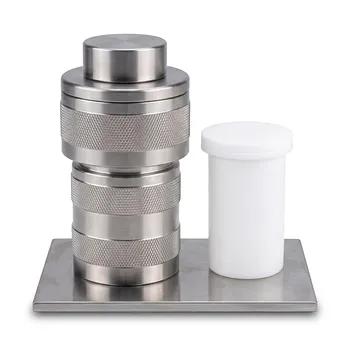
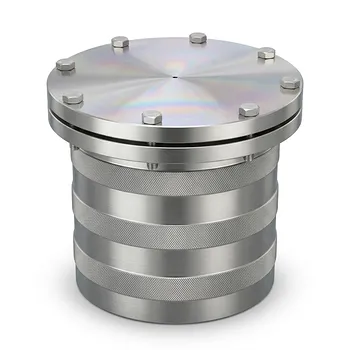
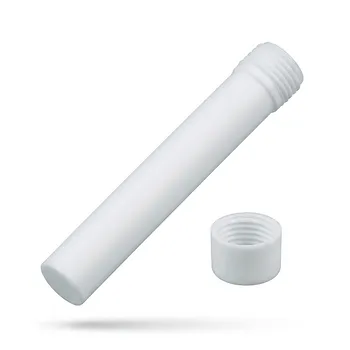
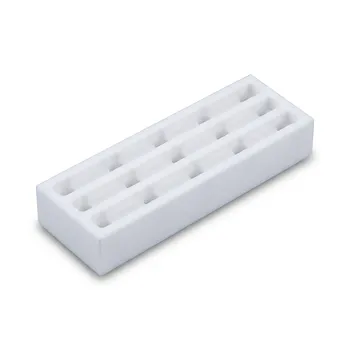
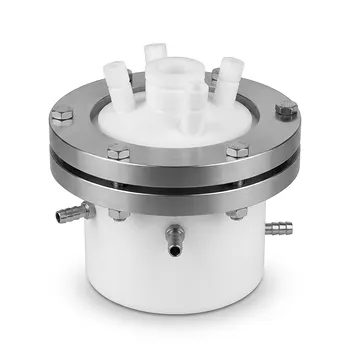
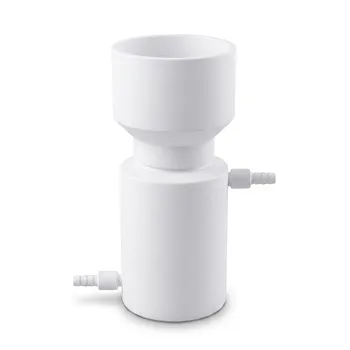
The PTFE-lined laboratory autoclave acts as a specialized high-pressure reaction vessel that facilitates the growth of $V_3O_7 \cdot H_2O$ nanobelts. It provides a sealed, high-temperature environment where solvents reach a state that promotes the crystallization of vanadium oxides. Specifically, the PTFE liner ensures the chemical purity of the nanobelts by preventing corrosive precursors from reacting with the autoclave's metallic shell.
Core Takeaway: The autoclave provides the necessary high-temperature and high-pressure sealed environment to drive solvothermal kinetics. The PTFE liner is critical for maintaining a contaminant-free system, preventing equipment corrosion, and ensuring the precise morphological growth of one-dimensional nanostructures.
Creating the High-Energy Reaction Environment
Achieving Necessary Pressure and Temperature
The synthesis of $V_3O_7 \cdot H_2O$ requires temperatures and pressures far exceeding the standard boiling point of the solvents used. The autoclave creates a sealed environment that allows the internal pressure to rise as the temperature increases, enabling solvothermal reactions that would be impossible in open-air setups.
Driving Solvothermal Kinetics
Under these high-energy conditions, precursors undergo chemical transformations that favor the formation of crystalline phases. This environment facilitates the thorough mixing and reaction of vanadium sources, allowing the $V_3O_7 \cdot H_2O$ to precipitate from the solution in a controlled manner.
The Role of PTFE as a Chemical Barrier
Preventing Metallic Contamination
The PTFE (polytetrafluoroethylene) liner is chosen for its exceptional chemical inertness. By acting as a barrier, it prevents the introduction of metallic impurity ions from the stainless steel walls into the reaction mixture.
Protecting Equipment Integrity
Solvothermal synthesis often involves acidic or highly reactive solvents that would otherwise erode the stainless steel outer shell. The PTFE liner offers superior corrosion resistance, protecting the structural integrity of the autoclave and ensuring its longevity across multiple experiments.
Ensuring Morphological Precision of Nanobelts
Supporting Controlled One-Dimensional Growth
The stability of the environment inside the PTFE-lined vessel is essential for the controlled morphological growth of the nanobelts. By maintaining constant conditions, the system allows the $V_3O_7 \cdot H_2O$ to crystallize into high-aspect-ratio one-dimensional structures rather than irregular particles.
Facilitating Sample Recovery
The extremely smooth surface of the PTFE lining prevents the synthesized nanobelts from adhering strongly to the vessel walls. This characteristic simplifies the subsequent recovery and collection of the solid precipitates, ensuring higher yields of the desired powder sediment.
Understanding the Trade-offs
Temperature Limitations
While PTFE is highly inert, it has a lower thermal threshold than the stainless steel that houses it. Most PTFE liners are limited to operating temperatures below 250°C (often recommended at 200°C) to prevent deformation or the release of toxic vapors.
Thermal Expansion and Sealing
PTFE has a high coefficient of thermal expansion, meaning it expands significantly more than the steel shell when heated. If not managed correctly through proper autoclave design, this can lead to leaks or deformation of the liner, potentially compromising the experiment or the safety of the operator.
How to Apply This to Your Project
Making the Right Choice for Your Goal
- If your primary focus is High-Purity Nanostructures: Use a high-quality PTFE liner to eliminate any risk of metallic contamination from the autoclave walls during the solvothermal process.
- If your primary focus is Corrosive Solvent Handling: Ensure the PTFE liner is properly seated and inspected for cracks, as even minor leaks can lead to irreversible damage to the stainless steel outer shell.
- If your primary focus is Precise Morphological Control: Maintain a constant temperature and strictly adhere to the designated reaction time to allow the nanobelts to crystallize uniformly on the smooth PTFE surface.
By providing a controlled, inert, and high-energy environment, the PTFE-lined autoclave remains the definitive tool for the successful synthesis of specialized vanadium oxide nanobelts.
Summary Table:
| Function | Benefit for V3O7·H2O Synthesis | Key Feature |
|---|---|---|
| High-Pressure Seal | Drives solvothermal kinetics for crystal growth | Sealed vessel design |
| Chemical Inertness | Prevents metallic contamination; ensures purity | PTFE Liner |
| Corrosion Resistance | Protects the steel shell from acidic precursors | Fluoropolymer barrier |
| Anti-stick Surface | Facilitates easy recovery of 1D nanostructures | Smooth morphology |
| Thermal Control | Maintains stability for morphological precision | Operating limit <250°C |
Elevate Your Nanomaterial Synthesis with KINTEK Precision
Achieving the perfect morphological growth of $V_3O_7 \cdot H_2O$ nanobelts requires the absolute chemical purity and thermal stability only high-performance fluoropolymers can provide. At KINTEK, we specialize in manufacturing an exhaustive range of laboratory supplies crafted from premium PTFE and PFA, specifically designed for demanding research environments.
From essential basic labware (beakers, crucibles, reagent bottles, and digestion tubes) and high-purity trace analysis tools to complex fluid transfer components (tubing, valves) and advanced reaction apparatus—including hydrothermal synthesis liners, microwave digestion vessels, and custom electrochemical cells—KINTEK is your ultimate partner. Our end-to-end custom CNC fabrication allows us to deliver everything from bespoke laboratory setups to high-volume standard parts with unmatched precision.
Don't let contamination or equipment corrosion compromise your results. Trust KINTEK’s exclusive focus on high-performance materials to safeguard your experiments.
Contact our experts today to discuss your custom lab requirements!
References
- Chuan Wu, Liangzhe Chen. Preparation and electrochemical properties of V<sub>3</sub>O<sub>7</sub>@PANI composition with core-shell architecture. DOI: 10.1088/1742-6596/3092/1/012012
This article is also based on technical information from Kintek Knowledge Base .
Related Products
- PTFE Lined High Pressure Digestion Vessel 50ml High Temperature Hydrothermal Synthesis Tank
- Custom TFM Reaction Vessel with Stainless Steel Jacket and PTFE Inner Cup for High Corrosion Resistance
- High Purity TFM Microwave Digestion Vessels PTFE Acid Evaporation Liners Domestic GT-400 Equivalent Laboratory Reaction Containers
- Custom PTFE Laboratory Cleaning Basket Carrier High Purity Acid Base Resistant Wafer Holder Low Background Contamination Free Chemical Bath Rack
- High Purity Corrosion Resistant PTFE Acid Reflux Cleaning System for Laboratory Trace Analysis
People Also Ask
- What are the benefits of using a PTFE-lined vessel for carbon-sulfur cathode treatment? Maximize Purity & Performance
- Why are PTFE-lined pressure digestion vessels required for the preparation of Ag/CeO2 catalysts? Purity & Performance
- What safety features are typically incorporated into high-pressure PTFE digestion vessel designs? Ensure Lab Safety
- What is the function of PTFE lined high-pressure vessels in g-C3N4 synthesis? Achieve High-Purity Material Growth
- Role of High-Pressure Digestion Tanks in Perovskite Synthesis: Achieve Superior Stability and Latent Heat